Commercial Vehicles
China’s 4x4 Van Market: Applications, Platforms, and Sourcing Checks for International Buyers
How to assess Chinese 4x4 vans by duty cycle, drivetrain design, export readiness, compliance requirements, and parts support.
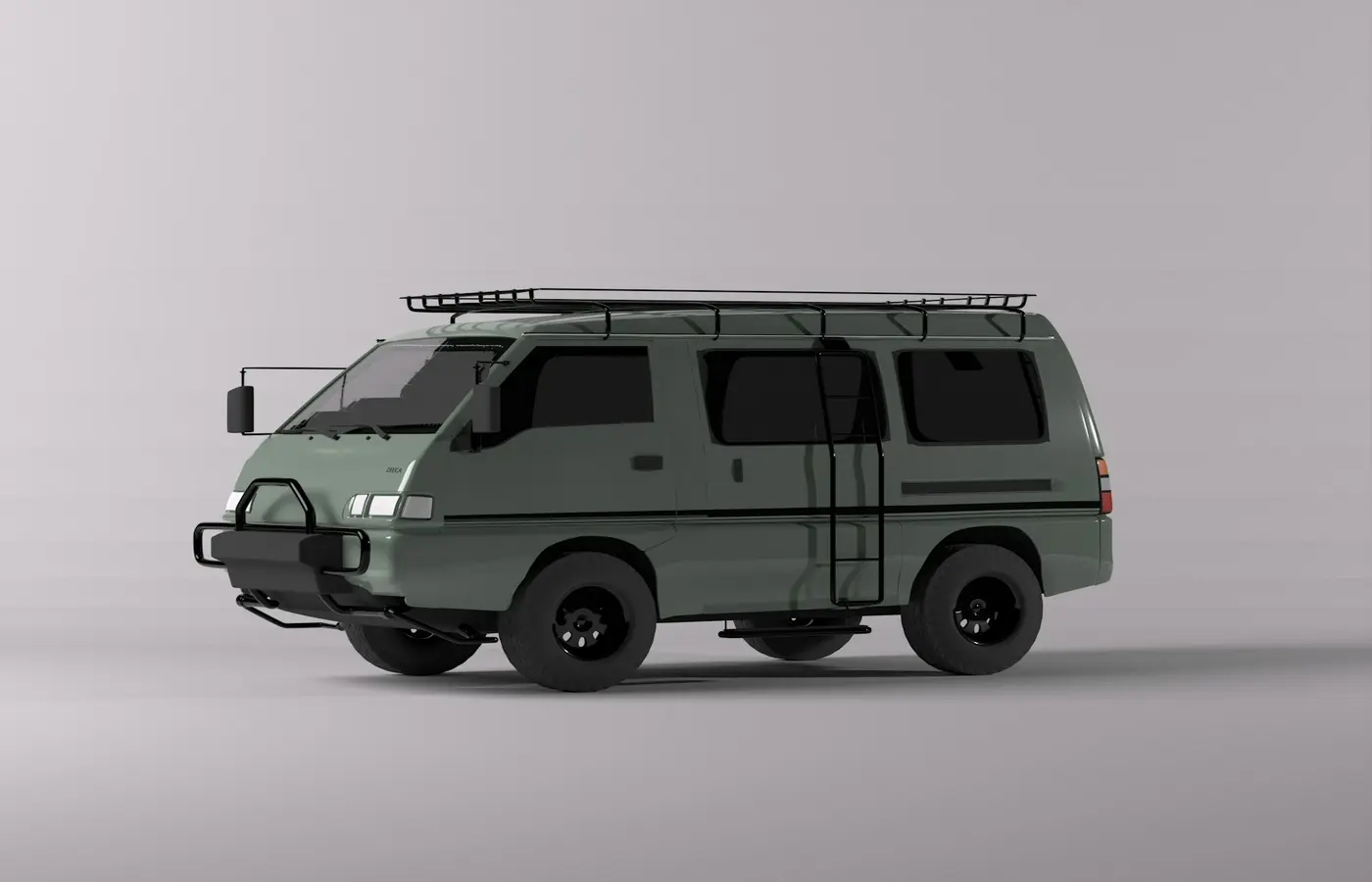
A Chinese 4x4 van can mean very different things depending on who is selling it. It may be a factory-built commercial van with selectable four-wheel drive, an all-wheel-drive passenger vehicle, a truck-derived enclosed utility body, or a camper conversion based on a conventional two-wheel-drive van.
That distinction matters more than the badge or the sales description. A buyer moving technicians over rough access roads needs different hardware, payload margins and service support from an operator buying a passenger shuttle for wet or snowy roads. International buyers should therefore assess China’s 4x4 van market by duty cycle first, then confirm the exact production specification, approval status and after-sales responsibility.
What counts as a 4x4 van in China’s vehicle market?
The terms used in listings and export discussions are often broader than the engineering underneath them. “4x4 van,” “AWD van,” “off-road van,” “light bus,” “minibus,” “camper van” and “special-purpose vehicle” can all appear in descriptions of vehicles with very different chassis and drivetrains.
A useful starting point is to separate four basic categories:
| Category | Typical drivetrain concept | What it may suit | What buyers should not assume |
|---|---|---|---|
| Factory 4WD commercial van | Mechanical or electronically controlled drive to both axles; may have selectable modes | Remote-site work, utility support, uneven-road access | That it has low range, locking differentials or severe-off-road capability |
| AWD passenger van or people mover | Automatic torque distribution between axles, commonly intended for variable road grip | Passenger transport in rain, snow or mixed road conditions | That it can sustain heavy off-road use or carry commercial payloads |
| Truck-based enclosed vehicle | Light-truck or pickup-related chassis with an enclosed rear body | Utility fleets, field service, specialist bodies | That its cabin, ride, safety equipment or access are equivalent to a van |
| Converted van or expedition vehicle | Standard vehicle modified by a body builder or conversion company | Tourism, recreation, mobile service and bespoke fleet roles | That conversion hardware is factory-approved or covered by the base-vehicle warranty |
The essential question is not whether a vehicle is marketed as “4x4.” It is whether the supplied vehicle has a documented drivetrain that matches the buyer’s operating conditions.
For example, all-wheel drive can be valuable for traction on wet pavement, compacted snow or loose access roads. It may use a coupling that automatically sends torque to the second axle when slip is detected. A conventional four-wheel-drive arrangement may instead use a transfer case, selectable high and low ranges, and a more direct mechanical connection between front and rear driveline components. Both layouts can be valid, but they solve different problems.
Vehicle classification can add another layer of confusion. A passenger-oriented light bus, a cargo van and a special-purpose vehicle can share body dimensions or even portions of a platform while having different seating, glazing, interior fittings, payload ratings and approval documents. Buyers should treat a seller’s category label as a starting point, not evidence of the vehicle’s legal classification in the destination market.
Where Chinese 4x4 vans are used
The practical demand for additional traction comes from specific working conditions rather than from a single “off-road van” market. A credible procurement plan links each application to the terrain, load and operating pattern the vehicle will face.
Remote-site transport and field support
Energy, mining, construction, telecommunications and infrastructure work can require vans to reach sites using unpaved roads, seasonal tracks or partially developed access routes. In these cases, the vehicle may carry technicians, tools, parts, communications equipment or safety supplies.
Four-wheel drive alone is not enough to determine suitability. Buyers should evaluate ground clearance, approach and departure angles, tire specification, underbody protection, axle-load limits and the effect of fitted equipment on payload. A van that performs adequately on graded tracks may not be designed for deep ruts, steep side slopes or repeated water crossings.
Utility, municipal and emergency support
Utility and public-service applications can include mobile maintenance teams, inspection units, disaster-response support, mobile workshops and command vehicles. These roles often need a balance between traction and predictable on-road behavior, because a vehicle may travel long distances on paved roads before reaching a difficult site.
For this use, interior layout and electrical integration can be as important as drivetrain hardware. Added shelving, generators, communications systems, auxiliary batteries or roof equipment can materially change axle loads. A body builder should provide a documented weight calculation for the completed vehicle, not only the weight of the base van.
Passenger and tourism operations
Passenger vans with AWD may be relevant to hotel transfers, rural tourism, airport operations, staff transport and shuttle work in regions with wet, icy or poor secondary roads. Here, the priorities may include passenger capacity, heating and air-conditioning performance, door configuration, luggage space and local safety requirements.
A passenger-oriented AWD vehicle should not automatically be treated as a commercial 4WD work van. Its suspension tuning, tire choice, recovery points and cargo-area structure may be designed primarily for road use. Operators should also check whether carrying passengers, luggage and accessories together remains within gross vehicle weight and rear-axle limits.
Camper, expedition and mixed-use conversions
China has a wide manufacturing base for van bodies, recreational conversions and special-purpose equipment. That creates opportunities for buyers seeking mobile accommodation, field offices, medical units or mixed passenger-cargo layouts.
The trade-off is accountability. A conversion can affect weight distribution, warranty coverage, electrical safety, emissions-related equipment, emergency exits and local registration classification. A buyer should establish whether the conversion is factory-approved, supplied by an authorized body builder, or performed independently after the vehicle leaves the manufacturer.
Platform types and why they change the buying decision
The most important sourcing decision is often the platform, rather than the visible body style. It determines the available driveline hardware, load capability, parts route and likelihood of straightforward compliance.
Factory-built 4WD vans
A factory-built four-wheel-drive van is generally the clearest route when the operating case genuinely needs regular off-pavement use. The buyer should still verify whether the system is full-time, part-time or automatically engaged; whether it includes low range; and whether use of certain modes is restricted to loose surfaces.
The main advantage is that the driveline should be represented in the vehicle’s production documentation, parts catalogue and service procedures. That does not guarantee export support, but it gives the buyer a firmer foundation for technical verification and future maintenance.
AWD people movers and light buses
AWD passenger platforms can be appropriate where traction and stability matter more than low-speed terrain ability. They may also offer better passenger access, cabin trim and road refinement than a work-focused van.
Their limits need to be explicit. Check the permissible payload after seats and luggage are included, whether tires are road-oriented, and whether the drivetrain has operating restrictions. If the vehicle will carry commercial equipment or tow regularly, request confirmation that the intended use remains within manufacturer limits.
Cab-chassis and truck-derived bodies
Truck-based enclosed bodies can offer robust frames, high load ratings or packaging flexibility for specialist equipment. They can be useful for mobile workshops, recovery support, rural distribution and service fleets.
However, buyers should compare the finished vehicle rather than the donor chassis alone. A heavy body can reduce payload, alter center of gravity and affect ride quality. The completed vehicle may also fall into a different registration or inspection category in the destination country.
Aftermarket and coachbuilt conversions
A conversion may create the exact layout a buyer needs, but it adds another supplier to the transaction. The base-vehicle manufacturer, converter, exporter and local importer may each have different responsibilities.
Before ordering, require written answers to three questions: who warrants the added components, who supplies replacement conversion parts, and who is responsible if local approval fails because of the completed body or interior installation.
Drivetrain details to verify before comparing quotes
Two quotations can appear comparable while describing materially different vehicles. Request a dated, VIN-linked or production-order-linked specification for the exact wheelbase, body, model year and export configuration.
The following points should be confirmed in writing:
- Drivetrain type: Is it two-wheel drive, automatic AWD, full-time 4WD or selectable part-time 4WD?
- Transfer case or coupling: Is there a transfer case, electronically controlled coupling or another torque-management system? Ask for the terminology used in the manufacturer’s technical documentation.
- Low range: If low-range four-wheel drive is required, request specific confirmation. Do not infer it from a 4x4 badge or an off-road appearance package.
- Differentials and traction control: Determine whether the vehicle has open differentials, limited-slip hardware, electronic brake-based traction control or locking differentials. These are not interchangeable features.
- Drive-mode logic: Identify which modes can be used on dry pavement, whether driver action is required to engage them and whether there are speed or surface restrictions.
- Axle and tire specification: Confirm axle-load ratings, tire size, load index, speed rating and availability of equivalent replacement tires in the destination market.
- Clearance and protection: Obtain official figures for ground clearance, approach angle, departure angle and fitted underbody protection where published. Do not rely on photographs.
- Payload after equipment: Calculate payload with the actual seating, partitions, racks, auxiliary fuel tanks, spare wheel carriers and conversion equipment installed.
- Towing and recovery: Verify towing limits, towbar approval, recovery-point ratings and any restrictions on trailer weight for the export version.
If the seller cannot provide a build sheet, official specification document, parts diagram or manufacturer confirmation, the drivetrain claim remains unverified. This is especially important when domestic-market and export versions differ in equipment or calibration.
Supply channels and export-readiness questions
Chinese vehicles can reach overseas buyers through several channels: an OEM export program, an authorized local distributor, a commercial-vehicle dealer, a body builder, or an independent exporter. Each channel can be legitimate, but they do not provide the same protections.
An OEM or authorized importer may be able to support parts ordering, warranty processing, recalls and technical documentation in the destination market. An independent exporter may be able to source a vehicle efficiently but may not have authority to honor the manufacturer warranty locally. A conversion company may understand body integration but have no responsibility for base-vehicle driveline repairs.
For any channel, buyers should establish the answers before placing a deposit:
- Who is the contracting seller, and who is the manufacturer of record?
- Is the vehicle built for export, or is it a domestic-market vehicle being exported independently?
- Who provides the certificate, declaration or technical documents needed for destination-market registration?
- Who performs pre-delivery inspection, and what is included in that inspection?
- Who pays for and coordinates warranty repairs in the buyer’s country?
- What is the spare-parts ordering route, expected stocking arrangement and escalation process for urgent failures?
- Who handles safety recalls or service campaigns if the vehicle is outside its original sales market?
Export availability should never be assumed from an online listing. Availability, warranty, emissions equipment, steering position, lighting, language settings and compliance documentation can all vary by destination.
A practical sourcing checklist for international buyers
A disciplined process reduces the risk of receiving a vehicle that is technically different from the one quoted.
Before signing or paying a deposit
- Define the actual duty cycle: road type, grades, climate, annual distance, payload, passenger count, towing and expected downtime tolerance.
- Obtain the exact vehicle identity: model designation, wheelbase, body type, model year, engine or powertrain, transmission and drivetrain.
- Ask for a VIN where the vehicle already exists. For production orders, request a signed build specification and a process for confirming the completed VIN.
- Request evidence for 4WD or AWD hardware from manufacturer documentation, not only a sales brochure or marketplace listing.
- Confirm the finished gross vehicle weight, axle loads and payload after all optional equipment and bodywork.
- Check whether the proposed vehicle can be registered in the destination country before shipment, including emissions, safety, lighting, steering, radio and special-purpose-body requirements.
Before shipment
- Match the pro forma invoice, purchase order, build sheet and vehicle identification details line by line.
- Obtain dated photographs of the actual unit or documented production inspection records.
- Review warranty terms, exclusions, geographic coverage and claim procedure in writing.
- Secure the parts catalogue, service schedule, fluids specification and consumables list relevant to the delivered configuration.
- Agree Incoterms, shipment insurance, inspection rights, payment milestones, damage-claim procedure and responsibility for missing documents.
Before delivery into service
- Confirm that local registration, inspection and insurance requirements have been met.
- Train drivers on drivetrain modes, towing limits, tire pressures, load distribution and any restrictions on using 4WD modes on paved surfaces.
- Establish an opening stock of mission-critical consumables and parts based on the fleet’s operating environment.
- Record the local contact responsible for warranty decisions, technical escalation and recall communication.
What to watch before committing
China’s 4x4 van market can offer useful options across passenger transport, field service, specialist bodies and conversion projects. But the category is too varied for broad assumptions about capability or export readiness.
The best purchase decision starts with the work the vehicle must do, not the label used to advertise it. A buyer who verifies the driveline architecture, completed-vehicle weight, destination compliance path and parts responsibility will be in a much stronger position than one comparing headline specifications alone.
FAQ
Is AWD the same as a true 4x4 van?
No. AWD usually refers to a system that distributes torque between axles automatically or electronically, often to improve road traction. A 4WD system may include selectable modes, a transfer case or low range. The exact architecture must be confirmed for the individual vehicle.
How can a buyer confirm that a Chinese van has low-range four-wheel drive?
Request the official specification, owner manual extract, parts diagram or written manufacturer confirmation for the exact model and configuration. Look for specific reference to a transfer case and low-range gear selection. A 4x4 badge, drive-mode switch or seller statement is not sufficient proof.
Can a Chinese 4x4 van be registered in my country?
Possibly, but registration is market-specific. It depends on the vehicle’s approval documents, emissions and safety requirements, completed body configuration, local inspection rules and importer arrangements. Confirm the compliance route with the relevant local authority or qualified importer before shipment.
What spare-parts evidence should a fleet buyer request before ordering?
Request the parts catalogue or illustrated parts information, service intervals, fluids and consumables list, warranty process, ordering route, expected supply responsibility and contact for technical escalation. For converted vehicles, request separate parts and warranty information for the conversion equipment as well.