
Technology
800V Electric Vehicles from China: What Buyers Should Check Beyond Peak Charging Power
An 800V badge can support rapid charging, but battery limits, charging curves and charger compatibility determine the real stop time.
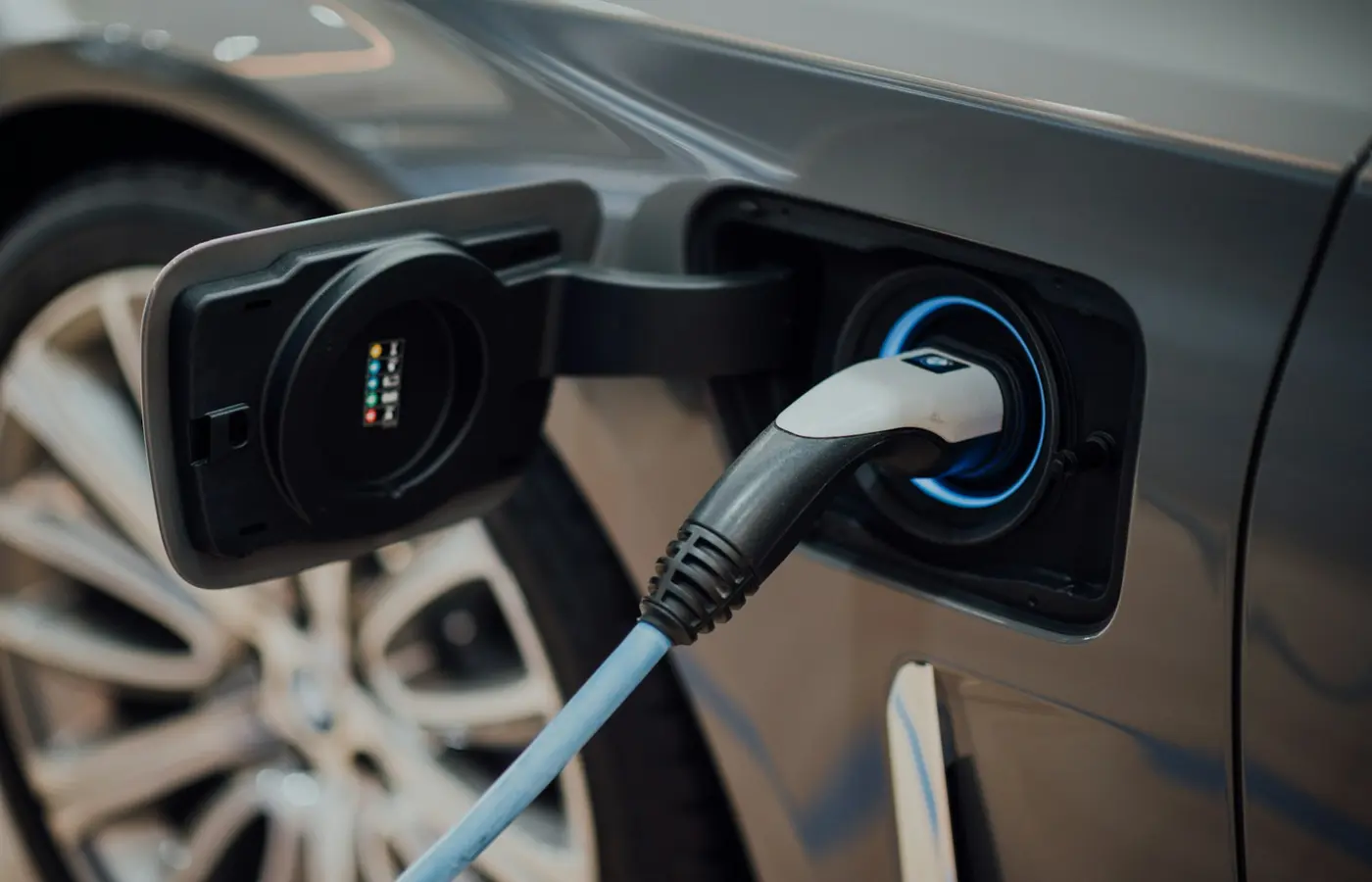
An 800V electric vehicle can potentially charge at very high DC power, but the badge alone does not tell a buyer how long a real charging stop will take. The useful question is not “What is its peak kW?” but “How much energy can it add between the states of charge I actually use, on the chargers available to me?”
That distinction matters particularly for buyers comparing Chinese EVs across domestic and export markets. A vehicle may use an 800V architecture in China, yet be sold elsewhere with different charging hardware, connector standards, battery options or charging limits. Even where the hardware is unchanged, a high-voltage car can be limited by the battery temperature, the station’s voltage and current capability, software settings, or power shared with other vehicles.
What an 800V EV architecture actually means
In simple electrical terms, charging power is the product of voltage and current:
Power = voltage × current
At 800V, a vehicle can deliver or accept a given amount of power with roughly half the current required at 400V. For example, 320kW corresponds to 800A at 400V but 400A at 800V, before allowing for normal variation in operating voltage and losses.
Reducing current can help engineers manage cable size, connector heating and electrical losses at high power. It is one reason automakers are adopting higher-voltage systems as they pursue faster DC charging. But “800V” is not a single, uniform technical specification. Battery voltage changes with state of charge, cell chemistry and temperature; an “800V” pack may operate over a broad voltage range rather than at a fixed 800V.
Buyers should also distinguish between a full high-voltage vehicle system and a more limited implementation. In a broadly integrated 800V design, major high-voltage components—including the battery, traction inverter, motor, DC/DC converter, air-conditioning compressor and charging equipment—are designed for higher voltage. Other vehicles may use an 800V battery or charging path while retaining some 400V-rated components and conversion hardware.
Neither approach is automatically better for every buyer. The practical point is that an 800V label does not guarantee a particular peak charge rate, charging curve, driving efficiency or charging experience.
The FEV technical benchmark of the XPeng G9 illustrates the sort of integration associated with an 800V silicon-carbide platform. It also describes a model-specific strategy that uses the rear motor and inverter to boost 400V charging input to 800V. That is useful context, but it should not be assumed for every XPeng variant, model year or export-market vehicle.
Why peak kW does not tell you how fast an EV charges
A quoted maximum DC charging figure is usually a brief operating point. It may be reached only at a low or mid battery state of charge, with a warm and properly conditioned battery, on a charger able to supply the required voltage and current.
Charging power normally rises after connection, reaches a peak, then tapers as the battery fills. The taper is intentional: battery-management software reduces charging current as cell voltage rises and thermal or durability constraints become more important. This is why a car that briefly reaches 350kW may not complete a 10–80% stop twice as fast as a car peaking at 175kW.
A meaningful charging claim should state at least:
- the starting and ending state of charge, such as 10–80%;
- battery size and, ideally, usable battery energy;
- charger rating and connector type;
- battery temperature or whether preconditioning was used; and
- the time required for that stated charging window.
The 10–80% measure is widely used because it captures a practical road-trip charge while avoiding the slowest part of the session above 80%. It is still not a complete comparison by itself. Adding 70% to a 100kWh usable battery means adding about 70kWh, while adding 70% to a 60kWh battery means about 42kWh. The larger-pack vehicle may take longer yet add considerably more usable driving energy.
FEV’s G9 benchmark reports a 350kW figure and a claimed 10–80% time of 20 minutes for the vehicle examined. That combination is more informative than either number alone, but it remains a specification reference rather than a guarantee of every real-world session. Charger performance, weather, traffic at the site and the car’s software version can all change the result.
Battery chemistry, pack size and C-rate set the charging ceiling
The battery, not the nominal vehicle voltage alone, determines how much power an EV can accept and for how long. Cell chemistry, cell design, pack cooling, electrical connections and battery-management calibration all shape the charging envelope.
One useful concept is C-rate. A 1C charging rate would theoretically add energy equivalent to the battery’s rated capacity in one hour. A 100kWh battery charging at 100kW is therefore charging at approximately 1C. At 300kW, it is charging at roughly 3C.
C-rate is helpful for interpreting claims, but it is not a complete cross-model score. It depends on which battery capacity figure is used, and it says little about how long the battery can sustain that rate. A vehicle might reach more than 3C briefly and then taper sharply; another might have a lower peak but maintain high power through more of the useful charging window.
Battery chemistry is relevant, although it should not be reduced to a simple rule that one chemistry is “fast” and another is “slow.” Nickel-manganese-cobalt (NMC) and lithium-iron-phosphate (LFP) packs can both be engineered for rapid charging, but their cell characteristics, thermal strategies and cost trade-offs differ.
The FEV G9 document identifies a 98kWh pack using prismatic NMC cells and describes battery capability above 3C. By comparison, FEV’s BYD Seal benchmark describes an 82.5kWh usable-energy Blade LFP battery and up to 150kW DC charging for the benchmarked version. Both examples use high-voltage technology in their broader designs, yet their quoted charging outputs differ substantially.
That comparison does not establish which vehicle is better. It demonstrates the buyer’s core lesson: 800V architecture can create the electrical conditions for higher-power charging, but it does not itself dictate the battery’s charge acceptance.
Check the charging curve, not just the headline claim
The best way to assess a China-market or export-market EV is to compare energy added over a defined charge window rather than compare only peak power.
Start with the usable battery capacity, then calculate the energy added during the claimed interval:
Energy added = usable battery energy × change in state of charge
For example, an 80kWh usable pack charged from 10% to 80% receives roughly 56kWh, excluding charging losses. If the stated time is 20 minutes, the average battery-side power over that interval is about 168kW. That vehicle may have a much higher peak figure, but the 168kW average is closer to what determines the stop duration.
This simple calculation has limits. Manufacturers may quote nominal rather than usable capacity, charging losses occur between the charger and battery, and the actual start and end states of charge may differ slightly from the display. Still, it is more useful than treating a momentary maximum as an average.
When comparing vehicles, ask for or seek:
- A full charging curve. Ideally it should show power against state of charge, along with test temperature and charger type.
- A timed 10–80% or 20–80% result. Compare equivalent windows, not one model’s 10–80% claim with another model’s 30–80% claim.
- Battery preconditioning details. A cold battery may charge far below its potential until it warms up.
- The charger’s voltage and current ratings. A 350kW nameplate alone is insufficient.
- Independent tests with disclosed conditions. Results are most useful when the tester identifies the vehicle version, software version, ambient temperature, starting state of charge and charger used.
Also include the non-charging time that affects a real stop: entering the site, locating an available stall, connecting, authorising payment and waiting for the battery to prepare. An EV that is technically very fast to charge can still be inconvenient if compatible high-power stations are sparse on the intended routes.
Charger compatibility can limit an 800V EV
A high-power charger cannot force a vehicle to accept its advertised output. The actual session is constrained by the lowest relevant limit: the vehicle, battery, connector, cable, charger voltage, charger current, site grid connection or power-sharing logic.
For an 800V vehicle, charger voltage range is especially important. Some older or lower-power DC chargers are designed mainly around 400V-class vehicles. They may have adequate power on paper but insufficient output voltage for an 800V pack to achieve its intended charging performance.
Current limits matter too. A charger that can provide 500A at up to 500V cannot necessarily provide its headline power to an 800V vehicle. Conversely, a charger able to provide high voltage but limited current may not support the vehicle’s full charging curve.
Some vehicles use voltage conversion strategies to remain usable on lower-voltage infrastructure. The approach described in FEV’s XPeng G9 benchmark is one example. It can improve practical compatibility, but conversion may not reproduce the vehicle’s best-case charging performance, and buyers should confirm the exact function in official documentation for their market.
Connector standards add another layer for importers. Chinese domestic vehicles generally use GB/T charging hardware, while many export markets use CCS2, NACS or other regional standards. A physical adapter is not automatically a complete solution. Communication protocols, voltage capability, thermal monitoring, certification, warranty coverage and local regulations all matter. Import buyers should verify the vehicle’s factory-installed inlet and supported DC charging specification before assuming access to a local network.
How to compare China 800V EVs before you buy or import
For a private buyer, fleet operator or importer, the right comparison begins with the exact vehicle rather than the platform name. Confirm the model year, trim, battery pack, destination market and charging inlet. Do not rely on a China launch presentation to describe an export version.
A practical buyer checklist
- Confirm usable battery energy. This is more helpful for charging comparisons than gross capacity alone.
- Record the official DC charging claim and its charge window. A 10–80% time is generally more useful than a peak-kW headline.
- Request a charging curve where possible. If one is unavailable, treat broad “minutes added” claims cautiously.
- Check the supported DC voltage range and maximum current. These determine whether local high-power chargers can serve the car as intended.
- Map the actual charging network. Check stations on regular and long-distance routes, including connector type, voltage, current, reliability and power-sharing arrangements.
- Ask how battery preconditioning works. Determine whether it activates automatically when a compatible charger is set as the navigation destination, and whether it works in the intended market.
- Verify the software version. Charging behaviour can change through battery-management and thermal-control updates.
- Review battery and high-voltage warranty terms. Check eligibility, exclusions, imported-vehicle support and whether local service centres can diagnose the system.
- For imports, confirm homologation and insurance requirements. Charging hardware, emergency response procedures and parts availability may be relevant alongside connector compatibility.
For fleets, repeatable performance matters more than a best-case result. Test candidate vehicles at the charging sites and ambient temperatures that resemble the operation. Measure charging time over a consistent state-of-charge range, note queueing and connection time, and test with payload where that affects energy use and route planning.
What to watch as China’s high-voltage EV market develops
China’s automakers and suppliers are continuing to develop 800V and higher-voltage systems, alongside higher-current chargers and new battery cells. The direction is clear: manufacturers are trying to reduce charging-stop time without relying only on larger battery packs.
But buyers should expect continuing variation. Some models will prioritize low cost, some will prioritize high sustained charge power, and others will use high-voltage hardware mainly to improve selected functions or infrastructure compatibility. More voltage does not remove the need for a capable battery, effective thermal management and suitable charging stations.
The most reliable way to assess China 800V EVs is therefore to ignore the badge as a standalone purchasing signal. Compare verified energy added, time across the same state-of-charge window, charging conditions and compatibility with the network you will actually use.
FAQ
Does an 800V EV always charge faster than a 400V EV?
No. An 800V system can reduce current requirements at high power and can support very rapid charging, but the battery’s charge acceptance, thermal condition, charging curve and charger capability determine the real result. A well-engineered 400V EV may charge faster than an 800V EV with a smaller or more conservatively calibrated battery.
What is a good way to compare charging speed between two EVs?
Compare the time and energy added over the same state-of-charge window, preferably 10–80% or 20–80%. Use usable battery capacity to estimate energy added, then consider the charger used, battery temperature and whether preconditioning was active. Peak kW is supporting information, not the conclusion.
Can an 800V electric car use a 400V DC fast charger?
It depends on the vehicle and charger. Some high-voltage EVs include a conversion strategy that allows charging from lower-voltage equipment, while others may be limited or unable to charge effectively from certain stations. Check the manufacturer’s documentation for the exact version and destination market.
Why might an 800V EV charge slowly at a high-power charging station?
Possible causes include a cold or hot battery, high state of charge, no battery preconditioning, a charger with inadequate voltage or current capability, station power sharing, cable temperature limits, software restrictions or a mismatch between the vehicle’s connector and the network’s equipment. A high charger nameplate rating does not guarantee high power at the battery.