Industry
China Automotive Export Logistics: How Ro-Ro, Container and Vehicle Handling Differ
A practical guide to choosing Ro-Ro or container shipping for vehicles from China, with handling controls, EV checks and quotation guidance.
The right way to ship a vehicle from China is not automatically the option with the lowest ocean-freight line item. Importers need to compare the entire movement: collection or delivery at the Chinese port, terminal acceptance, loading method, sea route, destination handling, customs clearance and final inland delivery.
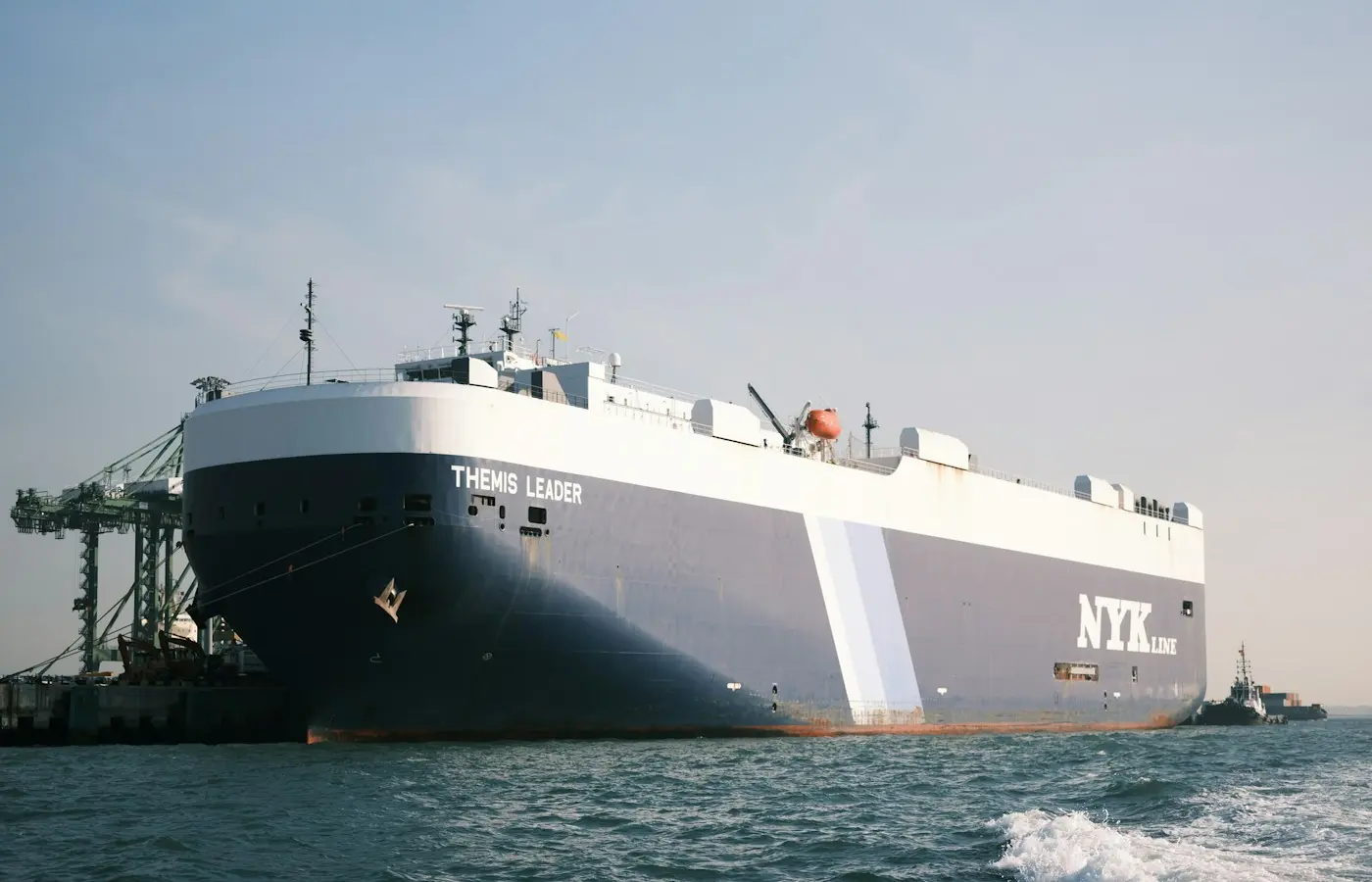
For most complete vehicles, the practical choice is between roll-on/roll-off (Ro-Ro) shipping and container shipping. Ro-Ro moves a vehicle as a rolling unit on a specialised vessel. Container shipping moves it as secured freight inside a sealed container. Both can work well, but they create different handling points, documentation requirements and cost risks.
The decision should therefore begin with the shipment profile and the full logistics chain—not with a headline rate.
Start with the shipment profile, not the freight quote
Before requesting quotations, an importer should prepare a consistent shipment brief. If each forwarder receives different vehicle details or delivery assumptions, the quotations may not be comparable.
At minimum, provide:
- Vehicle make, model, model year and VIN list where available
- Exact length, width, height and curb weight
- Number of units and whether the shipment is one-off or recurring
- Running condition and whether each vehicle can be safely driven
- Vehicle modifications, including raised suspension, oversized tyres or roof equipment
- Origin location in China and preferred export port, if known
- Destination port, final delivery location and target delivery window
- Fuel type, battery-electric or hybrid status, and available battery information
- Whether the vehicle is new, used, damaged, repaired or declared non-running
- Destination import, registration and customs requirements
These details determine whether a vehicle can be accepted by a carrier or terminal, whether it physically fits a chosen transport unit, and whether a route is commercially practical.
A vehicle that is operable and part of a larger batch may suit Ro-Ro well where a suitable vehicle-carrier service exists. A single vehicle headed to a destination with frequent container services but limited Ro-Ro access may be better suited to a container. Oversized, damaged or non-running units may require a different solution altogether, such as a flat-rack, open-top container, breakbulk service or specialist project-cargo handling.
The practical point is simple: a quotation is useful only after the carrier or forwarder understands what it is being asked to carry.
How Ro-Ro shipping moves vehicles from China
Ro-Ro stands for roll-on/roll-off. In a typical Ro-Ro movement, a vehicle is delivered to an automotive terminal, accepted into the terminal system, moved onto a dedicated vehicle carrier and secured on an internal deck. At destination, it is discharged into the receiving terminal and released after the relevant port, customs and documentation processes are complete.
The vehicle travels as a vehicle rather than as freight packed in a box. In normal operations, trained terminal personnel drive or otherwise move accepted units between the yard, vessel ramp and onboard parking deck. The vehicle is then restrained using the vessel operator’s securing procedures.
What the Ro-Ro handling chain normally includes
Although procedures differ by port and carrier, a Ro-Ro movement commonly involves the following stages:
- Origin delivery or collection — The vehicle reaches the nominated export terminal, either under the shipper’s arrangements or through a logistics provider.
- Terminal acceptance — The terminal checks documents, vehicle identity, condition and compliance with its acceptance rules.
- Yard storage and planning — The vehicle is parked in a terminal area until vessel loading.
- Vessel loading and lashing — The vehicle is moved aboard, positioned on the designated deck and secured.
- Ocean carriage — The unit remains on the vessel’s vehicle deck until discharge.
- Destination discharge — Terminal staff move it from the ship to the destination vehicle terminal.
- Release and collection — The vehicle is collected or delivered after customs clearance, payment of applicable charges and terminal release.
Ro-Ro can be operationally straightforward for standard running vehicles, particularly when the origin and destination both have appropriate vehicle-terminal infrastructure and a carrier offers a usable sailing schedule. However, route access matters. Ro-Ro services are not interchangeable with container liner services, and a port with strong container connectivity may not have frequent vehicle-carrier calls.
An importer should also avoid assuming that Ro-Ro means fewer responsibilities. The vehicle still passes through several custody points: origin delivery, terminal yard, ship loading, destination discharge and final collection. Condition records and handover documentation remain important.
How container shipping changes the handling chain
Container shipping changes the physical model. Instead of travelling on a vehicle deck, the vehicle is loaded into a container, secured for sea transport, the container doors are closed and sealed, and the container moves through the standard container-terminal chain.
The vehicle may be driven into the container, winched in, or loaded using another method appropriate to its condition and the approved loading plan. It must then be restrained and protected according to the packing provider’s and carrier’s requirements. The specific securing method should be suitable for the vehicle, container type and voyage conditions.
Once loaded, the container is transported to the export terminal, lifted onto the vessel, discharged at the destination and eventually unpacked at an approved location.
When container shipping may be practical
Container shipping can be a useful option when:
- The destination has frequent container services but limited Ro-Ro availability
- The shipment is small, irregular or consists of individual vehicles
- The importer needs a routing option that is not served by a suitable vehicle carrier
- The vehicle requires enclosed transport as part of the agreed logistics plan
- The buyer wants to consolidate compatible cargo, subject to carrier, customs and packing rules
The fact that a vehicle is enclosed does not remove handling or damage risk. A container still has to be loaded, secured, transferred between transport modes, opened and unpacked. Poor lashing, unsuitable loading equipment, moisture exposure, inadequate clearance or rushed unloading can all create claims issues.
Nor should importers assume a particular vehicle will fit a 20-foot, 40-foot or high-cube container based on generic advice. Fit depends on the vehicle’s exact external dimensions, ground clearance, door opening, loading angle, internal container dimensions, securing plan and the provider’s acceptance. Obtain written confirmation before booking.
Ro-Ro vs container: compare the full logistics trade-off
The central difference is physical: Ro-Ro carries the vehicle as a rolling unit, while container shipping carries it as secured freight. From that distinction follow most of the operational trade-offs.
| Factor | Ro-Ro shipping | Container shipping |
|---|---|---|
| Loading method | Vehicle is moved onto and off a dedicated vessel | Vehicle is loaded into, secured in and unpacked from a container |
| Vehicle condition | Usually best suited to units that meet carrier and terminal operability rules | Can offer more options for non-runners, but acceptance and loading capability must be confirmed |
| Route access | Depends on vehicle-carrier calls and automotive-terminal access | Often benefits from broader container-network coverage, depending on port pair |
| Shipment scale | Can be suitable for batches and regular flows | Can suit individual vehicles, smaller lots or consolidation arrangements |
| Main handling points | Vehicle terminal, vessel decks and destination terminal | Loading site, container terminal, unpacking site and inland container movement |
| Cargo protection model | Vehicle is exposed to the controlled vessel and terminal environment | Vehicle is enclosed, but depends heavily on correct packing and securing |
| Documentation focus | Vehicle acceptance, VIN identity, terminal release and condition evidence | Packing details, seal control, container number, securing records and unpacking evidence |
The final choice should be based on total landed logistics cost, not ocean freight alone. Ask each provider to identify what is included and excluded.
A useful comparison should separately show:
- Origin collection or delivery charges
- Export customs filing and documentation fees
- Origin terminal handling charges
- Ro-Ro terminal charges or container loading charges
- Ocean freight and applicable surcharges
- Container equipment, packing, lashing and seal charges where relevant
- Destination terminal handling and release fees
- Container unpacking, return or repositioning costs where relevant
- Customs brokerage and local compliance costs
- Inland delivery to the final handover point
- Free-time allowances and potential demurrage, detention or storage exposure
- Cargo insurance costs and deductibles
A low freight figure can become less attractive if it excludes mandatory terminal work, destination release charges, container return obligations or inland delivery. Conversely, a higher freight quote may include services that reduce operational uncertainty.
Vehicle handling controls to verify before departure
Most transport disputes become harder to resolve when the parties cannot establish the vehicle’s condition and custody status at each handover. Importers should agree evidence requirements before the vehicle enters the export terminal or loading facility.
Build a documented condition file
For each vehicle, request a condition record that includes:
- VIN and registration or stock number, where applicable
- Date, time and location of inspection
- Clear photographs of all sides, roof, wheels, glass, lights and interior
- Odometer reading where relevant
- Images of existing dents, scratches, cracked trim or missing accessories
- Confirmation of keys received and number of keys handed over
- Record of loose accessories, charging cables or tools that are permitted to travel
- Notes on warning lights, running condition or known defects
Photographs should be sufficiently clear to identify the vehicle and show the relevant condition. A wide image of the vehicle alongside close-ups of exceptions is more useful than a large set of unlabelled images.
Confirm acceptance rules and preparation instructions
Before delivery, obtain the carrier’s or terminal’s current rules on:
- Fuel quantity or fuel-level limits
- Battery state-of-charge requirements for EVs and hybrids
- Key handover and key-storage procedures
- Alarm and immobiliser settings
- Loose personal effects and prohibited items
- Roof racks, aftermarket accessories and detachable parts
- Tyre condition and vehicle mobility
- Damage, leakage or safety-related defects that may prevent acceptance
Do not rely on a previous shipment’s instructions. Terminal and carrier requirements can vary by route, vessel, location and cargo type.
Preserve the chain of custody
The importer, exporter, forwarder and receiving agent should know who is responsible at each stage. Key questions include:
- Who signs the vehicle into the origin terminal?
- Who receives any exception report at origin?
- Who can authorise repairs, rework or reloading?
- Who receives the arrival notice and terminal release?
- Who inspects the vehicle before destination collection?
- Who reports damage to the carrier or insurer, and within what deadline?
Insurance wording matters here. Cargo insurance may require prompt notice, evidence of damage, preservation of recovery rights and inspection before repair or disposal. The importer should read the policy and claims procedure before shipment rather than after a loss event.
Electric vehicles, non-runners and oversized units need early confirmation
Electric vehicles, hybrids, damaged vehicles, non-runners and unusually large units should not be treated as standard automotive cargo.
Battery-electric and hybrid vehicles can be subject to carrier-specific and terminal-specific acceptance conditions. These may address battery condition, state of charge, charging status, visible damage, leaks, warning messages, fire-related history and supporting declarations. Requirements can also differ between origin and destination facilities.
Importers should obtain written confirmation from the selected carrier or authorised booking agent that the specific vehicle type is accepted on the intended route. The confirmation should cover the export terminal, ocean carrier, transshipment point if any, and destination terminal. A forwarder’s informal assurance is not a substitute for confirmed carrier acceptance.
Non-running vehicles require the same discipline. Some Ro-Ro operations may only accept vehicles that can be safely moved under their own power and satisfy terminal rules. Other movements may be possible with specialist handling, but this must be planned in advance. A vehicle that cannot be moved as booked may be refused at the terminal, creating storage, rebooking and delivery costs.
Oversized or modified vehicles should be measured rather than described broadly as “SUV,” “truck” or “commercial vehicle.” Height, width, approach angle, ground clearance, axle loading and fixed accessories can affect whether a unit can enter a container, pass through a terminal lane, be parked on a vessel deck or be secured safely.
A pre-booking checklist for importers
Before issuing a booking instruction, confirm the following in writing:
- The agreed Incoterm and the exact handover point between seller and buyer
- Who arranges export clearance, port delivery, ocean carriage, insurance and destination delivery
- Origin and destination ports, including any transshipment port
- Vehicle VIN list, dimensions, weights and running condition
- Acceptance confirmation for EVs, hybrids, non-runners, damaged or modified units
- Current terminal cut-off date and required delivery appointment process
- Required shipping documents, including commercial invoice, packing details, bill of lading instructions and destination import documents
- The condition-reporting process and photographic evidence standard
- Key-control procedure and permitted accessory or loose-item policy
- Lashing, loading, sealing and unpacking responsibilities for containers
- Included and excluded charges at both origin and destination
- Free-time terms, storage exposure and container-return responsibilities
- Cargo insurance scope, exclusions, deductible and claims-notification process
- The named party responsible for inspecting and accepting the vehicle at destination
FAQ
Is Ro-Ro or container shipping better for importing vehicles from China?
Neither is automatically better. Ro-Ro may be a strong option for operable vehicles when suitable vehicle-carrier sailings and terminal access are available. Container shipping may be more practical for individual units, destinations with stronger container connectivity, or cargo requiring a different handling model. Compare the full route, service terms, vehicle condition and all origin-to-destination charges.
Can a non-running vehicle be shipped by Ro-Ro?
It may be possible in some circumstances, but it should never be assumed. Many Ro-Ro operations have strict acceptance requirements for vehicle mobility and safe handling. Obtain written confirmation from the carrier or authorised booking party before delivering a non-running vehicle to a terminal.
What condition records should an importer request before a vehicle leaves China?
Request a VIN-linked inspection record with dated photographs of the exterior, interior, wheels, glass and existing damage. The record should also note keys, accessories, odometer reading where relevant, warning lights and known operating issues. Keep equivalent arrival-condition evidence at destination.
What should be included when comparing vehicle-shipping quotations?
Compare more than ocean freight. Include origin delivery, export documentation, terminal charges, packing or lashing, destination handling, customs brokerage, container unpacking or return obligations, inland delivery, insurance, storage exposure and any free-time limits. Ask for exclusions and assumptions in writing.
Sources
- How to Ship Vehicles from China to Overseas Markets
- Car Shipping to China | Secure & Efficient Vehicle Transport | Ontime Automotive
- How to Transport Vehicles from China to Any Destination Country-Forest Shipping
- RoRo vs Container Shipping for Vehicles - ASI
- Global Automotive Logistics & Shipping | Ro-Ro Vessel & 40HQ Container Rates | MSAUTO
- Vehicle Shipping from China: Container vs Ro-Ro