Industry
China’s Automotive Logistics Market: How Parts, Finished Vehicles and Exports Move
A practical guide to China automotive logistics, from component supply and factory operations to vehicle distribution and exports.
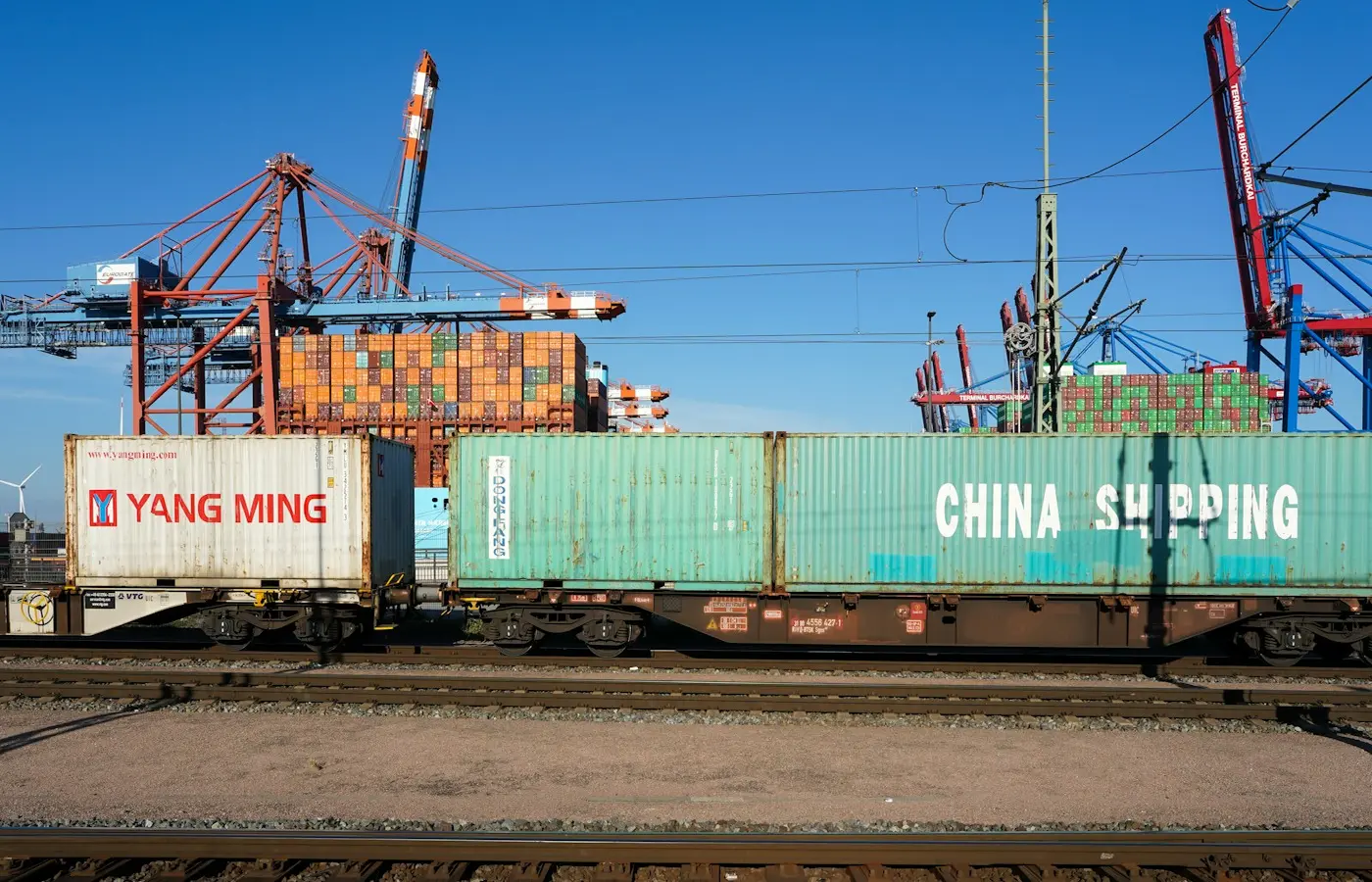
China’s automotive logistics market is best understood as a chain of linked operating systems rather than as a single trucking business. A vehicle may pass through supplier collection, component warehousing, plant delivery, line-side handling, factory compounds, domestic distribution, export-port processing and ocean transport—often with different companies responsible for each stage.
For global buyers, fleet operators and analysts, the important question is therefore not simply whether a provider has a large vehicle-carrier fleet. It is whether that provider has the right network, operational controls and commercial access for the specific flow being assessed: parts into a factory, finished vehicles across China, or vehicles moving from a Chinese plant to an overseas destination.
What China’s automotive logistics market actually covers
Automotive logistics includes the movement, storage, handling and coordination of materials and vehicles across their life cycle. The core modules are generally:
- Inbound component logistics: collecting parts from suppliers, consolidating loads, operating warehouses and delivering material to assembly plants.
- In-plant or production logistics: managing material inside or immediately around a factory, including sequencing, line-side replenishment, returnable packaging and empty-container circulation.
- Outbound finished-vehicle logistics: moving completed vehicles from plants to compounds, dealers, regional distribution centres, fleet customers or delivery hubs.
- Aftermarket-parts logistics: stocking and distributing replacement parts to dealer workshops, service centres and repair networks.
- Reverse logistics: returning packaging, recovering defective parts, handling warranty returns and, in some cases, supporting recycling flows.
This structure is broadly consistent with the segmentation described in a 2019 Strategy&/PwC report on China’s automotive logistics industry. A more recent industry-chain overview from Qianzhan similarly separates component, finished-vehicle, aftermarket and recovery-related logistics. These references are useful for understanding the market’s structure, but they should not be treated as evidence of a provider’s current fleet size, customer base or network reach.
International vehicle shipping is related to this system but is not the same thing. Domestic finished-vehicle distribution ends when a vehicle reaches a dealer, customer delivery centre or domestic destination compound. Export logistics adds further functions: port appointment management, terminal handling, customs documentation, ocean-carrier booking, vessel loading and destination-market delivery arrangements.
How parts and vehicles move through the system
The flow for a component is designed around production continuity. The flow for a completed vehicle is designed around safe handling, transport utilization and delivery timing. Confusing the two can lead to poor supplier selection.
Component logistics: precision before volume
Inbound logistics typically begins at a component supplier or supplier cluster. Parts may be collected through scheduled milk runs, consolidated at a logistics centre, stored briefly, sequenced or repacked, and delivered to a plant according to its production plan.
A factory may require different handling models for different parts. Bulky, low-frequency components can be shipped in scheduled bulk loads. High-value electronics may need controlled storage and traceability. Parts with many variants, such as interior trim or wiring harnesses, may require sequencing so that the correct item reaches the correct vehicle on the assembly line.
The central operational risk is a line stoppage. That means component-logistics performance is often judged by delivery-window compliance, inventory accuracy, traceability, packaging availability and the ability to respond to production-plan changes. A provider’s truck count is relevant, but its warehouse processes, information integration and local supplier coverage can matter more.
Finished-vehicle logistics: handling and network balance
Once a vehicle leaves final assembly, it may be inspected, parked in a factory yard or regional compound, fitted with accessories, documented and assigned to a domestic or export route. It can then travel by specialised car carrier, rail, coastal vessel, river vessel or a combination of modes.
Finished-vehicle logistics has a different set of priorities:
- preventing transport and yard damage;
- maintaining vehicle identification and status visibility;
- balancing outbound loads and return journeys;
- reducing dwell time at plants and compounds;
- matching dispatch schedules to dealer demand, customer handovers or vessel cut-off times.
A carrier network with insufficient destination density may struggle to achieve efficient load factors. Conversely, a provider serving multiple manufacturers and regions may have more opportunities to balance equipment and reposition capacity. This is one reason vehicle-logistics capability cannot be assessed from fleet ownership alone.
The transport network: road is central, but not the only mode
Road transport remains essential because factories, suppliers, dealers and customer-delivery locations rarely sit directly on rail sidings or port berths. Car carriers provide route flexibility and are usually the final domestic link for finished vehicles. Trucks are also indispensable for many component movements, particularly short-distance factory supply and time-sensitive deliveries.
However, longer corridors can support rail, coastal shipping and inland waterway transport where terminals, schedules and volumes align. Historical reporting by Automotive Logistics described the expansion of multimodal automotive movements in China, including rail and coastal or river services. That reporting should be read as historical context rather than a current measure of volumes or capacity.
Where each mode tends to fit
| Mode | Typical role | Main advantage | Main limitation |
|---|---|---|---|
| Road car carrier | Plant-to-dealer, short and medium domestic lanes, final delivery | Flexible routing and direct delivery | Driver, equipment and road-capacity constraints |
| Rail | Long domestic corridors and high-volume flows | Potentially efficient for predictable, consolidated volumes | Terminal access, schedules and first/last-mile dependence |
| Coastal ro-ro or vehicle shipping | Long north-south domestic routes and some export flows | Can move large volumes between suitable ports | Requires port handling and fixed sailing schedules |
| River transport | Routes linked to navigable inland waterways | May support lower-cost long-distance movement | Geographic and terminal constraints |
| Container or general cargo services | Parts, knockdown kits and some export vehicle formats | Broad shipping availability | Not interchangeable with dedicated finished-vehicle ro-ro operations |
A multimodal plan is not automatically superior. Moving a vehicle from truck to rail or vessel introduces terminal handovers, dwell time and damage exposure. It works best when the route has stable volumes, suitable terminals and predictable schedules. For urgent domestic deliveries or dispersed dealer destinations, direct road movements may remain the practical option.
Who provides automotive logistics services in China
China’s provider landscape includes several business models, and a company’s label does not reveal its actual service scope.
OEM-affiliated logistics groups
Some automotive groups have developed logistics subsidiaries or closely linked providers to support their manufacturing and distribution systems. These companies may have deep familiarity with a parent group’s plants, production rhythms and dealer networks. In some cases, they also serve external customers or operate joint ventures and commercial partnerships.
Historically, China’s automotive logistics arrangements were often more OEM-linked than those in highly outsourced markets, as noted in the 2019 Strategy&/PwC report. But it would be inaccurate to assume that every OEM-affiliated provider is captive, exclusive or unable to work for other manufacturers. Access depends on contracts, regions, business units and capacity availability.
Independent domestic specialists
Independent providers may focus on finished-vehicle transport, parts warehousing, rail services, freight forwarding, supply-chain management or a combination of these. Their strengths can include broader customer diversification and the ability to aggregate volume from multiple vehicle makers.
The Qianzhan industry overview identifies both OEM-linked and market-facing operators within the wider ecosystem. It is a useful starting point for mapping categories, not a substitute for checking current company filings, official service descriptions or contractual evidence.
Rail, shipping, port and terminal operators
Rail operators, shipping lines, ro-ro carriers, ports and vehicle-terminal businesses may control critical parts of the physical network without managing the full end-to-end automotive flow. A port operator may offer vehicle storage, pre-delivery processing and vessel loading, while a separate logistics company arranges the inland move and an ocean carrier supplies the ship.
For this reason, a provider claiming “export logistics” capability should be assessed in detail. It may mean freight forwarding and documentation, domestic drayage to port, terminal coordination, ocean booking, or an integrated service combining several of these functions.
International forwarders and 3PLs
International logistics groups can be relevant where manufacturers, suppliers or buyers need cross-border freight management, customs support or coordination in destination markets. Their role may overlap with Chinese domestic providers, but neither is automatically a replacement for the other. The key issue is where responsibility begins and ends.
Domestic distribution is not international vehicle shipping
A vehicle delivered from a Chinese plant to a domestic dealer is part of finished-vehicle logistics. A vehicle exported from China must pass through a more complex chain.
A typical export sequence may include:
- Release from the factory and movement to an inland compound or export port.
- Vehicle inspection, storage, port-entry scheduling and terminal handover.
- Export documentation and customs procedures.
- Vessel booking and loading, often using ro-ro shipping for finished vehicles where available.
- Ocean transport to the destination port.
- Destination-port discharge, customs clearance, inland distribution and dealer or customer delivery.
Different companies may perform each step. An inland vehicle carrier does not necessarily have vessel capacity. A freight forwarder may arrange bookings without owning ships. A port operator may handle vehicles effectively but have no responsibility for destination-country customs or distribution.
This distinction matters as Chinese-made vehicle exports expand. The logistics question is not only whether a producer can move vehicles from a factory to a Chinese port. It is whether the full chain has adequate bookings, terminal capacity, documentation competence, destination handling and accountability when schedules change or damage claims arise.
What global buyers and analysts should assess
A credible logistics review should test the provider against the actual route and operating model, rather than relying on broad statements about nationwide coverage.
A practical evaluation checklist
1. Network fit
Confirm the origin points, factory locations, supplier clusters, destination cities, ports and overseas markets that the provider can actually serve. Nationwide branding does not guarantee useful coverage on a particular lane.
2. Capacity access versus owned assets
Ask whether trucks, rail slots, vessels, compounds and warehouse space are owned, leased, chartered, contracted or obtained through partners. None of these models is inherently weak, but each has different implications during a capacity shortage.
3. Modal options and transfer points
Determine which movements can use road, rail or water and where handovers occur. The provider should be able to explain terminal choices, lead times, vehicle inspection procedures and contingency routes.
4. Damage prevention and claims management
Finished vehicles require documented handovers, condition inspections, secure parking and clear responsibility for damage claims. Buyers should ask about inspection records, escalation procedures, insurance arrangements and claim-resolution responsibilities rather than accept generic assurances.
5. Yard and compound capacity
Vehicle compounds can become bottlenecks when production, dealer demand and vessel schedules fall out of sync. Check how much storage is available, whether it is controlled directly or through a partner, and how vehicles are tracked while in storage.
6. Digital visibility
Useful visibility means more than a dashboard. It should identify the vehicle or shipment, its current status, handover history, exceptions and estimated next milestone. For inbound parts, visibility should also connect with delivery windows, inventory and production priorities.
7. Export execution
For international movements, clarify who manages export documentation, port bookings, vessel allocation, destination customs coordination and final-mile delivery. These responsibilities should be stated in service specifications and contracts.
8. Contingency planning
Ask how the provider responds to port congestion, weather disruption, vehicle-carrier shortages, rail schedule changes, factory shutdowns or sudden export-volume peaks. Evidence may include route alternatives, subcontracting arrangements, escalation procedures and defined service-level obligations.
What to watch as demand changes
China’s vehicle production base, supplier geography and export activity continue to influence logistics economics. Rather than treating any one trend as inevitable, buyers and analysts should monitor several connected developments.
- Production geography: New plants or model allocations can change the balance of inbound supplier flows and outbound vehicle lanes.
- Export-port concentration: A growing share of volume through particular ports can create efficiencies but may also increase exposure to terminal and sailing constraints.
- Ro-ro and ocean capacity: Export readiness depends on vessel access and port operations, not simply on domestic vehicle-carrier availability.
- Rail and waterway use: These modes may become more relevant on stable, long-distance corridors, but their role remains route-specific.
- Dealer-network changes: Direct delivery centres, large fleet customers and evolving dealer structures can alter the final distribution model.
- Supplier localization: Bringing suppliers closer to assembly plants can reduce transport distance but may increase dependence on regional logistics resilience.
- Digital integration: Better event tracking, yard management and planning systems can improve control, but only if data is accurate and shared across the chain.
The most useful conclusion is operational: China automotive logistics is a network-design and execution challenge. Strong capability comes from matching the right provider and transport mode to each part of the chain, with clear handovers between domestic distribution, port operations and international shipping.
FAQ
What is included in China’s automotive logistics market?
It includes inbound component transport, factory and line-side logistics, finished-vehicle distribution, aftermarket-parts distribution, reverse logistics and related warehousing, compounds, information systems and transport services. Export logistics adds port handling, customs, ocean carriage and destination-market coordination.
What is the difference between component logistics and finished-vehicle logistics?
Component logistics is primarily designed to keep production running through accurate, time-sensitive supply to factories. Finished-vehicle logistics focuses on safe handling, damage control, compound management, transport utilization and delivery to dealers, fleet customers, ports or delivery centres.
How are Chinese-made vehicles moved from factories to export ports?
They are commonly moved by road car carrier, rail, coastal shipping or a combination of modes, depending on the plant location, port, volumes and schedule. At the port, terminal operators and logistics providers may handle storage, inspection, documentation coordination and vessel loading.
What should an overseas buyer check before relying on a China-based vehicle logistics provider?
Check route coverage, capacity access, port and vessel arrangements, compound availability, vehicle-condition controls, insurance and claims processes, shipment visibility, customs responsibilities and contingency planning. Most importantly, identify exactly which party is accountable at every handover from factory to final destination.