
Industry
China’s Electric Bus Market: Applications, Powertrains, Charging, and Export Buyer Checks
How Chinese electric buses fit urban, shuttle and intercity work, and what export buyers must verify on range, charging, compliance and support.
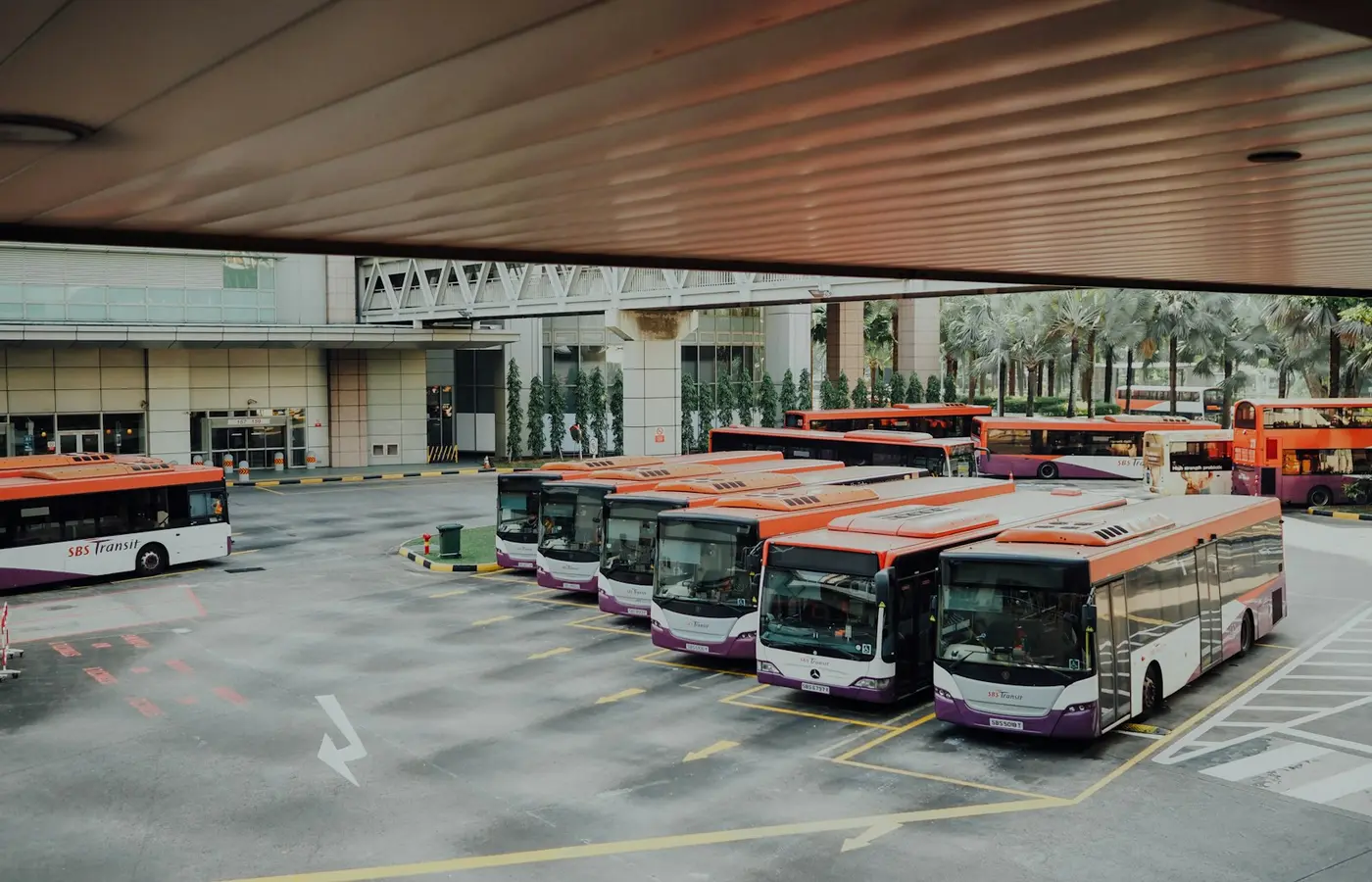
Chinese electric buses are most proven in work that is predictable: urban routes, depot-based shuttles, airport circulators, employee transport and other operations that return to a known charging location. That does not mean every electric bus offered by a Chinese manufacturer will suit every overseas route.
For an export buyer, the important question is not simply whether a vehicle has a large battery or an attractive brochure range. It is whether the configured bus can complete the actual timetable, passenger loads, gradients, climate conditions and charging plan of a specific operation—and whether the supplier can support it for the life of the fleet.
China’s domestic market offers substantial experience in electric bus deployment, particularly in city transit. But domestic scale alone does not demonstrate destination-market compliance, local parts availability or a workable charging project. Those issues must be verified before award, not resolved after vehicles arrive.
Where Chinese Electric Buses Are Used—and Why the Use Case Matters
The strongest fit for battery-electric buses is generally a route with known daily mileage, regular dwell periods and dependable access to charging. This is why urban public transport has been the central application for electric buses in China and in many other markets.
The International Council on Clean Transportation’s H1 2025 China market spotlight describes city buses as China’s most electrified medium- and heavy-duty vehicle category. It reports that battery-electric vehicles accounted for around 98% of the city-bus market in the first half of 2025, with hybrid and fuel-cell electric powertrains making up small remaining shares. This is a useful indicator of where the technology is most established domestically, rather than proof that a particular exported bus will fit a foreign operator’s needs.
Common applications include:
- Urban fixed-route transit: Frequent stops, relatively modest average speeds and a predictable return to depot can make charging and energy planning manageable.
- Airport, hotel and tourism shuttles: These often follow defined circuits and may have dwell time between peak periods, although luggage load and air-conditioning demand can be high.
- Campus, industrial park and port-area transport: Controlled routes and private depot access can simplify infrastructure deployment.
- Employee and school transport: These can be suitable where local regulations, vehicle layouts and safeguarding requirements permit electric bus use. The operator still needs to account for peak occupancy and split-shift schedules.
- Intercity and regional services: These are possible in selected cases, especially where end-of-route charging is available, but they create a narrower operating margin than typical city work.
Route predictability matters because it allows a buyer to build an energy model around known inputs. These include trip length, stop frequency, average speed, terrain, passenger count, layover duration, depot arrival time and required reserve energy.
The IEA’s Global EV Outlook 2023 analysis notes that electric buses are predominantly used in urban public transport, even as some vehicles have range sufficient for intercity duties. It also cautions that actual range depends on loaded vehicle weight, duty cycle, aerodynamics, drivetrain efficiency and environmental conditions such as temperature. There is no universally harmonised heavy-duty electric-range test procedure across major markets, so headline range figures should not be treated as a route guarantee.
China’s market data reflects this distinction. The ICCT reported much more limited battery-electric uptake among coaches than city buses in H1 2025. Coaches used for intercity work often face higher sustained speeds, fewer charging opportunities, luggage loads, longer daily distances and less tolerance for schedule disruption. Those characteristics do not make electrification impossible; they make route-level planning more important.
Battery-Electric, Plug-In Hybrid, and Fuel-Cell Bus Options
Chinese suppliers may offer more than one low-emission powertrain, but the options should not be treated as interchangeable.
Battery-electric buses
Battery-electric buses are the main consideration for fixed-route urban work. They eliminate tailpipe emissions and can be charged at a depot, at route terminals or through a combination of both. Their commercial case depends heavily on electricity prices, charging utilisation, battery capacity, vehicle duty cycle and the cost of building electrical infrastructure.
The key operational limitation is energy availability. A bus that completes a light-duty route in mild weather may not complete the same distance with full passenger loads, steep climbs, intense heating or cooling demand, congested traffic and an ageing battery. Buyers should therefore specify a required operational outcome—such as completing a defined block with a stated reserve—rather than relying only on nominal battery capacity.
Plug-in hybrid buses
Plug-in hybrids combine an electric drivetrain and battery with an internal-combustion engine. They can reduce fuel use in suitable cycles, but their real-world outcome depends on how they are operated and charged.
An Asian Development Bank report on low-carbon buses in the People’s Republic of China discussed cases where operators did not routinely charge plug-in hybrid buses because small batteries and operational complexity reduced the value of grid charging. In those circumstances, the report found that plug-in hybrids could effectively be used much like conventional hybrids.
That observation reflects the operating context examined in the report, not a universal rule for every hybrid bus or export market. For a buyer, the practical question is whether the fleet has a disciplined charging plan and sufficient electric operation to justify the additional system complexity.
Fuel-cell buses
Fuel-cell electric buses use hydrogen to generate electricity onboard. They may be considered where long duty cycles, constrained charging windows or policy support make depot-only battery charging difficult. However, hydrogen supply, refuelling infrastructure, safety processes, fuel quality, cost and maintenance capability are all project-critical requirements.
Fuel-cell buses are not a simple substitute for battery-electric buses. A fleet should select them only after comparing the complete energy-infrastructure and operating model, not because hydrogen appears to offer a faster refuelling experience on paper.
Match Charging Strategy to the Route, Depot, and Operating Window
Charging strategy is part of the transport operation, not an accessory purchase. A bus fleet can have technically capable vehicles and still fail to meet service requirements if chargers, grid capacity and dispatch planning are poorly aligned.
Overnight depot charging
Depot charging is usually the simplest model for buses that return to base with enough dwell time. It can reduce en-route infrastructure needs and allow charging to be coordinated with lower-demand periods where tariffs and local grid arrangements permit.
However, a depot assessment must go beyond counting parking spaces. Buyers should evaluate:
- available electrical capacity and the likely cost and lead time of any grid upgrade;
- number, location and power rating of chargers;
- cable management, parking geometry and accessibility for drivers and technicians;
- charger redundancy if one unit fails;
- peak demand management and smart-charging controls;
- fire safety, emergency procedures and local electrical requirements; and
- whether the schedule allows every vehicle to receive sufficient energy before its next pull-out.
Opportunity charging
Opportunity charging adds energy during route layovers or terminal stops. It can support longer daily blocks or enable a smaller onboard battery, but it increases dependence on infrastructure outside the depot. A late-running service may lose its planned charging window, while a failed terminal charger can affect multiple trips.
For that reason, opportunity charging needs a contingency plan: spare vehicles, alternative charging locations, usable battery reserve and procedures for service disruption. It should be assessed against real timetable data, including variability, rather than ideal scheduled layovers.
Battery swapping
Some Chinese suppliers and markets have explored battery-swapping arrangements. In principle, swapping can reduce turnaround time and separate battery ownership from vehicle ownership. In practice, it is a supplier- and platform-specific operating model. Buyers need to verify station availability, pack compatibility, ownership terms, battery condition standards, throughput, warranty responsibility and the consequences if the swapping network is unavailable.
The UNESCAP case-study material on China e-bus operations highlights the importance of planning charging infrastructure, battery arrangements, maintenance and data management together. These elements should be part of one operating design, not separate procurement packages with unclear interfaces.
Specifications That Need More Scrutiny Than the Brochure Range
A brochure range is usually a test result or manufacturer claim under stated assumptions. It is useful as a starting point, but it is not a guarantee of service performance on an overseas route.
Before selecting a model, buyers should request a configuration-specific technical dossier and assess the following items.
| Item to verify | Why it matters |
|---|---|
| Usable battery capacity | Nominal pack capacity may exceed the energy available within the supplier’s normal operating window. |
| Energy use on representative duty cycles | Energy consumption should reflect passenger load, speed profile, stops, gradients, HVAC use and ambient temperature. |
| Passenger capacity and layout | Seating, standing room, wheelchair space, doors and luggage provisions affect both compliance and vehicle mass. |
| Gross vehicle weight and axle loads | A large battery can reduce payload margin or create axle-load constraints under full occupancy. |
| Thermal management | Battery heating and cooling performance affects range, charging and battery durability in local climates. |
| Charging curve and connector standard | Peak charging power alone is insufficient; buyers need to know sustained charging behaviour and interface compatibility. |
| Auxiliary loads | Heating, air conditioning, air compressors, doors and passenger information systems all consume energy. |
| Warranty terms | Duration, mileage limits, capacity-retention conditions, exclusions and remedy processes can materially change fleet risk. |
A useful procurement method is to ask suppliers to model a defined route block using buyer-supplied operational data. The input should include real stop locations, elevation, scheduled and actual running times, seasonal temperatures, passenger loading assumptions and depot dwell windows. The supplier’s assumptions should be documented, challengeable and incorporated into acceptance testing where appropriate.
The World Bank’s Shenzhen Bus Group case study describes how an operator developed technical capability through early pilots and learned to specify vehicles and charging systems around its own constraints. The lesson for export buyers is clear: technical specifications should emerge from the operation, not be copied directly from a catalogue.
Export Buyer Due Diligence: Compliance, Service, Parts, and Data
A bus that is successful in China may require different equipment, documentation or validation to operate legally and safely elsewhere. Destination-market requirements can cover vehicle approval, braking, electrical safety, electromagnetic compatibility, accessibility, emergency exits, fire protection, visibility, cybersecurity, data protection and public-procurement conditions.
No buyer should assume that a model name or overseas sales claim establishes compliance. Verify the exact vehicle configuration, applicable approvals and responsibilities for testing, documentation and rectification.
Before contract award, request evidence and contractual commitments covering the following areas:
Homologation and safety
Confirm which destination-market regulations apply and whether the offered configuration meets them. Check dimensions, axle loads, door arrangements, accessibility equipment, passenger capacity, emergency systems, charging connectors and high-voltage safety provisions. If type approval or local inspection is still pending, define who bears the associated cost and delivery risk.
Service capability
Ask where maintenance will be performed, who will train technicians and how diagnostic tools will be provided. A supplier should identify local or regional service partners, escalation paths and response-time commitments. Remote support can be useful, but it is not a substitute for trained personnel and parts availability on the ground.
Spare parts and battery support
Request a recommended spare-parts list, stocking plan, lead-time targets and pricing structure. Critical parts may include charging components, thermal-management items, door systems, traction electronics, sensors and body panels.
Battery terms deserve particular attention. The contract should define capacity-retention thresholds, measurement methods, exclusions, repair versus replacement rules, transport arrangements for defective packs and responsibility for end-of-life handling. The commercial treatment of leased batteries, where offered, should be equally explicit.
Telematics and data control
Connected buses generate operational, maintenance and location data. Buyers should establish who owns the data, where it is stored, who can access it, how long it is retained and whether the system can integrate with the operator’s existing fleet-management platform. Cybersecurity obligations, software-update processes and remote-access permissions should be documented rather than assumed.
Supplier resilience
Evaluate the supplier’s export experience in the relevant region, but do not treat domestic Chinese deployment as proof of overseas support capability. Speak with reference customers where possible, review the local service structure and assess whether the supplier or distributor has the financial and operational capacity to support the promised warranty period.
A Practical Evaluation Process Before Ordering a Fleet
The lowest-risk electric bus procurement is staged. It starts with operational data and ends with measurable contract obligations.
- Collect route and depot data. Record daily kilometres, actual schedules, dwell periods, passenger peaks, gradients, seasonal weather, parking patterns, electricity tariffs and grid constraints.
- Build an energy and charging model. Test normal, high-load and adverse-weather scenarios. Include reserve energy, charger downtime and schedule delays.
- Define the required vehicle configuration. Specify layout, capacity, accessibility, HVAC, battery window, charging interface, axle-load limits and performance criteria for the intended service.
- Validate infrastructure early. Engage the utility, electrical engineers, depot owner and charger supplier before vehicle delivery dates are fixed.
- Run a representative pilot where feasible. A pilot should cover demanding routes and, ideally, different seasons. It should test not only range but also driver usability, charging reliability, workshop processes and supplier response.
- Convert findings into contract terms. Include acceptance tests, availability targets, warranty remedies, spare-parts lead times, training, software support, data rights and remedies for late or non-compliant delivery.
What to watch next is not only battery capacity. Buyers should monitor whether suppliers can offer configurations tailored to local regulations, stronger regional parts support, interoperable charging, clearer battery warranties and proven software support. Those capabilities may matter more to fleet uptime than a marginally higher advertised range.
Frequently Asked Questions
How far can a Chinese electric bus travel on one charge in normal service?
There is no single reliable answer. Range depends on the battery configuration, passenger load, route profile, average speed, terrain, heating or air-conditioning demand, ambient temperature, driving style and battery condition. Use manufacturer range as an initial reference only, then model the vehicle against the intended route and require validation under agreed operating conditions.
Is depot charging enough for an electric bus fleet, or is opportunity charging needed?
Depot charging may be enough for routes with manageable daily energy needs and long overnight dwell periods. Opportunity charging may be needed for longer blocks, intensive all-day operation or fleets seeking to reduce onboard battery size. The decision should be based on route energy demand, layover reliability, grid capacity, charger redundancy and disruption planning.
What should an overseas operator check before importing an electric bus from China?
Check destination-market approval requirements, the exact offered configuration, charging compatibility, weight and passenger capacity, battery warranty, parts availability, technician training, diagnostic access, telematics and data rights, supplier service commitments and the capability of local support partners. These checks should be completed before purchase order, not after shipment.
Are electric coaches as mature as urban electric buses in China?
Electric coaches are available, but their domestic adoption has been more limited than city buses. According to the ICCT’s H1 2025 China market spotlight, battery-electric coaches represented a much smaller share of the coach segment than battery-electric city buses. Higher speeds, longer distances and fewer charging opportunities make coach deployment more route-specific, especially for export operations.