
Commercial Vehicles
China Electric Truck Leasing: What Fleet Buyers Should Check Before Signing
A procurement guide to leasing Chinese electric trucks, covering vehicle specification, charging, maintenance, contract costs and residual-value risk.
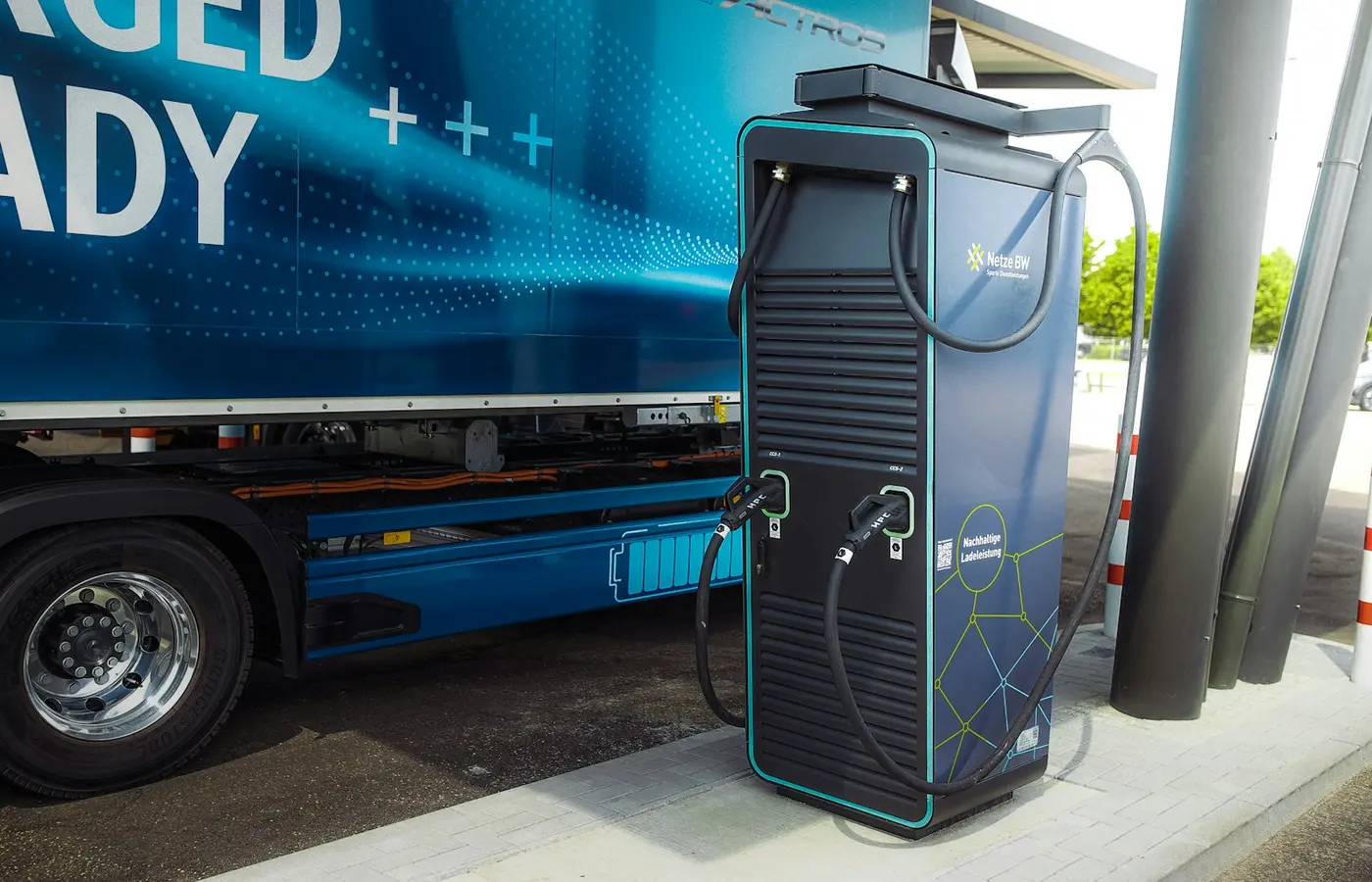
Leasing can reduce the upfront capital exposure of adopting Chinese electric trucks. It does not, however, remove the operational and commercial risks that determine whether the fleet works in service.
For a fleet buyer, the central question is not whether a monthly lease payment appears competitive. It is whether the proposed truck, battery, energy network and service package can reliably support a defined route at an understood all-in cost. That requires more diligence than comparing vehicle brochures or headline rental rates.
China’s electric-truck market includes conventional operating leases, finance leases, short-term rentals, rent-to-own arrangements and vehicle-battery separation structures. Terms vary materially between providers, vehicle classes and operating regions. A contract should therefore be treated as an operating-system agreement, not simply as vehicle financing.
Start with the operating model, not the monthly lease rate
Before requesting offers, define the work the truck must do. This creates a baseline against which leasing proposals can be tested.
A useful route profile should include:
- Daily and maximum shift distance
- Payload, cargo density and axle-loading requirements
- Number of trips and loading or unloading dwell time
- Road gradient, typical speed and congestion exposure
- Depot access and available grid capacity
- Operating hours, including night work
- Seasonal temperature and weather conditions
- Driver handover arrangements and planned downtime
These inputs matter because a lease that suits a fixed, high-utilisation quarry route may be unsuitable for regional distribution with irregular duty cycles. A battery-swapping arrangement may work well where trucks repeatedly pass compatible stations, but it may add complexity where routes change frequently or vehicles operate outside a defined corridor.
Buyers should also establish which lease structure is actually being offered:
- Operating lease: The lessor generally retains more residual-value exposure, subject to return conditions and exclusions.
- Finance lease: The fleet may take on more of the economic risks and obligations associated with ownership, even if legal title remains with the lessor during the term.
- Short-term rental: Provides flexibility but may carry a higher unit cost or restricted vehicle availability.
- Lease-to-own or rent-to-own: Requires a clear purchase formula, including how battery ownership is handled.
- Vehicle-and-battery separation: The truck and battery are priced separately, often through a battery-rental or battery-as-a-service arrangement.
The International Council on Clean Transportation’s analysis of 49-tonne electric tractor-trailers in China illustrates why the distinction matters. Its comparison of truck ownership with battery ownership against a battery-as-a-service model shows that battery costs can be shifted from upfront capital expenditure to recurring payments. That may improve initial affordability, but it does not by itself prove that a lease is cheaper for a specific fleet. The ICCT paper should be read as a route- and assumption-specific cost framework, not as a universal lease-price benchmark.
Verify the truck, battery and body configuration in the contract
A proposal can describe a vehicle family while leaving the final delivered specification unclear. Fleet buyers should require a signed vehicle schedule or annex that identifies exactly what is being supplied.
At minimum, the schedule should cover:
- Manufacturer, model and chassis configuration
- Vehicle identification number, or a documented VIN allocation process
- Motor and battery specification, including usable capacity where disclosed
- Battery ownership, rental or swapping arrangement
- Charging interface and supported charging equipment
- Swap-system compatibility, where applicable
- Axle layout, gross vehicle weight and rated payload
- Cargo body type, internal dimensions and auxiliary equipment
- Tyres, telematics hardware and safety equipment
- Delivery condition, registration responsibility and required approvals
This is especially important for export-oriented fleets. A truck configured for China’s domestic market may require different homologation, registration, lighting, bodywork, charging equipment or safety documentation in another jurisdiction. The contract should identify who is responsible for obtaining applicable approvals and what happens if the vehicle cannot be registered for the intended operation.
For swap-capable trucks, verify more than the vehicle’s physical battery format. The fleet should confirm that the proposed battery pack, truck software and relevant stations are contractually compatible for the full term. A generic sample contract may be useful as a prompt for what to document, but it should not be mistaken for a standard market agreement.
Test vehicle availability and replacement-vehicle commitments
An announced leasing platform, factory expansion plan or future fleet target is not evidence that trucks will be available for a buyer’s start date. Procurement teams should ask for written evidence of allocation.
Key questions include:
- Are the vehicles in existing inventory, in production, or only planned?
- What is the contractual delivery date for each unit?
- Is production allocation reserved for the customer?
- What pre-delivery inspection and acceptance process applies?
- What remedies apply if delivery is late or the specification changes?
- Is a temporary replacement truck available during delays?
The service-level agreement should be equally specific. A promise of “uptime support” has little value unless it defines what counts as downtime, when the clock starts, and which exclusions apply.
A practical uptime schedule should state the response time for roadside assistance, workshop admission targets, parts lead-time commitments and escalation contacts. It should also define whether downtime caused by the battery, charging equipment, swap station, software, cargo body or an accident is included or excluded.
For critical operations, negotiate a replacement-vehicle commitment. The contract should specify the substitute vehicle’s minimum payload, energy capability and availability window. A diesel replacement may preserve delivery capacity in an emergency, but it may create fuel-cost, emissions-compliance or driver-training issues. Those consequences should be considered before accepting it as the default remedy.
Audit charging or battery swapping as a service network
Energy provision is an operational dependency, not an optional add-on. A truck lease should not be approved until the fleet has validated how, where and at what cost vehicles will recharge or swap batteries.
Depot charging
For depot charging, the buyer should obtain written confirmation of:
- Available grid capacity and any required utility upgrades
- Charger type, power rating and number of charging points
- Installation timetable and commissioning responsibility
- Electricity tariff structure and billing process
- Ownership of chargers and civil works at lease end
- Repair, software-update and warranty obligations
- Backup arrangements during equipment outages
A charger quotation is not the same as usable site capacity. The fleet should verify utility approval, installation constraints and whether charging can occur during the hours when trucks are parked.
Public charging and corridor charging
If the operation depends on public or third-party charging, assess each route rather than relying on a national or provincial network map. Check access hours, bay dimensions, vehicle queuing, payment methods, charging-power availability and access for articulated or rigid trucks. Confirm whether the fleet can use the sites under its own account or must use a lessor-controlled platform.
Battery swapping
Battery swapping can shorten energy stops in some structured operations, but it introduces service-network reliance. Ask for a route-level station list, opening hours, supported vehicle and battery types, payment method, contingency procedures and a compatible-battery inventory policy.
The agreement should also address station changes. If a station is relocated, closed or capacity-constrained, who bears the resulting operational cost? Buyers should seek notice requirements, alternative-site commitments and remedies when the contracted network no longer supports the agreed route.
Make maintenance, warranty and uptime responsibilities explicit
Electric trucks have different maintenance requirements from diesel trucks, but they still require planned servicing, tyres, brake work, body repairs, diagnostics and component support. Responsibility should not be inferred from marketing language such as “full-service leasing.”
Create a responsibility matrix that assigns cost and operational ownership for:
- Scheduled preventive maintenance
- Unscheduled repairs and roadside assistance
- Tyres, brakes and other wear items
- Accident repair and insurance deductibles
- Battery faults and battery-health diagnostics
- High-voltage system repairs
- Charging-equipment faults
- Swap-station faults and stranded-vehicle recovery
- Telematics hardware, data connectivity and software updates
- Driver misuse, overloading or improper charging
The fleet should receive the maintenance schedule, service-network map, warranty terms and workshop escalation process before signing. If the lessor makes an availability or operating-cost claim, ask for evidence from comparable vehicles operating in a similar duty cycle. A performance statement based on a lighter route, a different climate or an unladen demonstrator should not be used as the basis for an uptime guarantee.
Telematics access also deserves attention. The fleet needs sufficient access to vehicle location, energy use, fault codes, charging events and maintenance status to manage its operation. The contract should define data ownership, permitted use, retention periods and access after termination, particularly where vehicles or data platforms operate across borders.
Price the full contract, including energy, penalties and early exit
A low fixed rent can conceal substantial variable charges. Compare bids using a total contractual cost model, not a headline monthly payment.
The model should include:
| Cost item | What to verify |
|---|---|
| Fixed vehicle rent | Term, payment timing, deposit and tax treatment |
| Battery charge | Rental fee, swap fee, minimum consumption or utilisation commitments |
| Energy cost | Electricity tariff, charging service fee, demand charges and settlement method |
| Maintenance | Included services, wear-item exclusions and labour rates |
| Insurance | Required coverage, deductible, claims process and cross-border validity |
| Mileage or utilisation | Included allowance, excess charges and measurement method |
| Return charges | Inspection standard, damage valuation and excess-wear fees |
| Indexation | Currency, inflation, electricity-price or interest-rate adjustment clauses |
| Early exit | Termination payment, return process and continuing battery obligations |
Run at least four scenarios: expected utilisation, lower-than-planned utilisation, higher utilisation and early return. This exposes minimum-use charges, mileage penalties and energy-price sensitivity that may not be visible in a standard proposal.
The same principle applies to battery-as-a-service. The battery fee may reduce the initial truck price, but the fleet must understand whether the charge is per month, per swap, per unit of energy, per kilometre, or a combination of these. It should also be clear whether fees continue when a vehicle is unavailable due to a fault outside the fleet’s control.
Allocate residual-value and technology-change risk before the end of term
Residual-value risk is difficult to forecast for electric trucks because vehicle platforms, battery formats, software and energy networks continue to evolve. A lessor may be better placed than an individual fleet to hold this risk, but only if the contract actually assigns it to the lessor.
Examine the end-of-term provisions closely:
- Is there a guaranteed buyback, purchase option or repurchase undertaking?
- How is the buyout price calculated?
- What vehicle condition is allowed at return?
- How will battery state of health be tested?
- Who selects the testing method and pays for it?
- Can the lessor charge for refurbishment beyond normal wear?
- What happens if a battery type, software platform or swap service is discontinued?
A stated residual value is not enough. Buyers should ask how the lessor underwrites it: through actual used-truck remarketing, a manufacturer repurchase agreement, a disposal channel, or simply an internal forecast. The answer affects whether the residual-value promise is commercially credible.
For vehicle-and-battery separation, clarify whether the returned vehicle must include a particular battery, whether battery condition affects return charges, and whether a replacement battery supplied during the term changes the economics. This is one area where legal review is essential.
A procurement checklist for comparing Chinese electric truck lease offers
Use a common request-for-proposal template so every bidder provides comparable evidence.
Required documents
- Full draft lease agreement and all annexes
- Vehicle specification schedule and delivery plan
- Battery ownership, rental or swapping terms
- Charging or swap-network service agreement
- Maintenance agreement and warranty documents
- Insurance allocation and claims procedure
- Fee schedule, rate card and sample invoice
- Return-condition guide and end-of-term valuation method
Technical and operational checks
- Validate payload, body configuration and route suitability
- Confirm registration and homologation requirements for the operating market
- Test depot electricity capacity and charger installation schedule
- Map charging or swap coverage against actual routes and shifts
- Review workshop locations, parts support and roadside response coverage
- Confirm telematics access and data-handling terms
Commercial and legal checks
- Compare all-in cost under multiple utilisation scenarios
- Identify every indexation, minimum-use and early-exit clause
- Check delayed-delivery remedies and replacement-vehicle commitments
- Confirm governing law, dispute process and enforceability of key service commitments
- Obtain local advice on registration, tax, insurance, data transfer and cross-border operation where relevant
The practical takeaway is simple: a Chinese electric-truck lease should be assessed as a bundled mobility and energy service. The most attractive offer is not necessarily the one with the lowest monthly payment. It is the one that clearly matches the fleet’s duty cycle, provides dependable energy access, assigns maintenance and downtime responsibilities, and leaves no ambiguity about costs or end-of-term risk.
FAQ
What is the difference between leasing a Chinese electric truck and using battery-as-a-service?
A truck lease covers use of the vehicle for a defined period. Battery-as-a-service separates the battery from the vehicle purchase or lease arrangement, with the battery provided through a recurring rental, swap or energy-service fee. The two can be combined, but the buyer should review each agreement separately because vehicle availability, battery access and payment obligations may be governed by different terms.
Who normally pays for charging, battery swapping and maintenance under an electric truck lease?
There is no universal arrangement. A full-service lease may include some maintenance, while electricity, swap fees, tyres, insurance and damage costs may remain the fleet’s responsibility. The contract should allocate each item explicitly rather than relying on general descriptions of an “all-inclusive” service.
What should a fleet buyer ask for before relying on a lessor’s uptime commitment?
Ask for the service-level agreement, workshop and roadside-assistance coverage, response targets, parts commitments, downtime definition, exclusions, escalation procedure and replacement-vehicle terms. If performance claims are made, request evidence from comparable routes and operating conditions.
How can a lease contract limit residual-value risk for an electric truck fleet?
Potential mechanisms include an operating lease with a clear return standard, a guaranteed buyback, a documented purchase-option formula, an agreed battery state-of-health test and remedies if a battery or energy-service platform is discontinued. The fleet should verify that these commitments are contractually binding and supported by a credible lessor or manufacturer process.