
Technology
China EV Battery Swapping: How It Works, Who It Suits, and Where the Model Fits
How China’s EV battery-swapping model works, why fleets are a key use case, and what limits wider adoption for passenger cars.
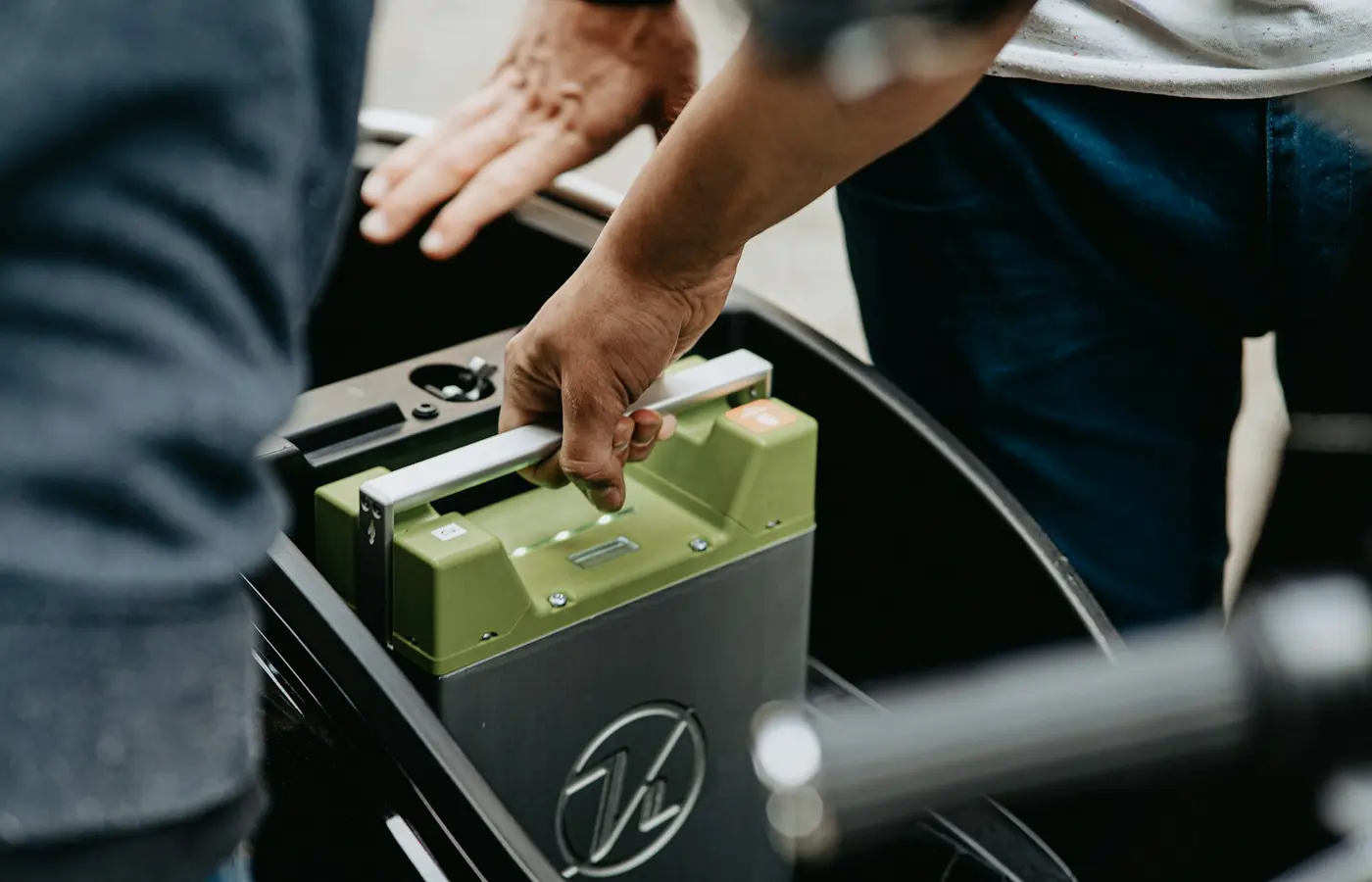
China EV battery swapping offers a different answer to the charging-time problem: instead of waiting while an EV battery is replenished, the vehicle enters a dedicated station and its depleted pack is exchanged for a charged one.
The appeal is easy to understand. A well-designed automated station can complete the exchange in minutes, based on operator claims, helping vehicles return to service quickly. But swapping is not simply faster charging. It requires compatible vehicle architectures, a controlled battery inventory, station automation, battery-condition data and enough regular demand to justify the infrastructure.
That is why battery swapping in China has developed most clearly in specific settings: branded passenger-car ecosystems, taxis and ride-hailing fleets, and heavy-duty vehicles operating on predictable routes. It is a potentially useful complement to plug-in charging, rather than a universal replacement for it.
How battery swapping differs from plug-in charging
With plug-in charging, electricity flows directly into the battery installed in the vehicle. The driver connects a cable at home, work, a public charger or a fleet depot. Charging speed depends on the vehicle, battery temperature, charger power, grid capacity and battery-management strategy.
Battery swapping changes the physical process. At a swap station, the vehicle is positioned over automated equipment. The station identifies the vehicle and battery, releases the pack from the underbody, removes it, and installs a charged compatible pack. The removed battery is then inspected, stored and recharged for later use.
The distinction has major commercial consequences:
- Charging keeps the same battery with the same vehicle. The owner or lessee retains the pack throughout its life.
- Swapping turns batteries into managed network assets. A station operator must hold enough charged packs to serve arriving vehicles while depleted packs recharge.
- Charging infrastructure can serve many vehicle designs. Connector standards matter, but most modern EVs can use compatible public charging equipment.
- Swapping needs deeper vehicle integration. The battery enclosure, mounting points, electrical interfaces, cooling arrangements, communications systems and safety checks must all work with the station.
This central battery-management model can give operators more control over charging schedules, battery diagnostics and inventory. JATO Dynamics notes that batteries in swapping systems can be stored and recharged centrally, potentially allowing operators to charge packs at less time-sensitive periods rather than relying solely on rapid charging at the vehicle.
That is an operational possibility, not a guarantee of lower cost or longer battery life. The outcome depends on the charging profile, battery chemistry, thermal management, electricity tariffs and how effectively the operator manages its assets.
The two core business models: branded networks and shared platforms
China’s battery-swapping market does not operate through one universal national network. In practice, the model generally falls into two broad categories.
Automaker-led passenger-car networks
An automaker can design vehicles around its own battery packs and operate, finance or coordinate a proprietary station network. This creates close integration between the vehicle, battery-management software, customer account, station hardware and after-sales service.
The advantage is control. The automaker can define which vehicles are eligible, monitor battery health across the fleet and tailor subscriptions or battery-rental plans to its customers. The drawback is that network expansion can be capital intensive, while stations may serve only a limited number of compatible models.
For private buyers, this makes the value proposition highly location-dependent. A swap-capable car can be convenient if stations cover regular urban journeys and highway routes. It may offer little practical benefit if the owner lives outside the network footprint or already has reliable home and workplace charging.
Standardised battery platforms and battery-as-a-service
A second model aims to separate the battery from the vehicle purchase and make compatible packs available through a common platform or partnership structure. Battery manufacturers, automakers, battery-asset companies, station operators and fleet customers can each play different roles.
The customer may buy the vehicle without owning the battery outright, then pay a monthly battery-service fee, an energy fee, a per-swap charge or some combination of these. This can lower the vehicle’s upfront purchase price, but it also creates a continuing contractual relationship with the battery-service provider.
CATL has promoted its Choco-SEB battery-swapping platform as a standardised approach involving battery packs, stations and compatible vehicle programmes. The strategic objective is broader compatibility than a single-brand system, but a shared platform should not be confused with unrestricted cross-brand interoperability. Participating vehicles still need to be designed to the relevant physical and electronic specifications.
As Reuters reported in 2022, the sector’s strategic challenge is that vehicle makers have historically used differing battery and vehicle architectures. Those differences make it difficult to create a network that works equally across all brands.
Why standardisation matters — and why it remains difficult
A battery pack is not a fuel container that can be exchanged with minimal coordination. It is a high-voltage component integrated into the structure, safety systems and software of the vehicle.
For a swap system to work reliably, participants must align on far more than battery capacity. Important requirements include:
- pack dimensions and underbody clearance;
- mounting locations and locking mechanisms;
- high-voltage and low-voltage electrical connections;
- cooling-system interfaces where relevant;
- vehicle-to-station communications;
- battery identification and traceability;
- state-of-health and state-of-charge reporting;
- inspection, fire-safety and emergency procedures;
- software rules governing which pack can be installed in which vehicle.
A network can therefore be standardised within a defined platform while remaining incompatible with vehicles outside it. This distinction matters for international buyers and suppliers assessing claims about “open” swapping networks.
China’s policy environment has encouraged work on battery-swapping standards and pilot applications, but technical standards alone do not create a functioning commercial network. Compatible models must reach the market, stations must be available where vehicles operate, and the battery-service model must be acceptable to customers.
The practical test is not whether a standard exists on paper. It is whether a driver can arrive at a station, receive an approved pack, understand the price and service terms, and continue operating with predictable uptime.
Why fleets are often the strongest use case
Battery swapping can make the most operational sense when vehicle downtime is expensive and daily utilisation is high.
A taxi, ride-hailing car, delivery vehicle or truck may travel far more hours each day than a privately owned passenger car. If a vehicle needs frequent energy replenishment, a shorter stop can have a direct effect on productive operating time. Fleet operators also tend to have more predictable routes, centralised management and repeatable demand patterns.
JATO identifies medium- to high-frequency commercial users — including ride-hailing vehicles, taxis and heavy-duty trucks — as important application scenarios for battery swapping. Reuters similarly reported that heavily utilised fleets can offer a clearer path to profitable station deployment because a relatively limited number of vehicles can generate recurring demand.
Heavy-duty operations can be particularly relevant where trucks work in constrained, intensive environments. The BBC has highlighted short-distance, high-intensity uses such as factories and mines as settings where swapping may have a more clearly defined business case.
These are not automatic wins. A fleet still needs to assess:
- Duty cycle: How many kilometres, shifts and energy stops does each vehicle require?
- Route concentration: Can stations be placed at depots, logistics hubs, mines, ports or key corridors?
- Station utilisation: Will enough vehicles use each station frequently enough to support equipment, land, power and maintenance costs?
- Battery inventory: How many spare packs are needed during busy periods?
- Vehicle availability: Are suitable swap-compatible models available in the required payload, wheelbase or body configuration?
- Total operating cost: Does the time saved outweigh battery-service fees, vehicle costs and network commitments?
For fleets, the key question is usually not whether swapping is technologically possible. It is whether it improves asset utilisation across a specific operating network.
What determines whether swapping works for passenger cars
For a private EV owner, swapping can be convenient, but its usefulness depends on a more personal set of conditions.
Station coverage on real journeys
A headline station count is less important than coverage near home, work and regular intercity routes. A dense network in one city does not necessarily translate into useful access across a country or province.
Buyers should check the operator’s current station map before treating swapping as a core ownership benefit. Maps and network counts change, and announced expansion targets are not the same as operating stations.
Battery ownership and service terms
Battery-as-a-service can reduce the initial vehicle price by separating the battery from the car purchase. However, it may introduce a recurring monthly charge and rules around upgrades, replacement packs, service areas and contract transfers.
The ownership issue is also psychological. As the BBC notes, some consumers may be uncomfortable exchanging a newer battery for an older one. A professionally managed system can address this through battery-health monitoring and service guarantees, but buyers should read the terms carefully rather than assume all packs have identical remaining value.
Home and workplace charging access
Drivers with dependable overnight charging may value swapping differently from drivers who rely on public infrastructure. If charging fits naturally into daily parking time, the time-saving argument for swapping weakens. If a driver lacks private charging and travels heavily, swap access may matter more.
Resale and long-term network confidence
A swap-capable vehicle’s value may be linked to the future availability of compatible stations and batteries. That does not make the vehicle unsuitable, but it means buyers should consider the operator’s network commitment, subscription transfer rules and the availability of conventional charging as a fallback.
The trade-offs: speed does not remove infrastructure costs
A battery swap may be quick for the driver, but the system behind it is complex. Stations need automated equipment, safety systems, grid connections, software, maintenance and physical space. They also need batteries sitting in inventory rather than installed in vehicles.
That inventory is central to the economics. A station must maintain enough charged packs to meet demand peaks, while depleted packs recharge. Too few packs can create queues or unavailable service. Too many can tie up capital in batteries that are not being used productively.
Utilisation is therefore critical. A lightly used station may provide strategic coverage but struggle commercially. A busy station may need more battery inventory, stronger grid capacity and careful scheduling to avoid bottlenecks.
Plug-in charging has its own constraints, including grid upgrades, charger reliability, dwell time and peak-demand management. But charging networks can generally support a wider range of vehicles without requiring the same level of mechanical battery compatibility.
This is why swapping should be viewed as a targeted infrastructure model. It can solve a specific uptime problem, especially in controlled fleets or within an integrated vehicle ecosystem. It does not eliminate the need for public, workplace, depot and home charging.
What to watch in China’s battery-swapping market
For analysts, suppliers and fleet operators, the most useful signals are operational rather than promotional.
Watch for the following:
- Compatible vehicle launches: A station network has more value when multiple usable vehicle models are actually delivered.
- Station density in defined areas: Focus on coverage along fleet routes, city operating zones and freight corridors rather than national announcements alone.
- Fleet contracts and deployments: Repeatable fleet demand is more meaningful than isolated demonstrations.
- Battery-service financing: The model depends on who owns the batteries, how those assets are financed and how customer payments are structured.
- Interoperability evidence: Confirm whether compatibility applies across brands, within a partnership or only within one vehicle platform.
- Service and utilisation disclosures: Station throughput, downtime and battery availability are more informative than construction targets.
- Policy implementation: Local pilot programmes, technical standards and incentives should be evaluated by jurisdiction and date, since policy support can change.
China remains the most important market for observing battery swapping at scale because it combines a large EV base, active infrastructure investment, major battery manufacturers and high-utilisation commercial transport segments. Even so, the model’s success will vary by vehicle type, geography and operating pattern.
FAQ
How long does an EV battery swap take in China?
Operators commonly present swapping as a process that can take only a few minutes. Actual time can vary with station design, vehicle positioning, queueing, system checks and battery availability. Operator timing claims should not be treated as universal real-world averages.
Do drivers own the battery in a battery-swapping EV?
Not always. Some programmes allow the battery to be rented or subscribed to separately from the vehicle through a battery-as-a-service arrangement. Other programmes may use different ownership structures. Buyers should check the specific contract, monthly charges, eligibility rules and transfer conditions.
Can any electric car use the same battery-swapping station?
No. Swapping requires compatible pack dimensions, mounting hardware, electrical connections, cooling arrangements and software. A shared platform may support several participating models, but it is not the same as universal compatibility across all EV brands.
Why is battery swapping often better suited to taxis, trucks and other fleets?
High-utilisation fleets can place a greater value on minimising downtime. Predictable routes, depot operations and concentrated demand can also help justify station investment and battery inventory. The model is most compelling when it improves the economics of a clearly defined operating cycle, not simply because it is faster than charging.