Industry
China’s Low-Speed Electric Vehicle Segment: Uses, Categories and Sourcing Checks
How China’s low-speed electric vehicles differ from road-legal EVs, where they are used, and what buyers should verify before sourcing.
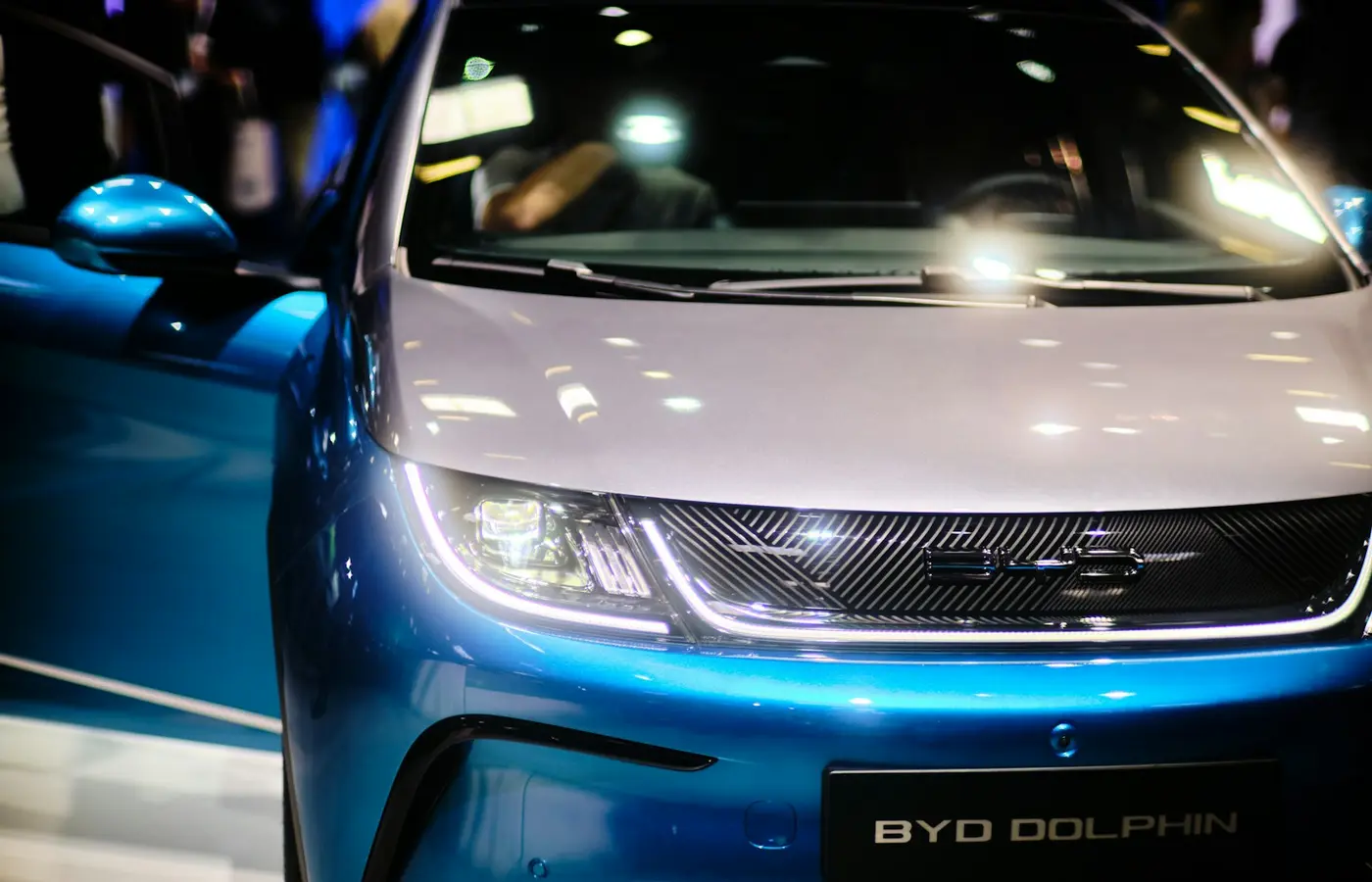
A low-speed electric vehicle in China is not simply a lower-priced alternative to a mainstream passenger EV. The phrase can cover several very different products: small four-wheel mobility vehicles, electric cargo tricycles, enclosed local-transport vehicles, and site-only tourist or factory vehicles.
For buyers, distributors and fleet operators, the first question is therefore not battery range, top speed or unit price. It is what legal and operational category the exact vehicle belongs to in its intended market. A vehicle may be suitable for a factory, resort, private estate or other controlled site while being unsuitable for public-road registration. Conversely, some electric three- and four-wheel vehicles are approved road motor vehicles, but their eligibility depends on the specific manufacturer, model and documentation.
China’s low-speed vehicle supply base remains relevant because it serves practical local-mobility and light-cargo applications. But product marketing labels such as “elderly mobility vehicle,” “golf cart,” “sightseeing car” or “no-licence vehicle” are not reliable evidence of road-use rights.
What does “low-speed electric vehicle” mean in China?
In Chinese policy discussions, low-speed electric vehicles generally refer to electric three- and four-wheel vehicles used for passengers or cargo that have low operating speeds, short range and comparatively basic battery and motor systems. The official description includes products commonly marketed as elderly mobility vehicles.
That description comes from a 2018 notice issued by six central government departments on strengthening management of the segment. The notice stated that many such products fell within the broad scope of road motor vehicles but had not been incorporated into the motor-vehicle management system and did not meet relevant motor-vehicle safety requirements for braking, steering and collision performance. The policy focus was on rectifying unregulated production and sales, rather than creating one new nationwide retail category with uniform road-use rights. The full notice is available through the Chinese central government portal.
That distinction remains important. “Low-speed electric vehicle” is useful as a market and policy term, but it should not be treated as a single national type-approval class with a universally applicable technical threshold.
In practice, local authorities may define and manage the affected products differently. Some local measures focus on vehicles not listed in China’s road motor vehicle production-and-product announcement system. Others also address local transition arrangements for existing vehicles already in use.
Where these vehicles are used: local mobility, light cargo and controlled sites
The China low speed vehicle market is best understood through its operating environments rather than its sales labels.
Short-distance personal mobility
Small enclosed three- or four-wheel electric vehicles are often aimed at short local trips. They may be marketed toward older users or customers seeking a weather-protected alternative to an electric bicycle or scooter.
However, a cabin, four wheels and a steering wheel do not make a vehicle equivalent to a road-legal passenger EV. Whether it can be registered or driven on public roads depends on its exact classification, approval status and local rules.
Light cargo and local delivery
Electric three-wheelers and compact cargo four-wheelers can be used for deliveries, market logistics, agricultural support and neighborhood transport. This is a commercially important segment, but it includes both compliant road vehicles and products that may be intended only for limited or non-road operation.
A buyer should not assume that every electric cargo tricycle falls into the same category. The manufacturer, model designation, technical configuration and documentary trail all matter.
Campuses, factories, resorts and scenic areas
Another group consists of vehicles designed for controlled premises: factory compounds, logistics yards, tourist attractions, resorts, golf facilities, large residential developments and campuses.
These may include non-road sightseeing vehicles and other site-use vehicles. Chongqing police guidance, for example, distinguishes such vehicles from low-speed electric vehicles and describes non-road tourist sightseeing vehicles as special-purpose vehicles used in defined areas such as factories, tourist sites and amusement venues. The guidance states that these vehicles are not permitted to operate on public roads. See Chongqing’s policy Q&A.
For a private-site fleet, that limitation may be entirely acceptable. The procurement requirement should then be framed around site safety, passenger capacity, gradient capability, charging arrangements, maintenance access and operator controls—not assumed public-road capability.
The categories buyers must not confuse
Several vehicle types can appear visually similar in supplier catalogues. Their regulatory treatment can be very different.
| Category | Typical purpose | Key sourcing question |
|---|---|---|
| Low-speed electric three- or four-wheeler | Local passenger or cargo movement | Is the exact model approved and registrable for the intended road use? |
| Approved road electric three- or four-wheel vehicle | Public-road transport within its approved class | Is the manufacturer and exact model listed in the relevant official system, with matching documents? |
| Electric bicycle | Pedal-assisted short-distance mobility | Does it meet the applicable e-bike standard and local registration rules? |
| Disability motorized wheelchair | Mobility aid for qualifying users | Does it meet the relevant disability-mobility definition and local registration requirements? |
| Non-road sightseeing or site vehicle | Defined sites such as resorts, factories or scenic areas | Is it restricted to controlled premises, and can the site support safe operation and charging? |
Electric bicycles are a separate category
Electric bicycles are generally treated separately from motor vehicles when they meet applicable national requirements. A local government consumer guide summarizes the GB 17761-2018 parameters commonly associated with compliant e-bikes, including pedal capability, a maximum design speed of 25 km/h, a maximum vehicle mass of 55 kg including the battery, motor output of no more than 400 W and nominal battery voltage of no more than 48 V. The guide is available from Lixian government.
A larger enclosed four-wheeler is not transformed into an e-bike merely because its speed or power output is limited.
Disability mobility devices have distinct treatment
Compliant disability motorized wheelchairs are also not simply another name for low-speed electric vehicles. Chongqing’s guidance describes them as non-motor vehicles designed for people with lower-limb disabilities and subject to their own national standard and local registration process. The exact definition and registration requirements should be checked in the jurisdiction where the vehicle will operate.
Sightseeing vehicles are not public-road passenger EVs
A tourist shuttle or sightseeing vehicle may have multiple seats, a roof and electric propulsion, but its intended environment may be a designated attraction, pedestrian area or private complex. It should not be marketed or procured as a substitute for a registered road vehicle without independent confirmation from the relevant authorities.
Why a low-speed vehicle is not automatically a road-legal passenger EV
The central sourcing distinction is between a vehicle that is within China’s road motor vehicle approval and registration system and one that is not.
For an approved road motor vehicle, buyers typically need to establish that the exact manufacturer and model are included in the relevant Ministry of Industry and Information Technology (MIIT) production-and-product announcement records, and that the vehicle’s delivered configuration matches the paperwork. Depending on the product and transaction, supporting documents may include a factory certificate, certificate of conformity, compulsory certification evidence where applicable and a valid motor-vehicle sales invoice.
A 2025 consumer notice from the Xinjiang market-regulation authority advises buyers of electric three- and four-wheel vehicles to check the MIIT announcement listing, CCC certification, factory certificate and conformity documentation, as well as the motor-vehicle invoice. It also warns that low-speed electric four-wheel vehicles outside the announcement system cannot be assumed to have the documentation required for normal motor-vehicle registration. Read the Xinjiang authority’s guidance.
This does not mean every electric three-wheeler or four-wheeler is barred from public roads. Some are approved motor vehicles. Nor does it mean a low maximum speed automatically determines legality. The decisive issue is the exact vehicle’s classification, approval status, documentation and the rules in the place of operation.
Local notices illustrate the point. Chongqing’s 2024 notice describes the low-speed electric vehicles covered by its policy as products not included in the road vehicle announcement system. The notice is here. Tianjin’s policy explanation similarly links its controls on non-compliant low-speed vehicles to products that have not received national motor-vehicle product approval. See Tianjin police guidance.
A sourcing checklist: verify intended use before comparing price or range
A disciplined review should begin before supplier quotations are compared.
1. Define the operating environment
State whether the vehicle will operate on public roads, private land, a factory site, a resort, a warehouse campus, a port, a farm or a mixed environment. Also define passenger or cargo use, expected loads, gradients, weather exposure, charging access and daily operating distance.
If public-road use is essential, make registration eligibility a non-negotiable procurement condition rather than an issue to resolve after delivery.
2. Request the exact model identity
Ask the supplier for:
- Manufacturer legal name and manufacturing address
- Exact model designation, not only a catalogue name
- VIN or chassis-identification format and sample vehicle identification details
- Technical specification sheet for the supplied configuration
- Clear photographs of the vehicle, labels and identification plate
- Battery chemistry, rated voltage, capacity and battery supplier information
- Charger specification, input requirements and plug configuration
- A written intended-use statement
A generic brochure or a photograph of a similar vehicle is not sufficient for a compliance review.
3. Check official listing and documentation at model level
For a vehicle represented as road legal in China, verify the exact manufacturer and model against the official MIIT road-vehicle announcement information. Ask the supplier to provide the relevant listing reference, but do not rely solely on a screenshot or a sales representative’s statement.
Then compare the listing and documents against the actual supplied configuration. A change in body type, seating, motor, battery, axle arrangement or dimensions can affect whether a document set corresponds to the delivered vehicle.
4. Separate Chinese compliance from export-market compliance
Chinese paperwork does not by itself establish eligibility for import, registration, insurance or operation in another country.
Before placing an export order, obtain written guidance from the destination market’s relevant customs, transport, registration, type-approval, electrical-safety or insurance authority. Requirements may concern vehicle type approval, lighting, braking, occupant restraint, electromagnetic compatibility, battery transport, charger safety, spare parts support and identification marking.
5. Review the non-regulatory operating package
Even where a vehicle is suitable for a controlled site, commercial due diligence remains necessary. Request written warranty terms, spare-parts lists, battery replacement policy, charger information, maintenance intervals, wiring diagrams where appropriate, and service-response arrangements. These are supplier claims and contractual matters, not evidence of road legality.
Check local rules separately: transition arrangements do not create national permission
Local management measures can be especially misleading when viewed out of context.
Some Chinese cities have used transition periods or information-tagging arrangements for existing low-speed vehicles while reducing the installed fleet. These measures are local, time-limited and conditional. They should not be interpreted as a national approval route for new purchases.
For example, Chongqing’s September 2024 notice extended a transition period for certain existing low-speed electric vehicles until March 31, 2027. During that period, its notice sets conditions including information coding and compliance with specified road-safety obligations; after the transition period, the covered vehicles may not operate on roads. That is a local management arrangement, not proof that a newly sourced vehicle can be registered anywhere in China.
Tianjin’s local measures took effect on May 1, 2024, according to its police policy Q&A. The broader lesson is straightforward: a rule in one municipality, including a temporary arrangement, does not determine the position in another municipality.
Buyers planning Chinese domestic operation should check the latest official notice from the exact city or county where the vehicle will be used. Export buyers should instead start with the importing jurisdiction’s rules.
What to watch when buying from China’s low-speed vehicle supply base
The segment can offer useful vehicles for controlled, low-distance applications. It can also create avoidable compliance risk when a supplier’s marketing language is allowed to substitute for classification evidence.
The practical approach is to classify first and buy second:
- Treat “elderly mobility,” “golf cart,” “tourist vehicle” and “no licence required” as commercial labels, not legal conclusions.
- Match the vehicle to its permitted environment rather than attempting to retrofit a site vehicle into a public-road fleet.
- Verify model-level documentation, not just the supplier’s company credentials.
- Confirm local rules where the vehicle will operate, including any registration, driver-licensing, insurance or route restrictions.
- For exports, obtain destination-market confirmation before shipment.
- Evaluate batteries, chargers, parts availability and after-sales support as separate procurement workstreams.
The main takeaway is not that China’s low-speed vehicles are one uniform risk category. It is that the market contains multiple product types serving different uses. A buyer who establishes the intended use, exact model identity and applicable legal category early can compare suppliers on meaningful terms. A buyer who starts with price and range may discover too late that the vehicle cannot be used where it was intended.
FAQ
Can a low-speed electric four-wheeler in China be registered for public-road use?
Not automatically. Registration depends on the vehicle’s exact classification, its inclusion in the relevant road motor vehicle approval system, matching documentation and the rules of the locality where it will operate. Many products commonly described as low-speed four-wheelers are not treated as registrable road motor vehicles.
How can a buyer check whether an electric three- or four-wheel vehicle is listed in China’s MIIT vehicle announcement system?
Start with the exact manufacturer name and model designation, then use the official MIIT announcement information system or request a verifiable listing reference from the supplier. Cross-check the official record against the vehicle’s identification details and delivered specification. The Xinjiang market-regulation authority’s consumer guidance also directs buyers to use MIIT announcement searches and to review supporting documents.
Are sightseeing electric vehicles allowed on public roads in China?
Non-road sightseeing vehicles are generally intended for designated sites rather than public roads. Chongqing’s policy Q&A identifies non-road tourist sightseeing vehicles as site-use special-purpose vehicles and states that they cannot operate on public roads. Local rules and the exact vehicle category should still be checked for the intended location.
Does a Chinese vehicle certificate make a low-speed EV legal to import and operate in another country?
No. Chinese documentation may be relevant to identifying the vehicle and its Chinese-market status, but it does not establish compliance with another country’s import, type-approval, registration, insurance, electrical-safety or road-use requirements. Confirm those requirements with the responsible authority in the destination market before ordering.