
Commercial Vehicles
Chinese Electric Bus Charging: How to Match Depot Power, Charging Windows and Route Duty Cycles
A practical framework for evaluating Chinese electric buses against real route energy use, depot capacity, charging windows and local operating requirements.
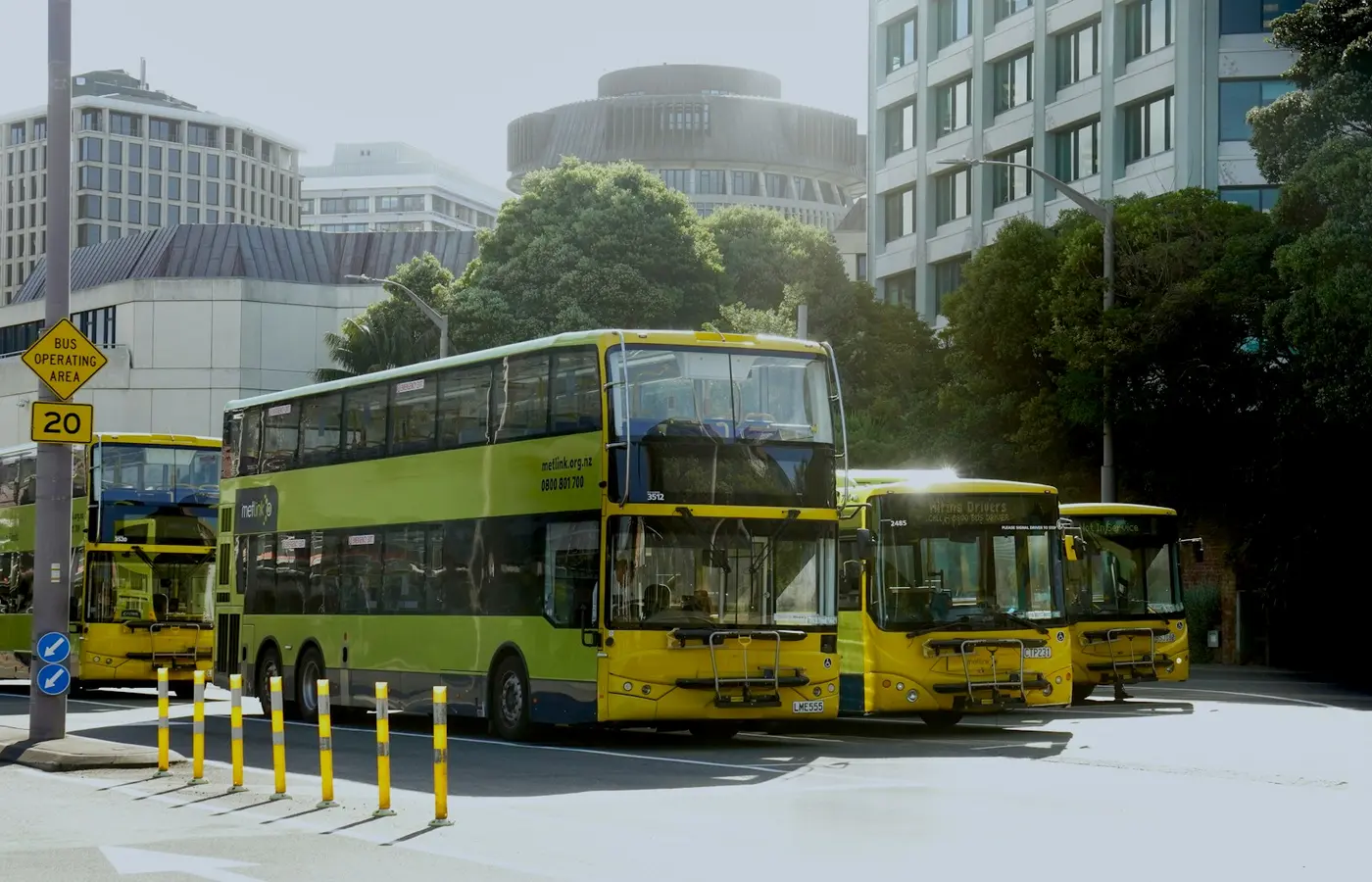
A Chinese electric bus is not ready for procurement simply because its published range appears to cover a route. The operational question is more demanding: can the vehicle complete its daily duty cycle, return with an acceptable energy reserve, and recharge reliably within the depot’s real electrical and scheduling constraints?
That question should be answered before comparing suppliers, battery sizes or vehicle purchase prices. Chinese manufacturers offer a wide variety of battery-electric bus configurations, but the right configuration depends on the operator’s timetable, climate, passenger loads, terrain, depot connection and maintenance model. A bus that works well on an overnight-charged urban route may be poorly matched to a long block with limited layover time, while a high-power terminal-charging solution can create avoidable site and schedule complexity if a larger-battery depot-charged bus would suffice.
Research into Chinese e-bus operations consistently points to the same planning inputs: actual driving range, real energy consumption and actual charging speed matter more than nominal brochure specifications. The International Council on Clean Transportation’s 2024 review of operations in Chinese cities is useful context because it examines routine fleet performance across operators in different climatic regions. It should not, however, be used as a shortcut for modelling another market’s routes, grid conditions or regulations.
Start With the Route Duty Cycle, Not the Bus Brochure Range
The first task is to define what each bus must actually do in service. A stated range is normally produced under a specified test condition or operating assumption. It is not a guarantee that the same vehicle will cover a particular timetable with local passenger loads, heating or cooling demand and traffic delays.
Build a route-duty-cycle dataset before setting a battery-capacity requirement. At minimum, collect:
- Daily distance per vehicle block, rather than only route length
- Maximum uninterrupted distance between charging opportunities
- Pull-out, pull-in and scheduled recovery times
- Terminal layovers and whether they are operationally usable for charging
- Historical passenger loads by time of day
- Route gradients, stop frequency, road speeds and congestion patterns
- Local summer and winter temperature profiles
- Heating, ventilation and air-conditioning requirements
- Historical late-running data and service disruptions
- Any restrictions on depot access, terminal dwell time or vehicle substitutions
The critical unit is often the vehicle block: the work assigned to one bus over a full operating day. Two buses may operate the same route but face different energy requirements if one covers a morning-and-evening peak block while another remains in service all day.
Chinese operational experience shows why this distinction matters. WRI China’s work on electric-bus operations identifies actual range, actual energy use and real charging speed as essential inputs for service planning. Its analysis also explains that charging strategy changes how operators organise vehicles and schedules, rather than being a standalone technical choice. WRI China’s report on operational challenges is particularly relevant for fleets considering the trade-off between larger batteries and daytime charging.
For an imported bus programme, use the operator’s own diesel, hybrid or existing electric-bus records wherever possible. Diesel fuel use cannot be converted directly into battery energy use, but it can reveal the routes with heavy stop-start operation, sustained grades, crowding or difficult peak-period schedules. Those are the routes that deserve the most conservative electric-bus modelling.
Calculate Energy Demand and the Available Charging Window
Once the duty cycle is known, calculate the energy the bus needs for the full block and compare it with the vehicle’s usable battery energy—not merely the battery’s advertised gross capacity.
A basic planning calculation is:
Required route energy = expected route energy consumption × scheduled distance + operating reserve
The expected consumption figure should be adjusted for the route and season. It should account for traction energy, auxiliaries and thermal management, including cabin heating and air-conditioning. The reserve should be defined by the operator’s service policy and risk tolerance. It is not simply an arbitrary percentage copied from another fleet.
Then test whether the bus can restore the needed energy during the available dwell period:
Recoverable charging energy = effective charger-to-battery power × usable charging time
In practice, effective power is lower and less stable than charger nameplate output might imply. Battery charging power can taper at higher states of charge; vehicles may arrive late; charging may not begin immediately; and depot load management may allocate less power when many buses are connected. Manufacturer documentation should therefore be checked for battery usable capacity, allowed DC charging power, charging curve, thermal-management conditions and supported interfaces.
Overnight-only charging versus opportunity charging
There are two broad operating models, with many mixed arrangements between them.
Overnight depot charging usually pairs a larger battery with a long overnight dwell period. It can simplify daytime operations because drivers do not need to charge during a route, and it may reduce dependence on terminal infrastructure. The trade-off is that the depot must have sufficient electricity supply and enough charging equipment to prepare the whole returning fleet by morning.
Opportunity charging uses scheduled daytime replenishment at a terminal, interchange or other suitable location. This can allow smaller batteries or support longer daily work, but it depends on reliable dwell time, charger availability, compatible vehicles and disciplined operations. A missed charging slot can quickly affect later trips.
WRI China describes these as different operating models rather than universally “fast” or “slow” charging categories. A bus with a modest charging rate may still be used for daytime replenishment on a short route, while a higher-power-capable bus may be operated primarily with overnight charging. The timetable and site constraints should determine the architecture.
Check Whether the Depot Can Supply the Required Charging Power
A depot may have space for chargers without having enough electrical capacity to operate them at the needed times. Nameplate charger power is therefore an incomplete measure of fleet readiness.
The planning sequence should move from individual buses to simultaneous demand:
- Identify when each bus returns and when it must depart again.
- Estimate the energy each vehicle must receive before its next pull-out.
- Assign charging slots based on actual parking positions and cable reach.
- Model how many buses will charge concurrently.
- Compare that load with the site’s connection, transformer, switchgear, feeders and protection systems.
- Test the plan with late returns, unavailable chargers and future fleet additions.
For example, a depot with many installed chargers might still have to limit the number operating at full power at once. Smart load management can distribute available power across connected vehicles, but it cannot create capacity beyond the utility connection and on-site distribution system.
A proper site assessment should cover:
- Utility connection capacity and any upgrade lead time
- Transformer ratings and spare capacity
- Main switchgear, protection systems and feeder capacity
- Cable routes, civil works and charger foundations
- Parking layout, vehicle circulation and emergency access
- Charger location relative to daily parking assignments
- Resilience arrangements for equipment failures
- Fire-safety, electrical-safety and local permitting requirements
- Scope for phased expansion
Charging infrastructure availability at both depots and terminals can constrain the charging method selected, a point emphasised in WRI China’s operational research. For overseas projects, that conclusion must be applied locally: a Chinese city’s grid connection process, land availability and operating practices may differ sharply from those in the destination market.
Do not ignore peak demand
The largest electricity draw can occur when many buses arrive within a narrow period after peak service. A charging schedule that looks adequate on a daily energy basis may still exceed the site’s maximum demand during a few critical hours.
A fleet charging simulation is valuable here. It should use real return-to-depot distributions rather than assume every vehicle arrives exactly on schedule. It should also reflect the expected behaviour of the charging management system and any utility restrictions on peak load. This is especially important for depots transitioning in phases, where diesel and electric vehicles may share circulation space and maintenance facilities during rollout.
Choose Charging Architecture Around Operations and Site Constraints
The most suitable charging architecture is the one that protects service continuity with the least avoidable operational exposure.
| Architecture | Best suited to | Main advantages | Main constraints |
|---|---|---|---|
| Overnight depot charging | Predictable blocks with long nightly dwell | Simpler daytime operations; fewer terminal assets | Requires adequate depot energy and battery capacity |
| Terminal opportunity charging | Long blocks or limited overnight energy margin | Can extend daily duty cycle; may reduce required onboard energy | Depends on reliable dwell time and terminal space |
| Mixed depot and opportunity charging | Diverse routes or phased electrification | Allows route-specific deployment and resilience options | More complex scheduling, maintenance and infrastructure management |
Terminal charging should not be selected merely because a charger can be installed. Confirm that the planned dwell period is long enough after allowing for late arrivals, passenger movements, driver breaks and schedule recovery. If the charger becomes unavailable, determine whether the bus can continue service, be substituted, or reach the depot safely.
High-power systems, including pantograph-based arrangements, can be operationally effective in suitable circumstances. They also require a confirmed vehicle-charger configuration, civil works, power supply, maintenance procedures and support for the applicable standards. Do not assume a bus and charger are interoperable because both are sold in China or because each supports a broadly similar charging concept.
China’s GB/T 44345-2024 guideline, listed by the national standards platform as an operational guide for battery-electric public buses in smart-transport settings, provides useful operational-management context. The standard listing also indicates that it is aligned with ISO 37158:2019. It should not be treated as a mandatory requirement outside China. Destination-market vehicle approval, electrical and transport rules remain decisive.
Verify Vehicle, Charger and Service Compatibility Before Procurement
A shortlist should be filtered through technical and operational due diligence before commercial comparison. This is particularly important when Chinese buses are being deployed outside their home market, where local homologation, support and charging requirements may differ.
Request and verify the following for every proposed model:
- Battery chemistry, gross capacity and usable operating capacity
- Battery thermal-management design and specified operating conditions
- Maximum permitted charging power and charging curve information
- Physical connector, communication protocol and charger-interface documentation
- Vehicle dimensions, turning circle, axle loads and depot-layout compatibility
- Passenger capacity under the destination market’s rules
- Low-floor, low-entry, wheelchair-accessibility and ramp configuration
- HVAC capacity and any auxiliary heating arrangement
- Diagnostic-tool access, telematics data ownership and fault-code availability
- Warranty coverage, exclusions, battery warranty conditions and local claim process
- Spare-parts stockholding, technician training and service-response arrangements
- Homologation evidence and any country-specific approvals required
Procurement criteria in bus programmes can include vehicle length, floor configuration and operating requirements, as reflected in an ESCAP case study on China e-bus operations and procurement. However, procurement rules and vehicle approval conditions must be confirmed in the relevant destination market rather than inferred from Chinese practice.
Compatibility checks should include physical fit as well as digital communication. A compatible plug does not by itself prove that a charger can initiate, regulate and safely complete charging with a particular bus. Ask suppliers to document the exact vehicle, charger, software and interface versions proposed for the project.
Stress-Test the Plan for Winter, Disruptions and Fleet Growth
A charging plan should be approved only after it has been tested against the conditions that make real-world operations difficult.
The minimum scenario set should include:
- Winter heating demand and summer air-conditioning demand
- High passenger loads and prolonged congestion
- Delayed pull-in and reduced overnight charging time
- A charger outage or charging-bay access problem
- A missed terminal charging opportunity
- Utility demand limits or temporary grid restrictions
- A vehicle held out for maintenance
- Expansion from the initial fleet to the planned future fleet
Climate is especially important. Heating and cooling can materially change route energy use, but there is no universal percentage adjustment that can safely be applied to every bus and market. The ICCT’s research across Chinese cities is useful evidence that operational performance must be assessed in differing climatic conditions; it is not a substitute for local seasonal data and route-level modelling.
The practical go/no-go test is straightforward: under the defined adverse scenarios, can the fleet still deliver the timetable with an agreed energy reserve and an achievable charging schedule? If the answer depends on every bus returning exactly on time, every charger working continuously and mild weather, the configuration has insufficient operational resilience.
For fleet operators evaluating Chinese electric buses, the best procurement decision is therefore not the one attached to the largest advertised range or the highest-power charger. It is the one supported by a defensible operating model: route energy demand is understood, depot power is demonstrably available, charging windows are realistic, interfaces are verified and the fleet can withstand normal disruption without sacrificing service.
Frequently asked questions
How much depot power is needed to charge an electric bus fleet overnight?
There is no universal figure. Required depot power depends on the energy each bus must recover, the number of buses charging at the same time, available overnight hours, charger efficiency, charging-power limits and the site’s load-management strategy. Calculate the charging schedule bus by bus, then test the resulting simultaneous load against the utility connection and on-site electrical equipment.
Should an electric bus route use overnight depot charging or opportunity charging?
Use overnight charging where the route’s daily energy requirement can be restored during the normal depot dwell period with sufficient reserve. Consider opportunity charging where duty cycles are longer, depot dwell is limited or route-specific operating needs justify terminal infrastructure. The choice should be based on timetable resilience and site capability, not a preference for a particular charger type.
What vehicle specifications matter most when importing Chinese electric buses?
Priorities include usable battery energy, thermal management, charging interface and communications, permitted charging power, passenger and accessibility configuration, axle loads, homologation evidence, diagnostic access, warranty terms and local parts and service support. Confirm each item for the exact model and destination-market configuration.
How should fleets account for winter heating and air-conditioning in electric bus route planning?
Model seasonal energy demand using local temperature data, expected HVAC operation, passenger loading and route conditions. Apply the result to the most demanding vehicle blocks, then test whether buses can complete service and recharge within the available window. Avoid relying on a generic seasonal range reduction figure from another city or vehicle model.