
Commercial Vehicles
Chinese Electric Trucks: How Fleet Operators Should Evaluate Total Cost by Duty Cycle
A practical framework for comparing Chinese electric and diesel trucks using real routes, payloads, charging access, utilization and contract terms.
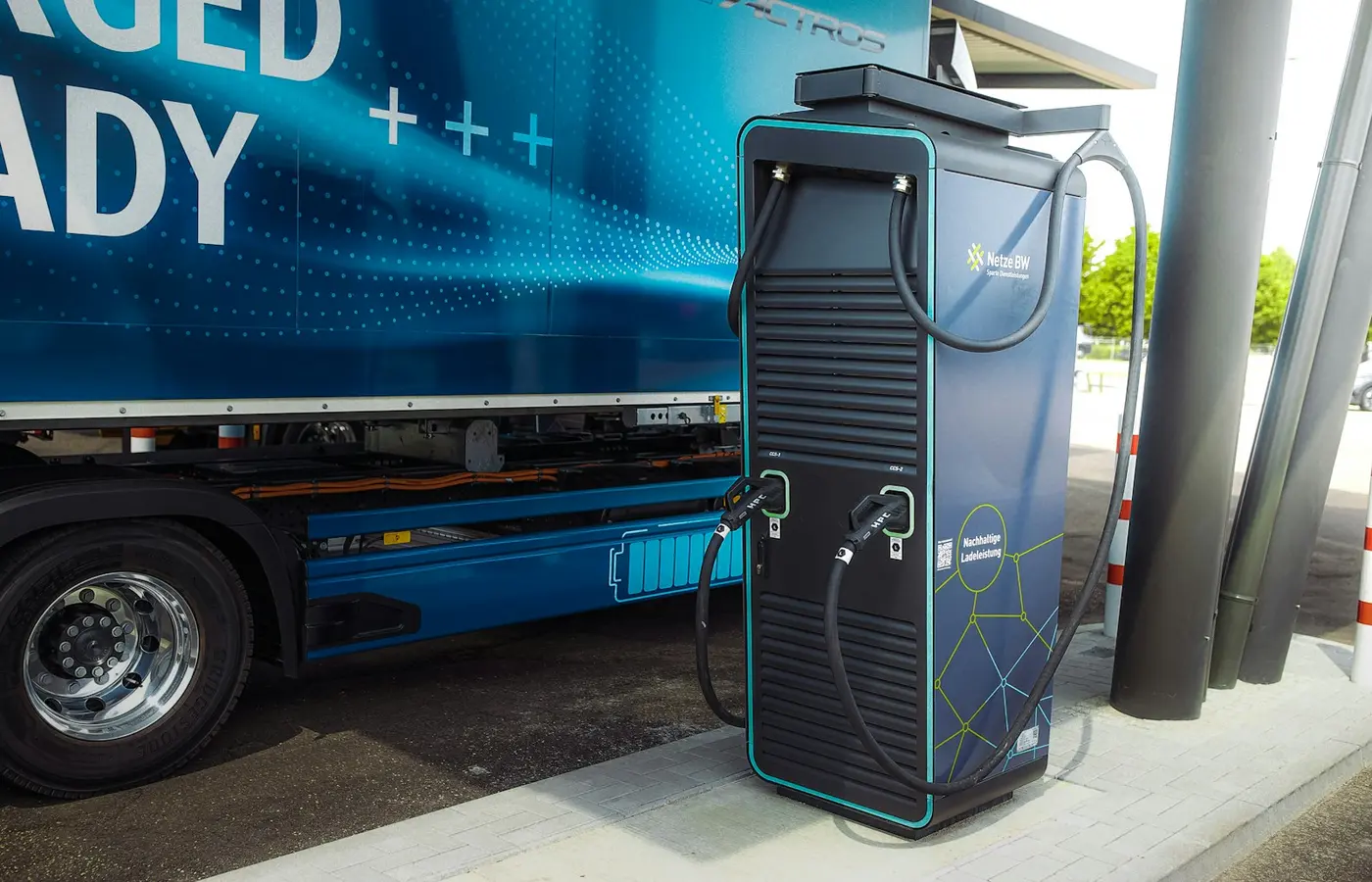
The central question for a fleet is not whether a Chinese electric truck is cheaper than diesel in general. It is whether a specific electric truck can complete a specific operation, at the required payload and service level, for a lower or more predictable whole-life cost.
That distinction matters because truck economics are driven by duty cycle. A battery-electric tractor working a repeatable port-to-depot route may have a strong operating case. The same vehicle may be unsuitable for an irregular long-haul assignment with variable loads, limited dwell time and no dependable charging.
Fleet buyers should therefore compare electric and diesel vehicles route by route before calculating fleet-wide savings. Purchase price, energy cost and advertised range are important, but they are only part of the decision.
Start with the duty cycle, not the vehicle sticker price
A useful truck comparison begins with dispatch data rather than a vehicle brochure. Before requesting quotations, build a profile of each operating segment using at least several months of records where available.
The core inputs are:
- Route origin, destination and intermediate stops
- Daily distance, trip distance and annual kilometres
- Loaded and empty kilometres
- Payload distribution, not only legal maximum payload
- Terrain, average speed, congestion and road surface
- Stop durations and existing dwell time
- Delivery windows and late-delivery consequences
- Ambient temperatures and auxiliary loads such as refrigeration or cab climate control
- Operating days, shifts and driver handovers
- Current vehicle availability and spare-truck requirements
This work identifies whether the route is a realistic electrification candidate. A truck that returns to the same depot every night has a different charging opportunity from a vehicle that finishes at changing customer sites. Likewise, a volume-limited e-commerce operation may tolerate additional vehicle curb weight more easily than bulk haulage or other payload-constrained work.
China’s current deployment pattern illustrates this point. An ICCT analysis of on-road freight electrification in China found that battery-electric trucks in its observed cases were mainly used in shorter-haul operations: 80% of cases operated on routes under 350 km, with average daily mileage just above 300 km. That is evidence of where deployment has occurred, not a universal maximum range rule.
Similarly, the ICCT’s 2023 real-world performance report concluded that the sampled truck models appeared suited to operations below 300 km. Its calculated-range method also contained uncertainty, so fleets should not treat that finding as a substitute for route-specific modelling.
The practical lesson is simple: segment the fleet. Do not compare one electric truck with one diesel truck using fleet-average mileage if the fleet contains fundamentally different jobs.
Build a route-level cost model before aggregating fleet savings
A total-cost-of-ownership model should calculate annual cost and whole-life cost for each route category. Cost per productive kilometre is useful, but cost per tonne-kilometre may be more revealing when payload differs between electric and diesel alternatives.
For each candidate route, include the following categories.
| Cost area | Inputs to verify |
|---|---|
| Vehicle acquisition | Purchase price, lease payment, deposit, financing rate, term and delivery timing |
| Energy | Electricity tariff, diesel procurement price, consumption assumptions and charging losses |
| Infrastructure | Chargers, civil works, grid connection, software, maintenance and site rent where relevant |
| Maintenance | Service intervals, labour rates, parts pricing, tyre wear and roadside support |
| Operations | Driver time, queueing, charging-related waiting, replacement vehicles and dispatch changes |
| Risk and asset value | Insurance, warranty, battery terms, residual value and end-of-life responsibilities |
The ICCT’s China-focused heavy-truck TCO study is useful as a guide to the categories that belong in a model. Its assumptions should not be copied directly into a procurement decision. For example, its battery end-of-life treatment after five years is an analytical assumption, not a promise that every pack will require replacement after five years.
A robust model should identify every input by source and date. Electricity pricing should be tied to an actual tariff or charging-network quote. Diesel cost should reflect the fleet’s procurement terms rather than a retail headline. Finance should use the offered lease or loan terms, not a generic discount rate.
Run at least three cases:
- Base case: expected route distance, energy use, utilization and pricing.
- Conservative case: lower utilization, higher electricity cost, weaker residual value and additional downtime.
- High-utilization case: strong charger availability and enough productive work to spread fixed infrastructure costs.
This approach prevents a low energy-cost assumption from disguising a vehicle-availability problem, or a favourable vehicle price from masking expensive grid work.
Test range, payload and charging against the actual shift
Rated battery capacity is not the same as usable route energy. A fleet needs an operational energy plan for every shift.
Start with the manufacturer’s battery capacity and range claim, but model a usable operating window rather than assuming the truck can repeatedly use the full nominal pack. Add an energy reserve for diversions, traffic, weather and charger unavailability. Then test the route against payload, gradients, speed profile, stop-start operation and auxiliary loads.
Charging also has to fit within real work. A charger’s rated power does not guarantee that the vehicle receives that power throughout a session, and a planned charging stop may fail operationally if the bay is occupied, site access is restricted or loading runs late.
A Tianjin drayage case study provides a helpful example of why operating context matters. The ICCT reported a 6x4 battery-electric tractor-trailer with a 282 kWh battery, nominal range of 170–190 km and estimated energy consumption near 1.5 kWh/km in that specific application. The route involved dry-bulk drayage and is not a national benchmark for range, consumption or electricity price. The full case study is available here.
Payload can be equally decisive. An ICCT e-commerce straight-truck case study described an 18-ton electric truck with a 350 kWh battery and manufacturer-certified range of about 420 km. It also noted that the electric truck had higher curb weight and lower maximum payload than its diesel comparator. For lightweight freight, cargo volume may be the binding constraint, reducing the commercial impact of that payload difference. For dense freight, the lost payload can require more trips or more vehicles. See the e-commerce case study for the specific vehicle context.
A route assessment should answer these questions:
- Can the truck complete its planned shift with a defined energy reserve?
- Does it need mid-shift charging or swapping?
- Can charging occur during dwell time that already exists in the operation?
- Does the electric truck meet the required payload on the heaviest common loads?
- If it cannot, what is the cost of extra trips, changed loading practices or another vehicle?
- What happens when the route is delayed or the planned charger is unavailable?
Manufacturer range and charging claims are appropriate starting points. They should be treated as claims until confirmed through route modelling and, ideally, a monitored pilot.
Calculate utilization and downtime as operating constraints
An electric truck can have attractive energy economics and still fail the fleet business case if it cannot deliver the required productive hours.
Compare diesel and electric operations using productive vehicle time, trips per shift, loaded kilometres, availability and spare-vehicle needs. Charging time should be measured as an operational event, including detours, queueing, plug-in time, charger faults and any driver waiting that cannot be used for rest, loading or other work.
This is particularly important for high-utilization fleets. A diesel truck may refuel quickly and return to work, while an electric truck may require a scheduled charging window, battery swap or replacement vehicle. Conversely, a depot-based electric truck may charge while parked overnight with little impact on productive hours.
A Nature Energy study based on year-long records from 61,598 electric trucks in China found that the electric trucks in its dataset were less utilized than diesel counterparts. It reported that 23% of electric delivery trucks and 30% of electric semi-trailers could achieve one-for-one replacement with diesel counterparts in the observed operations. For the full transport demand served by one diesel vehicle, the study found that multiple electric trucks were required on average in its delivery-truck and semi-trailer cases.
Those findings are observational results from a particular dataset, not a procurement ratio to apply to every fleet. Their value is in demonstrating why route-level utilization matters. The same study found cost and lifecycle-emissions reductions for diesel operations that could be replaced one-for-one, supporting a targeted deployment strategy rather than fleet-wide averaging.
For each route, calculate:
- Productive hours per vehicle per shift
- Planned and unplanned charging time
- Trips completed per shift
- Current diesel vehicle availability
- Required electric spare ratio
- Replacement vehicle and driver costs during charging or repair events
- Revenue or service penalties if a delivery window is missed
Verify energy supply, charging ownership and electricity pricing
“Electricity cost” is not a single number. The delivered cost of energy depends on where charging occurs, who owns the equipment, how often it is used and how the site is billed.
The main models are depot charging, customer-site charging, public charging and battery swapping. Each has different risks.
Depot charging can provide predictable access and lower operational disruption, but may require grid upgrades, landlord approval, civil works and careful management of peak demand. Public charging reduces upfront infrastructure spending but introduces exposure to network pricing, bay availability and queueing. Customer-site charging can work well on fixed contractual routes, but access and commercial terms must be documented. Battery swapping can reduce stop time for suitable operations, but fleets need to understand pack ownership, swap-station coverage, battery condition standards and pricing mechanisms.
The Tianjin case study used an electricity-price assumption of ¥1.4/kWh. That was a location-specific, time-specific assumption for its analysis, not a current national tariff. Fleet models should instead use site-specific utility bills, charging-provider quotations and connection studies.
Before committing, verify:
- Grid connection capacity and upgrade lead time
- Demand charges or peak-period pricing
- Charger purchase, installation and maintenance responsibilities
- Charger uptime commitments and repair response times
- Charging access outside normal site hours
- Electricity resale arrangements at leased or customer sites
- Public-network pricing, parking fees and queueing exposure
- Battery-swapping tariffs, minimum-volume commitments and service coverage
Treat maintenance, battery warranty and residual value as contract questions
Electric trucks generally have different maintenance requirements from diesel trucks, but lower scheduled-maintenance expectations do not remove commercial risk. The key issue is who carries the cost and downtime risk when a battery, traction system, charging interface or software issue occurs.
Procurement teams should obtain the following in writing:
- Vehicle warranty duration and mileage limit
- Battery capacity-retention guarantee and measurement method
- Battery warranty exclusions, including operating conditions and charging practices
- Responsibility for replacement batteries or repaired packs
- Service-network locations and mobile-service coverage
- Diagnostic access, telematics access and software-update policy
- Repair response-time commitments and parts availability
- Maintenance inclusions, tyre responsibilities and roadside recovery terms
- End-of-lease, buyback or residual-value provisions
Model battery and residual-value risk separately from routine maintenance. If a supplier offers a battery lease, swap contract or residual-value guarantee, test the provider’s obligations under high mileage, capacity degradation, early termination and vehicle resale.
For the diesel comparator, separate scheduled service, unscheduled repairs, tyres and downtime using the fleet’s own maintenance history. That creates a fairer comparison than assuming either powertrain has negligible maintenance risk.
Make the decision with clear go/no-go gates
A fleet should approve an electric-truck deployment only when the operational plan works under more than one optimistic assumption.
A practical set of go/no-go gates includes:
- Energy margin: The truck completes the shift with a defined reserve under realistic payload, weather and traffic assumptions.
- Payload compliance: The truck meets common and peak load requirements without uneconomic additional trips.
- Charging feasibility: Charging or swapping access is contractually and physically available when required.
- Vehicle availability: The fleet can meet delivery commitments with the planned vehicle count and spare ratio.
- Energy-cost exposure: Tariffs, demand charges and charging-provider fees are understood and sensitivity-tested.
- Service protection: Warranty, repair response, diagnostic access and replacement-vehicle arrangements are documented.
- Asset risk: Battery obligations and residual-value assumptions are credible for the planned holding period.
Where the case is promising but uncertain, begin with a measured pilot. Record route distance, payload, energy use, charging duration, charger faults, queueing, vehicle availability, maintenance events and driver feedback. Compare the results with the original model, then revise the fleet rollout plan.
Questions to send Chinese truck manufacturers, dealers and charging providers should include: What payload applies to the offered configuration? What is the warranted battery capacity over time and mileage? Which local service points can support the fleet? Who pays for charging equipment and grid upgrades? What data can the operator access? What is the response time for an immobilized vehicle? And what happens if charging or swapping infrastructure is unavailable?
Chinese electric trucks can be commercially compelling in the right operating segments. The disciplined approach is to prove that fit through route data, contract evidence and measured utilization—not through a universal cost-per-kilometre claim.