
Technology
Chinese EV Battery Types: How LFP, NMC, and Sodium-Ion Compare
A practical guide to LFP, NMC and sodium-ion EV batteries in Chinese vehicles, including range, safety, cost, charging and fleet implications.
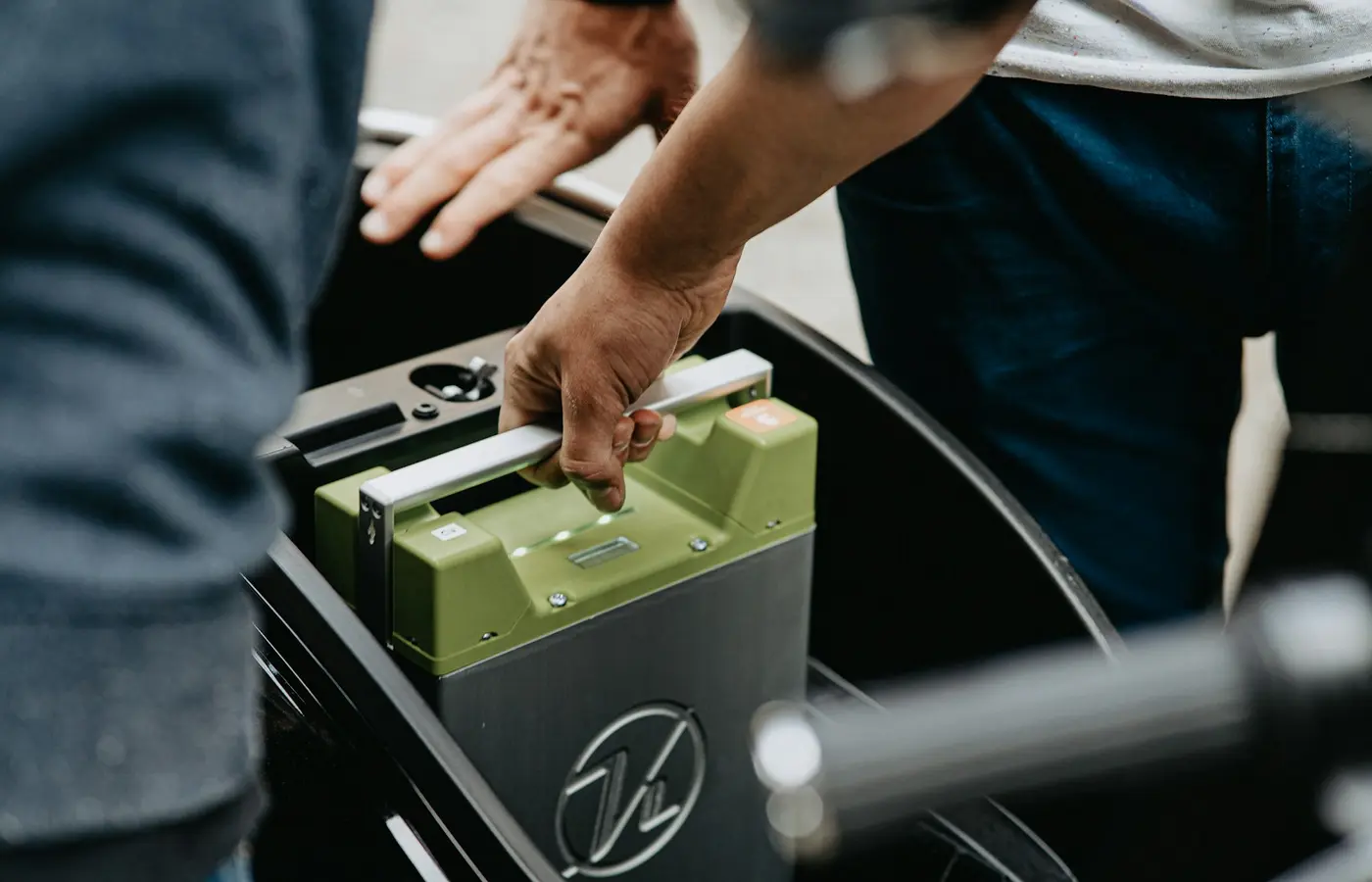
Battery chemistry is one of the most important specifications on a Chinese EV—but it is not a simple ranking of good, better and best. For most buyers, the choice is a trade-off between range packaging, purchase cost, durability, cold-weather operation, charging behaviour and the vehicle’s intended duty cycle.
Lithium iron phosphate (LFP) and nickel-manganese-cobalt (NMC) remain the two established chemistries in electric vehicles. Together, they account for more than 90% of EV lithium-ion battery sales, according to Bain & Company. Sodium-ion is an important emerging technology in China, but it should not yet be treated as a direct, universal replacement for lithium-ion packs in passenger cars.
The practical takeaway is straightforward: LFP is usually well suited to mainstream EVs, predictable fleet routes and cost-sensitive applications; NMC remains useful where manufacturers need more energy in a constrained weight or space envelope; and sodium-ion may become relevant in selected lower-cost, light-duty, stationary-storage and cold-climate applications as production matures. The actual vehicle specification still matters more than the chemistry label alone.
The short answer: which chemistry fits which use case?
The following comparison is a decision guide, not a substitute for checking the exact battery fitted to a vehicle. Battery suppliers, chemistry, capacity and pack design can vary by trim, model year, production plant and export destination.
| Use case | Likely fit | Why it may suit the application | Main point to check |
|---|---|---|---|
| Mainstream passenger EV | LFP | Generally supports cost-conscious vehicle design and can offer strong cycle-life potential | Real-world range, charging curve and winter performance |
| Long-range or space-constrained passenger EV | NMC | Higher energy density can help put more energy into a given mass or volume | Battery cooling, warranty and replacement cost |
| Urban taxi, delivery or depot-charged fleet | LFP | Predictable routes and regular charging can align well with durable, lower-cost battery systems | Daily energy use, charging schedule and usable capacity |
| Electric vans and commercial vehicles | LFP or NMC | LFP can favour operating cost; NMC can help where payload and range packaging are critical | Payload after battery fitment and route-level energy consumption |
| Early sodium-ion applications | Sodium-ion | Potential strategic fit for selected low-cost, light-power or storage uses | Whether the vehicle is genuinely series-produced and supported locally |
Chemistry does not determine ownership experience on its own. A vehicle with a well-designed LFP pack, efficient powertrain, heat pump, battery preconditioning and conservative software buffers may outperform a poorly executed NMC vehicle in many real-world conditions. Conversely, an NMC pack can be a rational choice where a manufacturer needs maximum range without making the vehicle excessively large or heavy.
LFP batteries: why they are central to China’s mass-market EV strategy
LFP stands for lithium iron phosphate. Its cathode chemistry uses iron and phosphate rather than nickel and cobalt, two materials associated with NMC cathodes. That distinction matters for material sourcing, cost structure and cell behaviour.
China’s battery industry has developed deep experience with LFP production and pack integration. LFP has gained substantial share from NMC since 2018, aided by improvements in energy density while maintaining a cost advantage, according to Bain’s battery-industry analysis. This helps explain why LFP is widely used in China-made passenger EVs, buses, commercial vehicles and stationary battery systems.
Where LFP tends to be strong
Cost and material exposure. LFP avoids nickel and cobalt in the cathode. That does not make an LFP battery cheap in every market or at every time, but it can reduce exposure to those particular materials and support lower-cost vehicle positioning.
Cycle-life potential. LFP is commonly associated with strong durability under frequent charging and discharging. This can be valuable for vehicles that cover predictable daily mileage, including urban delivery vans, taxis, buses and private EVs charged regularly at home or at a depot.
Thermal stability. At chemistry level, LFP is generally regarded as more thermally stable than high-nickel NMC variants. This is an advantage, but it should not be simplified into “LFP is safe” and “NMC is unsafe.” Cell quality, pack structure, cooling, crash protection, battery-management software, manufacturing controls and damage condition all affect vehicle safety.
Chinese pack engineering. Improvements in cell-to-pack integration have helped narrow the historical energy-density gap between LFP-based vehicles and some earlier lithium-ion designs. McKinsey’s discussion of China’s battery sector identifies cell-to-pack technology as one of the manufacturing advances deployed in China’s BEV market.
The LFP compromise: energy density
LFP cells typically offer lower energy density than many NMC cells. In practical terms, a manufacturer may need more battery mass or volume to achieve a similar nominal capacity. This matters most in vehicles where battery packaging is tight, such as compact cars seeking long range, performance-oriented models, or commercial vehicles where every kilogram affects payload.
However, chemistry alone does not predict a vehicle’s range. Aerodynamics, motor efficiency, wheel and tyre choice, vehicle mass, heating and cooling loads, usable battery capacity and software calibration all play major roles. A buyer comparing two China-made EVs should therefore compare the complete vehicle: battery capacity, certified range under the applicable test cycle, curb weight, charging performance and warranty.
NMC batteries: where higher energy density can justify the trade-offs
NMC refers to nickel-manganese-cobalt oxide cathodes. The ratio of those three metals can vary, which is why “NMC” is not one uniform product category. NMC532 and NMC811, for example, use different proportions of nickel, manganese and cobalt.
Higher-nickel NMC formulations are generally pursued because they can support higher energy density. That can give vehicle engineers more flexibility: more range in the same battery space, a smaller battery for a given target range, or a lighter package where weight is especially important.
McKinsey noted that Chinese manufacturers had moved into serial production of NMC811-based cells, while NMC532 was widely used in the benchmarked market at the time of its analysis. The distinction remains useful for buyers because the balance of energy density, material cost, longevity and thermal behaviour can change with cathode formulation.
Where NMC can make sense
NMC is often relevant when a vehicle programme needs to maximise energy storage within a limited physical envelope. This can include longer-range passenger EVs, premium models, vehicles designed for sustained motorway use, or commercial applications where battery weight competes directly with payload.
The key benefit is not that every NMC vehicle will travel farther than every LFP vehicle. Rather, NMC gives engineers a potentially higher-energy cell platform from which to build a range-focused package.
The trade-offs buyers should understand
Material complexity and cost exposure. NMC cathodes use nickel and cobalt, creating exposure to different raw-material supply and pricing dynamics than LFP. The final vehicle price depends on far more than the cathode, including scale, battery size, local taxes, logistics and OEM pricing strategy, so chemistry should not be used to predict a vehicle’s transaction price by itself.
Thermal management. NMC packs require careful thermal design, especially in high-power, fast-charging or high-temperature use. That is not a reason to exclude NMC automatically. It is a reason to ask how the specific vehicle manages battery cooling, heating and preconditioning.
Formulation matters. Buyers should not assume all NMC batteries behave identically. Request the supplier name and chemistry designation where available, particularly for fleet procurement or high-mileage applications.
Sodium-ion batteries: promising in China, but not yet a like-for-like replacement
Sodium-ion batteries replace lithium with sodium as the charge-carrying ion. Their strategic appeal is clear: sodium is widely available, and sodium-ion designs can reduce dependence on lithium and, depending on the cathode formulation, may also avoid or reduce use of nickel and cobalt.
China is actively building technical and industrial capability in sodium-ion batteries. The national digital standards platform lists T/CIAPS 0031-2023, a general specification covering sodium-ion battery cells and modules for electric vehicles, light-power applications and energy storage. The existence of this standard shows that the technology is moving beyond laboratory research, but it does not prove that all announced vehicle programmes have reached high-volume production.
Why sodium-ion attracts attention
Sodium-ion technology could be useful where absolute battery energy density is less important than cost, material availability, durability, or operation in particular temperature conditions. Potential applications include selected entry-level vehicles, low-speed or light electric vehicles, two- and three-wheelers, depot-based fleets and stationary storage.
Some sodium-ion developers and vehicle manufacturers have highlighted low-temperature capability, charging performance and material-cost potential. Such statements should be treated as product-specific claims unless independently verified under disclosed test conditions. Sodium-ion cells differ significantly in cathode and anode design, so one supplier’s results cannot be assumed for another’s pack.
Why availability remains the central question
Bain’s assessment is cautious: high-density sodium-ion and other emerging battery technologies remain in prototype or pilot manufacturing stages, with market share expected to remain in the single digits through 2030. That does not mean sodium-ion has no commercial future. It means buyers should separate an announcement, pilot programme or prototype from a vehicle that can be ordered, delivered, serviced and supported in their market.
For now, a sodium-ion vehicle should be evaluated case by case. Confirm the battery chemistry, production status, usable capacity, warranty, winter operating limits, charging requirements, diagnostic support and availability of replacement packs.
How the three chemistries compare in daily ownership and fleet operation
The table below describes broad tendencies rather than fixed outcomes. Cell-level results cannot be transferred directly to the vehicle level without considering pack design and operating conditions.
| Operating question | LFP | NMC | Sodium-ion |
|---|---|---|---|
| Range and packaging | Often needs more space or mass for equivalent energy | Often advantageous where high energy density is needed | Generally constrained by lower energy density than mainstream lithium-ion EV packs |
| Thermal behaviour | Often offers favourable thermal stability characteristics | Requires robust pack thermal management, especially in demanding use | Depends heavily on cell design and pack execution |
| Cold-weather operation | Can be affected materially by low temperatures | Can also lose performance in cold weather | Promising claims exist, but vehicle-level results must be verified |
| Frequent cycling | Often attractive for regular charging and high-utilisation duty cycles | Can be suitable, but outcomes vary by formulation and controls | Still needs application-specific validation at scale |
| Cost positioning | Often supports lower-cost EV designs | Can carry greater material-cost exposure | Potentially attractive, but actual pack economics remain application-specific |
Cold weather is a vehicle-system issue
All battery-electric vehicles can lose usable range in cold conditions. The battery has higher internal resistance at low temperatures, while cabin heating, window demisting and cold tyres also increase energy consumption.
It is reasonable to expect chemistry to influence cold-weather behaviour, but no buyer should select a vehicle based on a generic statement that one chemistry “works in winter” and another does not. Ask whether the vehicle has active battery heating, charging preconditioning, a heat pump, cold-weather charging restrictions and a published low-temperature operating range.
Charging speed depends on more than chemistry
LFP, NMC and sodium-ion packs can all be engineered for different charging priorities. The relevant buyer question is not simply “Which chemistry charges fastest?” It is:
- What DC charging power can this exact trim accept?
- At what battery temperature and state of charge was that figure measured?
- How long does a typical 10% to 80% charging session take?
- Does the vehicle precondition the battery before arriving at a rapid charger?
- How often can that charging pattern be repeated in the intended duty cycle?
A high peak charging-power figure can be less useful than a stable charging curve and dependable thermal control on repeated routes.
Warranty and degradation deserve more attention than nominal chemistry
For a private buyer, warranty conditions may be more useful than broad assumptions about cycle life. For fleets, the essential questions are capacity-retention thresholds, mileage limits, calendar limits, exclusions, diagnostic procedures and replacement-pack lead times.
A chemistry associated with good cycle life still needs competent battery management and a warranty that matches the planned use. Likewise, a high-energy NMC pack can be commercially sensible if it delivers the required route range, payload and service support.
What buyers of Chinese passenger EVs, vans, buses and trucks should check
Before making a purchasing or procurement decision, ask for written specifications for the exact vehicle being offered. Do not rely on a generic model brochure, especially when evaluating imports or vehicles supplied through distributors.
For passenger-EV buyers
Check these points:
- Exact battery chemistry and battery supplier
- Gross and usable battery capacity
- Certified range under the relevant local test method
- AC and DC charging limits, including charging-time guidance
- Battery heating, cooling and preconditioning functions
- Battery warranty duration, mileage limit and capacity-retention terms
- Availability of authorised service, diagnostics and replacement parts in your market
- Whether battery specification changes across trims or model years
A lower-cost LFP vehicle may be the rational choice for a driver with home charging, moderate daily mileage and limited need for long motorway trips. An NMC-equipped alternative may justify its packaging advantage for buyers who prioritise long-distance capability or a smaller, lighter vehicle format.
For fleets and commercial operators
Fleet decisions should begin with routes, not battery labels. Map daily kilometres, payload, elevation, ambient temperature, dwell time, depot power capacity and charging windows. Then test whether the specified battery can complete the duty cycle with a realistic operating reserve.
For vans, buses and trucks, request:
- Battery mass and its impact on legal payload
- Usable energy under expected operating conditions
- Charging power available at depot and en route
- Thermal-management strategy for high-utilisation operation
- Warranty terms for commercial mileage and frequent DC charging
- Repair versus replacement policy for damaged packs
- Local parts stock, technical training and diagnostic access
- End-of-life, transport and recycling responsibilities in the destination market
LFP can be especially compelling for vehicles returning to base each day, where regular depot charging reduces dependence on public rapid-charging infrastructure. NMC may be justified when route range and payload constraints make battery mass or volume the limiting factor. Sodium-ion should be considered only where the supplier can demonstrate series-production status and a support model appropriate to the fleet’s operating market.
FAQ
Are LFP batteries safer than NMC batteries in Chinese EVs?
LFP chemistry is generally associated with stronger thermal stability than many NMC formulations. But safety is not determined by cathode chemistry alone. Cell manufacturing, cooling, battery-management software, pack enclosure, crash protection, charging controls and vehicle condition all matter. Assess the complete vehicle and its warranty rather than treating any chemistry as risk-free.
Do LFP batteries lose more range in cold weather than NMC batteries?
Cold weather affects all EV batteries and also raises vehicle energy use for heating and defrosting. Chemistry can influence low-temperature performance, but vehicle-level outcomes depend on battery heating, thermal management, capacity, software and driving conditions. Compare disclosed winter-operation features and independent tests of the exact vehicle where available.
Are sodium-ion batteries already available in Chinese electric cars?
Sodium-ion batteries have moved into commercial development and are covered by a Chinese general specification for EV, light-power and energy-storage applications. However, availability in passenger cars remains much more limited than LFP or NMC. Confirm whether a particular vehicle is in series production, which market it serves and how warranty and service support are handled.
How can I confirm the battery chemistry in a Chinese EV before buying?
Ask the seller or importer for the exact vehicle technical sheet, battery supplier, chemistry, gross and usable capacity, warranty booklet and homologation documentation for your market. Confirm that the documents apply to the specific trim, model year and production origin being offered. Do not assume that every version of the same model uses the same battery pack.