
Regulation
GB 38031-2025 and Chinese EV Battery Due Diligence: Documents Export Buyers Should Check
How export buyers can assess GB 38031-2025 battery-safety evidence, match it to delivered vehicles, and cover separate market-entry risks.
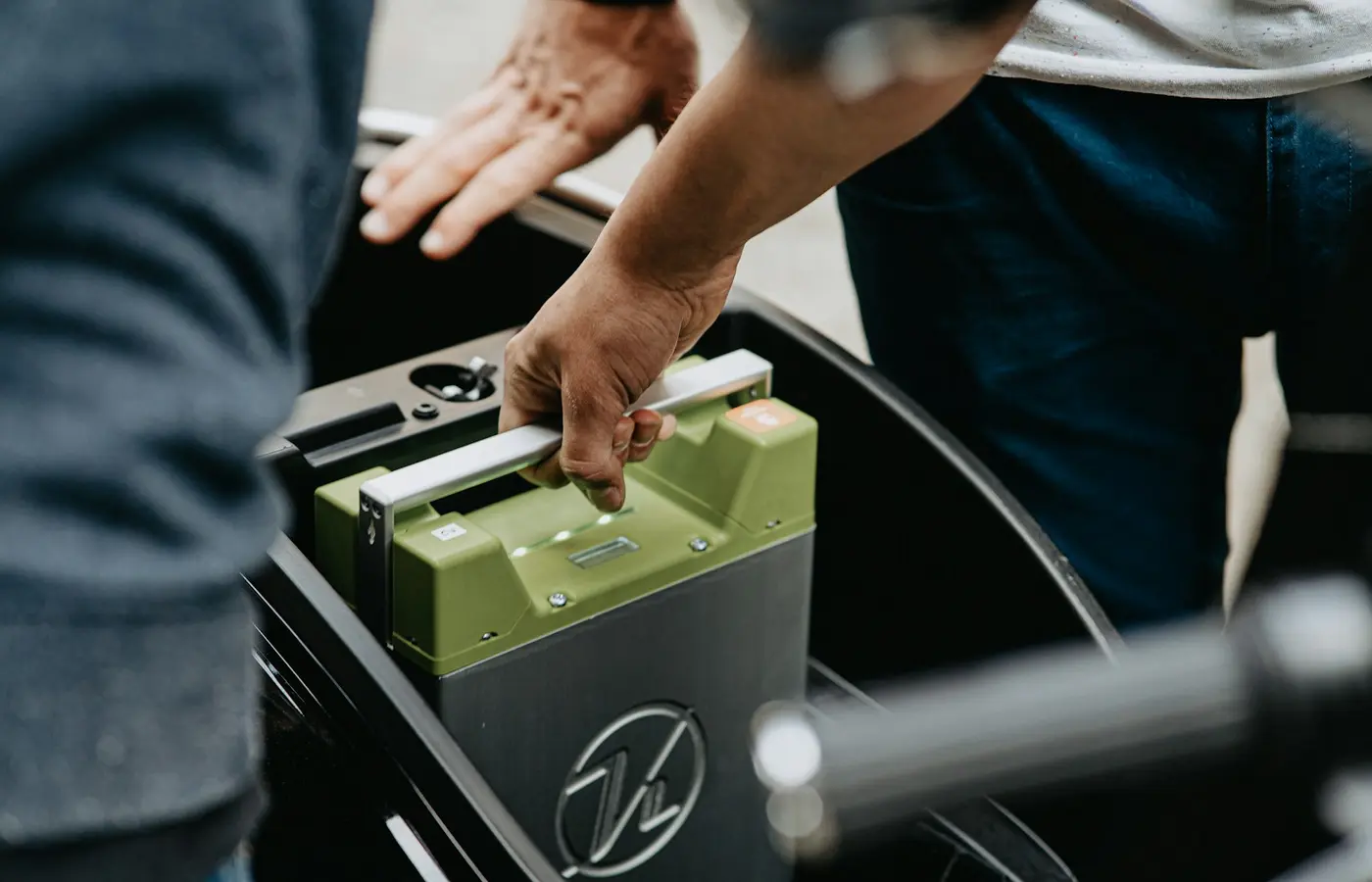
GB 38031-2025 can be an important part of EV battery due diligence when sourcing from China. It is not, however, a passport for registering, shipping or selling an electric vehicle in another country.
For an importer, fleet operator or distributor, the practical question is not simply whether a supplier can state that its battery meets GB 38031-2025. The question is whether the test evidence can be reliably connected to the battery system fitted to the vehicles being purchased—and whether the buyer has separately addressed the rules of the destination market.
That distinction matters because a traction battery is a configured system. Cell chemistry, pack structure, cooling hardware, battery-management-system (BMS) calibration, high-voltage components and manufacturing changes can all affect the relevance of a historical test report. A credible due-diligence process therefore combines standards evidence, configuration control, traceability and local compliance work.
What GB 38031-2025 covers—and what it does not prove
GB 38031-2025 is described in available industry reporting as China’s mandatory national safety standard for traction batteries used in electric vehicles. It replaces GB 38031-2020 and is reported to take effect on 1 July 2026. The available research material describes its title as Electric Vehicles Traction Battery Safety Requirements and indicates that it covers cells, battery packs and battery systems used to propel EVs.
Buyers should confirm the exact publication record, effective date, scope and applicability provisions against the official Chinese standard text or an authoritative standards-service record before relying on them in a contract or compliance filing. The research package available for this article does not include that official text.
In buyer terms, GB 38031-2025 is a Chinese product-safety baseline. Evidence of compliance may help answer whether a particular traction-battery design has been assessed against specified safety requirements. It does not by itself prove that:
- the vehicle can be registered in the importing country;
- the vehicle has destination-market type approval or conformity documentation;
- the battery is acceptable to a shipping line, airline, port, freight forwarder or insurer;
- charging connectors, communications protocols or grid compatibility suit the local market;
- the importer has met local labelling, recycling, consumer-protection or recall obligations; or
- an individual battery has a particular remaining capacity or state of health.
This last point is especially relevant for used EVs. A type-level safety test and the condition of a specific battery in service are different questions. A battery may have been designed and tested to a safety standard, while its current usable capacity, repair history and degradation still require separate assessment.
The safety areas that should appear in test evidence
The detailed standard—not a marketing summary—determines which requirements apply to a particular battery system and under what conditions. Buyers should avoid treating a short list of headline tests as a substitute for the standard or for a complete laboratory report.
Available technical reporting on the 2025 edition describes expanded attention to thermal propagation, bottom impact, external short circuit, fast-charge-related testing and salt-spray exposure. One widely reported change is a thermal-propagation requirement intended to prevent fire and explosion for an observation period of at least 120 minutes following the prescribed event. An industry explanation of the standard also reports the 120-minute condition and the 1 July 2026 implementation date.
That is a significant safety objective, but it should be read carefully. Before accepting a supplier statement, a buyer should establish:
- the exact test item and clause cited;
- the sample model and configuration tested;
- the initiating condition and test setup;
- the observation period and pass criteria recorded by the laboratory;
- whether the report identifies deviations, retests or conditional observations; and
- whether the tested configuration matches the supplied battery system.
The same discipline applies to mechanical, electrical and environmental tests. A report may show that a test was completed, but a buyer still needs to determine whether it applies to the relevant pack, battery system and vehicle programme. Test applicability can depend on product architecture and the standard’s own conditions.
Do not reduce compliance to a thermal-propagation claim
“Two hours without fire or explosion” is likely to attract commercial attention, but it is not a complete procurement specification. It does not describe crash performance for every vehicle installation, battery durability, diagnostic capability, repairability, water-ingress performance in every real-world use case or the quality of production control after the tested sample was built.
Treat the claim as one evidence point in a broader review, not as a one-line buying decision.
Core documents to request from the vehicle maker and battery supplier
A supplier may reasonably need to redact confidential information, particularly where a test report belongs to a cell maker, a vehicle maker or a third-party customer. The objective is not necessarily to obtain every proprietary page. It is to receive enough verifiable information to establish product identity, test scope and the connection between the report and delivered vehicles.
Request the following documents early, ideally before commercial terms are finalised.
1. GB 38031-2025 test evidence
Ask for a full report, or a controlled redacted copy, that still shows:
- the report number and issue date;
- the issuing laboratory’s identity;
- the applicant and manufacturer, where disclosed;
- the tested product model or models;
- the applicable standard edition;
- test items and methods;
- sample condition and relevant configuration details;
- individual results or pass/fail outcomes; and
- signatures, seals or other report-authentication features used by the laboratory.
A one-page certificate, supplier declaration or slide deck may be useful as an index document, but it is not equivalent to a detailed test report. It usually cannot show what was tested, on which model, under what conditions or with what result.
2. Battery and vehicle technical specifications
Request a controlled specification for the export vehicle and its battery system. It should identify, to the degree commercially disclosable:
- vehicle model and variant;
- battery pack or battery-system model;
- cell chemistry and cell supplier, if available;
- rated energy and voltage range;
- cooling or thermal-management approach;
- high-voltage architecture;
- pack dimensions and mass where relevant to shipment or installation; and
- BMS hardware and software version, or the supplier’s version-control method.
These documents create the baseline for comparing a report with the vehicle actually ordered.
3. A configuration-matching declaration
Ask the vehicle manufacturer to provide a dated declaration that links the cited test report to the battery system installed in the export vehicle. It should state whether the supplied configuration is identical to the tested configuration or, where it is not identical, explain why the supplier considers the report applicable.
The declaration should address material changes, including cells, pack enclosure, thermal interface materials, contactors, fuses, cooling components, BMS calibration and manufacturing location. A vague assertion that the battery is “equivalent” is not enough for a high-value fleet or distribution purchase.
4. Traceability records
The supplier should be able to connect vehicle, pack and production records. Request a format or sample showing how it will provide:
- vehicle identification number (VIN);
- battery pack serial number;
- production date or batch reference;
- battery-system model;
- manufacturing-site identification where relevant; and
- warranty start date and responsible warranty entity.
For shipment acceptance, warranty administration and recalls, retain this information in a buyer-controlled register rather than leaving it only in a supplier portal.
5. Change-control and quality documents
Ask how the supplier controls changes after testing. Useful evidence includes a change-notification procedure, quality agreement, revision history and a named process for evaluating safety-critical changes.
The buyer should be notified before, not after, material changes to cell source, pack construction, BMS software, critical protective components or manufacturing site. Whether a change requires new testing, a technical justification or a regulatory filing depends on the affected market and the terms of the transaction.
How to review a report without treating it as a certificate
A report is useful only if it is authentic, complete enough for its purpose and applicable to the supplied product. The following checks help turn a document request into a real verification exercise.
| Review question | What to compare | Why it matters |
|---|---|---|
| Who issued the report? | Laboratory name, report number, contact details and accreditation scope | A genuine report may still be outside the laboratory’s relevant scope or may require direct verification. |
| What was tested? | Pack/system model, cell type, energy, voltage, cooling and BMS details | Similar product names can conceal materially different configurations. |
| Which standard applies? | Reported standard edition and test dates | A report to an older edition is not automatically evidence for a newer requirement. |
| Does it match the order? | Vehicle bill of materials, specification sheet, VIN and pack serial-number format | This links type-level evidence to the delivered vehicle. |
| Are there qualifications? | Redactions, deviations, retests, exclusions and model-family statements | These can affect what the report actually supports. |
Where feasible, verify the report directly with the named laboratory through independently sourced contact details. Ask the laboratory what it can confirm: for example, that the report number is genuine, the report has not been withdrawn and the named recipient is authorised to receive confirmation. Laboratories may be limited by confidentiality rules, so agree an authentication route in the supply contract.
If a report relies on model-family coverage, request the engineering rationale that places the export battery within that family. If key information is redacted, ask for a written explanation of the redaction and an alternative verification method. A refusal to provide an unredacted report does not itself prove non-compliance; report ownership, confidentiality and commercial sensitivity vary. But a buyer should not accept an unverifiable compliance claim merely because the underlying information is said to be confidential.
Separate checks for destination market, shipping and after-sales support
GB 38031-2025 cannot replace destination-market due diligence. Import requirements differ by country, vehicle category, new-versus-used status, intended road use and sales model.
Before purchase, identify the relevant authority or approved technical service in the destination market and confirm the applicable pathway for vehicle type approval, individual approval, conformity, registration and product safety. Do this before placing non-cancellable production orders. A Chinese domestic safety standard may be relevant supporting evidence, but it is not automatically recognised as homologation elsewhere.
Shipping needs its own workstream. Lithium-battery and electric-vehicle transport requirements can vary by transport mode, whether vehicles are new or used, battery condition, state of charge, packaging arrangements and carrier policy. Confirm the planned route with the freight forwarder and actual carrier, not only with the vehicle supplier. Ask which documents, declarations, state-of-charge limits and damage-inspection records they require.
Also check operational readiness:
- charging connector and charging-control compatibility;
- local high-voltage warning labels and language requirements;
- workshop diagnostic access and tooling;
- battery isolation, towing and emergency-response procedures;
- replacement-pack lead times and repair policy;
- warranty responsibility in the destination country;
- recall-notification responsibilities; and
- end-of-life battery, recycling or extended-producer-responsibility obligations.
These are not administrative details. For fleets and distributors, weak after-sales arrangements can create more operational risk than an incomplete initial document package.
A practical supplier-verification workflow before purchase and shipment
A staged process is more reliable than requesting a stack of documents at the end of a negotiation.
Before contract signature
- Define the exact vehicle variants, battery options and destination markets.
- Request GB 38031-2025 evidence, product specifications and traceability samples.
- Map the test-report configuration against the proposed vehicle configuration.
- Obtain destination-market advice on type approval, import and registration.
- Identify any gaps requiring additional testing, engineering evidence or local approvals.
In the supply contract
Include representations on the identity and accuracy of supplied compliance documents. Define notification and approval rights for material changes to the battery system, BMS, cells or production site. Allocate responsibility for recalls, warranty handling, corrective actions, false declarations and destination-market approvals.
Legal and regulatory advisers should review these provisions for the relevant jurisdiction. Contract language cannot make a non-compliant vehicle registrable, but it can reduce uncertainty over who bears the cost when evidence or configuration changes.
Before shipment
Capture VINs, pack serial numbers and production dates. Confirm the delivered specification against the agreed bill of materials. Recheck shipping documentation with the appointed logistics provider, particularly where a vehicle has been stored, damaged, repaired or transported as used stock.
An independent inspection or technical document review can be useful for larger orders. It is not a substitute for regulatory approval, but it can help identify mismatches between paperwork, physical labels and the agreed configuration.
Maintain a closing file
For each vehicle programme, separate records into four categories:
- Evidence received: reports, specifications, declarations and manuals supplied by the seller;
- Evidence verified: documents authenticated with the issuer or reconciled to the ordered configuration;
- Open technical questions: unresolved differences, redactions or pending change-control explanations; and
- Destination-market requirements: approvals, transport conditions and local obligations still outstanding.
This distinction prevents a common failure: treating receipt of documents as proof that all risks have been cleared.
FAQ
Does GB 38031-2025 approval mean an EV can be registered in my country?
No. It may be relevant evidence of compliance with a Chinese traction-battery safety requirement, but registration depends on the laws and approval processes of the destination market. Confirm requirements with the relevant local authority or qualified adviser.
What is the difference between a GB 38031-2025 test report and a battery certificate?
A test report should identify the tested product, standard, methods, dates and results in meaningful detail. A certificate or supplier statement may summarise a claim but often does not show enough information to establish what configuration was tested. Either document still needs to be linked to the delivered battery system.
How can an export buyer confirm that a report applies to the battery in the delivered vehicle?
Compare the report with the pack model, cell and BMS information, vehicle specification, bill of materials, production records, VIN and battery serial number. Obtain a configuration-matching declaration from the vehicle maker and verify the report with the laboratory where practical.
Does GB 38031-2025 prove battery life or state of health?
No. Safety compliance and battery condition are separate matters. For used vehicles, request battery diagnostic data, service history, warranty information and an assessment method suitable for the intended transaction.
The key takeaway is straightforward: GB 38031-2025 evidence is valuable, but only when a buyer can authenticate it, match it to the supplied configuration and place it alongside the separate approvals, transport arrangements and service capabilities required in the destination market.
Sources
- China EV Battery Safety Standard 2026 | Yanxun Car
- China EV Battery Health Standard Guide | Yanxun Car
- GB 38031-2025 Battery Safety Standard: Key Changes, Thermal Propagation & Compliance
- GB 38031-2025: China’s “No Fire, No Explosion” EV Battery Standard Explained — ChinaStandards | ChinaStandards
- Understanding China’s GB 38031-2025: A New Standard for Electric Vehicle Battery Safety
- Understanding China’s GB 38031-2025: A New Standard for Electric Vehicle Battery Safety