
Regulation
GB 38031-2025 Explained: China’s New EV Battery Safety Requirements
A practical guide to GB 38031-2025, China’s new mandatory EV traction-battery safety standard effective from July 2026.
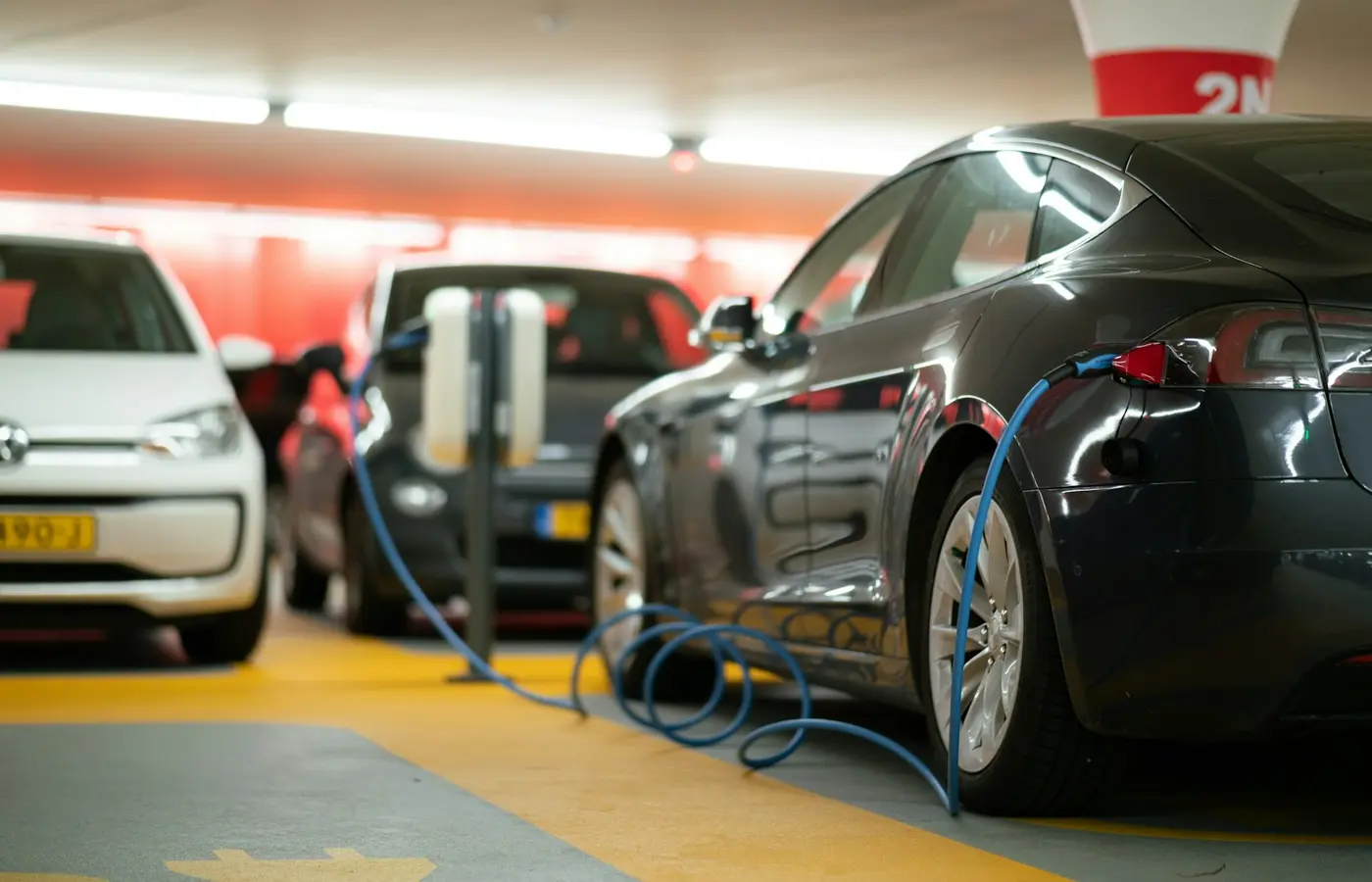
China’s GB 38031-2025 is the new mandatory safety standard for traction batteries used in electric vehicles. For vehicle makers and battery suppliers, it sets the validation baseline for products placed on the Chinese market after its implementation date. For overseas buyers, it is useful evidence of a battery system’s China-market safety compliance—but it is not, by itself, an export approval or universal certificate.
The revised standard takes effect on 1 July 2026. It expands and refines the abuse-test regime applied to battery cells and battery packs or systems, with particular attention to thermal propagation, underbody impacts and safety after fast-charge cycling.
What GB 38031-2025 covers—and when it takes effect
GB 38031-2025 is titled Electric vehicles traction battery safety requirements. It was issued on 28 March 2025 and will be implemented on 1 July 2026, according to China’s National Standard Information Public Service Platform. It replaces GB 38031-2020.
The standard is a mandatory national standard, not a voluntary industry guideline. China’s government has described the revision as an updated mandatory EV battery safety standard, with revised thermal-diffusion requirements and newly introduced test items for bottom impacts and post-fast-charge safety. The official English-language government summary is available here.
Its scope is importantly narrower than many commercial discussions suggest. GB 38031-2025 concerns the fundamental safety requirements of traction batteries installed in electric vehicles. It does not establish a complete framework for:
- battery production quality management;
- transport of battery cells, modules or packs;
- repair and maintenance procedures;
- end-of-life recycling;
- battery energy capacity, charging speed, cycle life or other performance claims; or
- approval in overseas vehicle markets.
That distinction matters. A battery can meet a safety-test standard while still needing separate validation for vehicle integration, electromagnetic compatibility, transport, customs, type approval or destination-market regulations.
The central safety principle: defined abuse tests, defined outcomes
GB 38031-2025 tests battery cells and battery packs or systems under specified electrical, thermal, mechanical and environmental abuse conditions. The purpose is to assess whether a traction battery can avoid severe safety outcomes when subjected to the defined test event.
At cell level, the principal acceptance criterion for the listed abuse tests is straightforward: the cell must not catch fire or explode.
At pack or system level, the requirements are broader because a vehicle battery includes enclosure structures, high-voltage connections, cooling systems, battery management functions and mounting interfaces. Depending on the test, the standard evaluates whether there is leakage, enclosure rupture, fire or explosion, as well as whether electrical insulation remains above the specified threshold.
For relevant pack or system tests, the post-test insulation resistance must be at least 100 Ω/V. Where an AC circuit is present, the higher threshold is 500 Ω/V. These are insulation requirements, not a blanket statement that a tested battery pack must remain fully operational after every test.
A practical way to read the standard is to separate two questions:
- What is being tested? A cell, or an installed battery pack/system.
- What is the required outcome? Prevention of fire and explosion is central, while pack-level tests can add requirements related to leakage, housing integrity and insulation.
This is why cell test results should not be treated as a substitute for pack-level validation. A cell may behave safely in isolation, while the completed battery system faces additional risks from enclosure damage, electrical architecture, cooling hardware and vehicle mounting.
Battery-cell tests: electrical abuse, heat, cycling and crush
The cell-level section of GB 38031-2025 covers several common battery abuse scenarios. The standard’s listed cell tests include:
- over-discharge;
- overcharge;
- external short circuit;
- heating;
- temperature cycling;
- crush; and
- a safety test after fast-charge cycling.
For these listed cell tests, the stated requirement is that the battery cell must not catch fire or explode.
Why these tests matter
Electrical abuse tests address failure modes linked to abnormal charge or discharge conditions. Overcharge can drive unwanted internal reactions, while over-discharge and external short-circuit conditions assess different forms of electrical stress.
Heating and temperature-cycling tests address thermal exposure and repeated temperature changes. These can affect internal materials, seals, interfaces and electrical connections. Crush testing, meanwhile, is intended to examine a cell’s response to mechanical deformation.
The new fast-charge-related item is especially relevant because rapid charging creates a distinct set of thermal and electrochemical stresses over repeated use. The requirement should not be read as a claim that all fast charging is inherently unsafe, or that every battery chemistry responds in the same way. Rather, it adds a defined safety evaluation after fast-charge cycling to the mandatory test regime.
The government’s announcement confirms that a safety test following fast charging has been added. It does not mean that the standard sets a universal public benchmark for charging speed, battery life or real-world degradation.
Battery-pack and system tests: integration safety matters
A traction battery pack is more than a collection of cells. It is a high-voltage vehicle component exposed to road vibration, impacts, crash loads, water, heat and electrical faults. GB 38031-2025 therefore contains a separate group of requirements for battery packs or systems.
The pack/system test regime includes confirmed categories such as:
- vibration;
- mechanical shock;
- simulated collision;
- external fire exposure;
- thermal propagation or thermal diffusion assessment;
- water-related testing, including immersion conditions where applicable;
- electrical abuse conditions; and
- bottom impact assessment.
The exact method, sample condition, sequence and acceptance criteria depend on the individual test clause. Buyers and suppliers should avoid reducing these requirements to a simple checklist of test names. A pack’s compliance depends on testing the applicable configuration under the standard’s specified procedures.
Vibration, shock and simulated collision
Vibration and mechanical-shock tests are relevant to normal vehicle service and sudden impact loads. They assess whether the pack remains safe when subjected to forces that may affect fasteners, internal modules, coolant lines, busbars, wiring and the outer enclosure.
Simulated collision testing addresses a more severe vehicle-related load case. The required result includes the avoidance of leakage, enclosure rupture, fire and explosion, along with the applicable post-test insulation requirements.
Water and external-fire exposure
Water-related tests evaluate whether the battery enclosure and electrical protection measures can maintain safety under the specified exposure conditions. This should not be interpreted as a broad consumer claim that every compliant vehicle can be submerged or driven through any depth of water.
External-fire testing addresses a different scenario: the battery’s response when exposed to fire originating outside the pack. It is part of a system-level safety assessment, not evidence that a battery is immune to heat damage.
The new bottom-impact test
One of the most notable additions in the 2025 revision is a bottom-impact test. China’s official summary says the test is intended to assess protection when the bottom of the battery is struck.
This reflects a practical vehicle-integration concern. Underbody impacts can damage a battery enclosure or its internal structure even when the rest of the vehicle appears relatively intact. Ground clearance, underbody shields, pack location, mounting design and vehicle use conditions can all influence this risk.
The presence of a bottom-impact test does not mean every compliant battery will withstand every road hazard. It means the battery system must meet the standard’s defined test conditions and acceptance criteria.
Thermal propagation: the key focus of the 2025 revision
Thermal propagation—often described as thermal diffusion in official summaries—is a central battery-system safety concern. It refers to the spread of a thermal event from an initially affected area or cell to other parts of the battery system.
The 2025 revision updates the thermal-propagation test approach by further clarifying temperature requirements, observation time and vehicle testing conditions, according to the official government announcement.
This is significant because thermal propagation is not solely a cell-chemistry issue. Pack architecture, thermal barriers, venting paths, monitoring systems, cooling design and vehicle integration can all affect how a thermal event develops.
However, compliance should not be overstated. GB 38031-2025 defines test conditions and pass/fail requirements. It does not establish that a battery is “fireproof,” that thermal runaway is impossible, or that a thermal event cannot occur in real-world conditions outside the standard’s test envelope.
For purchasers comparing vehicles, the useful question is not simply whether a manufacturer uses a particular battery chemistry. It is whether the relevant battery pack and vehicle configuration have been validated to the applicable safety requirements, and whether the documentation identifies the tested configuration clearly.
What the new standard means for EV makers and battery suppliers
For manufacturers supplying China’s EV market, the implementation date creates a clear planning point. Vehicles and battery systems intended to meet the new mandatory regime need validation plans that account for the revised standard before 1 July 2026.
That may affect more than laboratory testing. Product teams may need to review:
- cell selection and cell-level safety performance;
- pack enclosure and underbody protection design;
- module spacing, thermal barriers and venting arrangements;
- high-voltage insulation and AC-circuit architecture;
- cooling-system integration;
- battery-management-system safety functions; and
- test evidence for each relevant vehicle and battery configuration.
Suppliers should also consider configuration control. A test report tied to one pack version, cell type, module design or enclosure may not automatically support a materially different product. For fleet buyers and procurement teams, traceability between the supplied vehicle, the battery pack identification and the supporting documents is often as important as the headline claim of compliance.
What overseas buyers should ask to review
GB 38031-2025 compliance is relevant evidence for a China-built EV, but it is not a universal export document. The buyer’s destination market may impose its own vehicle type-approval, battery, electrical-safety, transport and customs requirements.
Rather than asking only for a generic “battery certificate,” overseas buyers should use a configuration-specific verification process.
A practical document checklist
Ask the manufacturer, distributor or supplier to identify:
- The exact vehicle configuration — model, variant, production period and market specification.
- The battery system configuration — pack part number, battery supplier where disclosed, chemistry where relevant, nominal voltage and capacity.
- The GB 38031 edition used — specifically whether evidence relates to GB 38031-2020 or GB 38031-2025.
- Applicable test reports or declarations — where available, these should identify the tested battery pack or system and preferably its relationship to the offered vehicle.
- The issuer and traceability of each document — including report number, date, product identity and test laboratory details where provided.
- Destination-market approval evidence — obtained separately from the relevant market authority, importer or homologation route.
The key point is that a report should be reviewed for relevance, not merely existence. A battery safety document for a different pack version or vehicle variant may have limited value for the vehicle being purchased.
For larger orders, fleet operators may also want contractual clarity on battery configuration changes. If the supplier changes cell source, pack design, cooling layout or high-voltage architecture during production, the buyer should understand whether the supplied documentation remains applicable.
What to watch before July 2026
GB 38031-2025 is already published, but its mandatory implementation date is 1 July 2026. During the transition period, buyers may encounter vehicles supported by evidence under the older GB 38031-2020 edition as well as products being prepared for the 2025 edition.
Useful questions include:
- Which edition applies to the offered vehicle and its planned production date?
- Is the pack/system tested in the same configuration as the exported vehicle?
- Has the manufacturer documented the battery’s bottom-impact and fast-charge-related compliance pathway under the revised standard?
- What separate approvals are required in the destination market?
The most reliable interpretation is therefore narrow and practical: GB 38031-2025 raises and refines China’s mandatory traction-battery safety test framework, especially around thermal propagation, underbody impact and post-fast-charge safety. It is a significant China-market compliance standard, but not a substitute for independent export-market verification.
FAQ
When does GB 38031-2025 take effect?
GB 38031-2025 takes effect on 1 July 2026. It was issued on 28 March 2025, according to the National Standard Information Public Service Platform.
Does GB 38031-2025 replace GB 38031-2020?
Yes. The national standards platform identifies GB 38031-2025 as replacing GB 38031-2020.
What new tests does GB 38031-2025 add for EV batteries?
Official government information confirms the addition of a bottom-impact test and a safety test following fast-charge cycling. The revision also further clarifies thermal-propagation testing, including temperature requirements, observation time and vehicle testing conditions.
Does compliance with GB 38031-2025 make an EV battery approved for export?
No. GB 38031-2025 is a Chinese mandatory safety standard for traction batteries used in EVs. Export approval, vehicle homologation, transport rules and required buyer documentation depend on the destination market and the specific transaction.