
Technology
GB/T 18487.1-2023 Requirements Explained: What China’s EV Charging Standard Covers
Understand the scope of GB/T 18487.1-2023, how it relates to connectors and communications, and what buyers should verify on Chinese EV chargers.
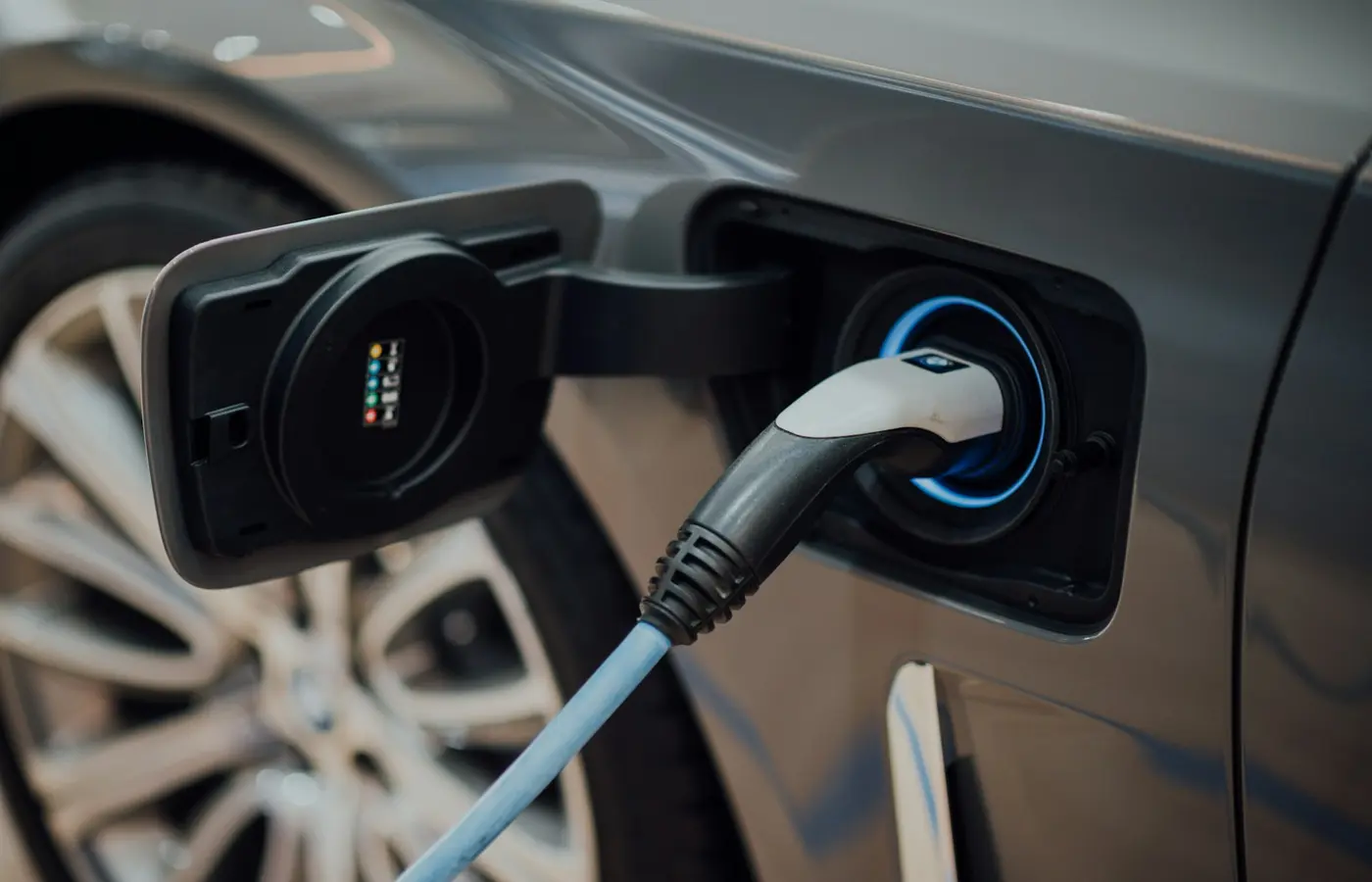
A claim that an EV charger meets GB/T 18487.1-2023 requirements can be useful, but it is not a complete answer to several practical questions buyers often ask. It does not, on its own, prove that a charger will physically connect to a particular vehicle, communicate successfully with that vehicle, meet local installation rules, or qualify for sale in another country.
For importers, fleet operators, charging-network developers and component suppliers, the standard is best understood as a general framework for China’s conductive EV charging systems. It matters in equipment assessment, technical documentation and compliance planning. But it sits alongside other standards that address charging connectors, vehicle-charger communication and product-specific requirements.
What GB/T 18487.1-2023 is and its current status
GB/T 18487.1-2023 is titled “Electric vehicle conductive charging system—Part 1: General requirements.” Its Chinese title is 《电动汽车传导充电系统 第1部分:通用要求》.
The official National Standard Information Public Service Platform record lists the standard as current. It was issued on September 7, 2023, and implemented on April 1, 2024. The same official record identifies it as replacing the earlier GB/T 18487.1-2015 edition.
The designation matters:
- GB identifies a Chinese national standard.
- /T indicates a recommended national standard rather than a mandatory national standard solely by designation.
- Part 1 signals that the document is one part of a wider standards landscape rather than a self-contained rulebook for every charging component and use case.
The official record also notes Amendment No. 1. Buyers should obtain the applicable text and amendment information before making clause-level claims, preparing test plans or comparing a legacy product against the 2023 edition. An amendment can affect implementation even where a product was originally designed or tested to the base publication.
This distinction is especially important when reviewing supplier declarations. A declaration referencing “GB/T 18487” without a part number, publication year or amendment status is not sufficiently precise for a procurement decision.
The scope: general requirements for conductive charging systems
“Conductive charging” means charging in which electrical energy is transferred through a conductive connection between the vehicle and charging equipment. In practical terms, this is the conventional wired charging architecture used by AC charging equipment and DC charging equipment.
GB/T 18487.1-2023 addresses the general requirements of that charging system. Its role is broader than a connector drawing, yet narrower than a complete market-access or installation rulebook.
The standard is relevant to system topics including the relationship between the electric vehicle and supply equipment, electrical safety, protective measures, charging control and communication-related system behaviour. However, the exact applicability of an individual provision depends on the charging arrangement, the equipment type and the interfaces involved.
A useful way to read the standard is to separate three layers:
| Layer | Main question | What GB/T 18487.1-2023 contributes |
|---|---|---|
| System layer | Is the conductive charging system designed to operate safely and coherently? | General system requirements and safety-oriented principles |
| Interface layer | Can the cable, plug, inlet and coupler physically mate and carry the intended electrical load? | Context and related references, but not the sole connector specification |
| Communication layer | Can the vehicle and charger exchange the required operational messages? | System relationship and references, but not a substitute for the applicable communication protocol standard |
That division prevents a common error: treating a general conductive-charging standard as proof of complete interoperability.
It also helps explain why a charger can appear technically well specified while still requiring more verification before deployment. A charger may satisfy relevant general requirements yet have the wrong connector configuration for the target fleet, incompatible control software, or an unsuitable certification package for its destination market.
Which requirements matter in an equipment review
For a real charger review, GB/T 18487.1-2023 should be used as part of a document-and-evidence exercise, not as a marketing label.
The most relevant review areas typically fall into the following categories.
System configuration and intended use
Start with what the manufacturer says the product is designed to do. Confirm whether it is AC or DC equipment, the intended vehicle class, the rated electrical characteristics, the installation environment and any stated charging-system configuration.
The purpose is not to assume that every product follows the same path through the standard. Instead, it is to establish which provisions and referenced standards are likely relevant to the exact equipment under review.
Ask for:
- The product model number and revision identifier
- A current technical data sheet and installation manual
- Rated voltage, current and power information
- A wiring diagram or system architecture document
- The intended connector and vehicle interface configuration
- The edition and amendment status of each standard cited in the declaration
Electrical safety and protective functions
General conductive-charging requirements are closely connected to protection against electric shock and other electrical safety functions. For a buyer, the important point is to verify evidence for the shipped configuration—not simply evidence for a similar cabinet, controller or charging module.
Useful evidence can include product-specific test reports, engineering records, conformity documentation and the manufacturer’s description of protective functions. The applicability and adequacy of those documents depend on the target product, the applicable standard revision and the market in which the equipment will be installed.
Do not infer that a report for one power rating, connector option or enclosure configuration automatically covers another. Differences in cable assembly, output architecture, controller software or environmental rating can be material.
Charging control and connection-related conditions
A charging system must manage more than energy transfer. It must also manage the conditions under which charging starts, continues, changes state or stops. This is where general system requirements connect with connector-specific design and vehicle-charger communication.
Reviewers should therefore request documentation for:
- Charging-state logic and fault handling
- Connection and disconnection conditions
- Controller hardware and firmware versions
- Error-code definitions and recovery behaviour
- The relationship between hardware configuration and supported protocol version
The right question is not “Does this charger meet GB/T 18487.1-2023?” in isolation. It is: “Which requirements apply to this configuration, and what model-specific evidence demonstrates conformity?”
Normative references and adjacent standards
Standards frequently direct users to other documents for detailed requirements. That means a GB/T 18487.1-2023 review should include its normative references and any product-specific standards cited by the supplier.
This is important because a declaration to the general standard may leave unanswered questions about connector dimensions, control signalling, digital communication implementation, EMC, enclosure performance or national certification obligations. The answer may reside in another standard, a regulation, a test specification or an installation code.
Why this standard does not settle connector compatibility
Connector compatibility has at least four separate dimensions:
- Physical mating — whether the plug and inlet fit together correctly.
- Electrical capability — whether the interface is rated and configured for the required voltage, current and operating conditions.
- Control signalling — whether the connection states and control functions behave as expected.
- Communication interoperability — whether the vehicle and charger can exchange the necessary messages and respond correctly.
GB/T 18487.1-2023 is not, by itself, a complete connector-compatibility document. The physical charging connection is addressed through the relevant GB/T 20234 series for conductive charging connection devices. A buyer assessing a real vehicle-charger pairing should identify the applicable part and revision of that series, then compare the actual plug, inlet, cable and rated characteristics—not just the standards list on a brochure.
This matters for cross-border deployment. China’s GB/T charging interfaces differ from connector ecosystems commonly used in Europe and North America. Even if equipment is designed around China’s charging framework, it may need a different connector configuration, an appropriately engineered interface solution and additional protocol validation before it can support a different regional fleet.
Adapters deserve particular caution. A mechanical adapter may solve only the visible problem of physical connection. It does not automatically resolve electrical ratings, safety functions, signalling or digital communication. Any adapter assessment should be based on its own documentation, intended use and applicable local rules.
How GB/T 27930 fits into charging communication and interoperability
Charging communication is a separate but related subject. GB/T 27930-2023 is the Chinese national standard associated with digital communication between conductive charging equipment and electric vehicles. Like GB/T 18487.1-2023, it was issued in September 2023 and implemented on April 1, 2024 according to the available standards information.
The practical distinction is straightforward:
- GB/T 18487.1-2023 sets general requirements for the conductive charging system.
- GB/T 27930-2023 addresses the digital communication relationship between the charger and the vehicle.
A charger can therefore have a credible general-requirements claim while still needing verification of its communication implementation. Successful interoperability depends on more than a standards reference. It can depend on the charger controller, vehicle control unit, protocol revision, software version, configuration parameters and fault-handling behaviour.
For a fleet deployment, request the supplier’s protocol version information and software release records. Where the deployment involves a specific vehicle model, the stronger approach is a documented compatibility process involving the exact charger configuration and vehicle configuration. A generic statement that a charger “supports GB/T communication” is less useful than a versioned, testable declaration tied to identifiable products.
What importers and suppliers should verify before relying on compliance claims
A disciplined review should treat standards compliance, interoperability and legal market access as related—but different—questions.
A practical due-diligence checklist
Before placing an order or presenting a compliance claim to an end customer, verify the following:
- Standard identification: Does the documentation cite GB/T 18487.1-2023 rather than an unspecified or outdated reference?
- Amendment status: Has the supplier accounted for Amendment No. 1 noted in the official standard record?
- Product identity: Do declarations and reports identify the exact model, variant, output configuration and hardware revision being supplied?
- Technical scope: Does the evidence correspond to the charger’s intended AC or DC use, connector configuration and operating conditions?
- Connector evidence: Are there drawings, specifications and applicable GB/T 20234-series references for the actual vehicle interface?
- Protocol evidence: Which GB/T 27930-2023 implementation and software version are used, and what vehicle combinations have been evaluated?
- Installation requirements: Does the intended site meet the destination country’s electrical, grid, building and fire-safety rules?
- Market-access requirements: Have current local certification, registration or inspection obligations been checked for the specific product category?
- Document control: Are manuals, test reports, declarations and software records dated, revision-controlled and internally consistent?
For China-market products, do not assume that the presence of a GB/T standard means every item must carry the same certification mark or follow the same approval route. Whether a product is subject to CCC or another requirement depends on the applicable product category, current regulatory catalogue and implementing rules. That must be checked separately with the responsible manufacturer, certification body or regulator.
For export projects, the same principle applies in reverse: conformity to a Chinese GB/T standard does not automatically establish compliance with European, North American, Middle Eastern or other destination-market requirements.
What to watch as China’s charging standards evolve
China’s charging ecosystem is evolving quickly, particularly around higher-power charging, vehicle-charger communications and the integration of charging equipment with broader energy systems. As standards are revised, product teams need to manage both hardware and software change control.
For buyers, the practical watchpoints are:
- Whether the official standard status has changed
- Whether an amendment or replacement affects the claimed compliance basis
- Whether the equipment uses a legacy or current communication implementation
- Whether a product revision changed connectors, controllers or charging modules
- Whether target-market regulations impose requirements beyond the GB/T framework
The official record should be the starting point for status checks, not a reseller listing or an undated marketing page. The SAMR/SAC standard record for GB/T 18487.1-2023 is particularly useful for confirming the standard title, implementation date, current listing and amendment notation.
FAQ
Is GB/T 18487.1-2023 mandatory in China?
The “GB/T” designation identifies it as a recommended national standard. That does not by itself determine every legal or commercial obligation. A requirement may arise through product regulations, certification rules, contracts, procurement specifications or other binding documents. Verify the requirements for the exact charging product and use case.
Does GB/T 18487.1-2023 define the GB/T charging connector?
No. It establishes general requirements for conductive EV charging systems. Physical connection devices, including plugs, inlets and couplers, should be assessed against the applicable GB/T 20234-series standards and the actual product drawings and ratings.
What is the difference between GB/T 18487.1-2023 and GB/T 27930-2023?
GB/T 18487.1-2023 covers general requirements for conductive charging systems. GB/T 27930-2023 concerns digital communication between conductive charging equipment and the electric vehicle. A complete interoperability assessment may need both, as well as connector and product-specific evidence.
Can a charger meeting GB/T 18487.1-2023 be used outside China?
Potentially, but the claim alone is not enough. The charger may need a different connector interface, additional testing, destination-market certification, local installation approval and verification of vehicle communication compatibility. The relevant requirements depend on the country, site and vehicle fleet.
The central takeaway is simple: GB/T 18487.1-2023 is an important foundation for evaluating Chinese conductive EV charging equipment, but it is one part of a larger technical and regulatory picture. Treat it as a system-level reference, then verify connector details, communications, product-specific evidence and target-market obligations.