Technology
GB/T, CCS, and Chinese EVs: What Importers Must Check Before Charging
Chinese EV charging compatibility depends on the exact vehicle version, inlet, communication protocol and approved equipment—not simply its port or adapter.
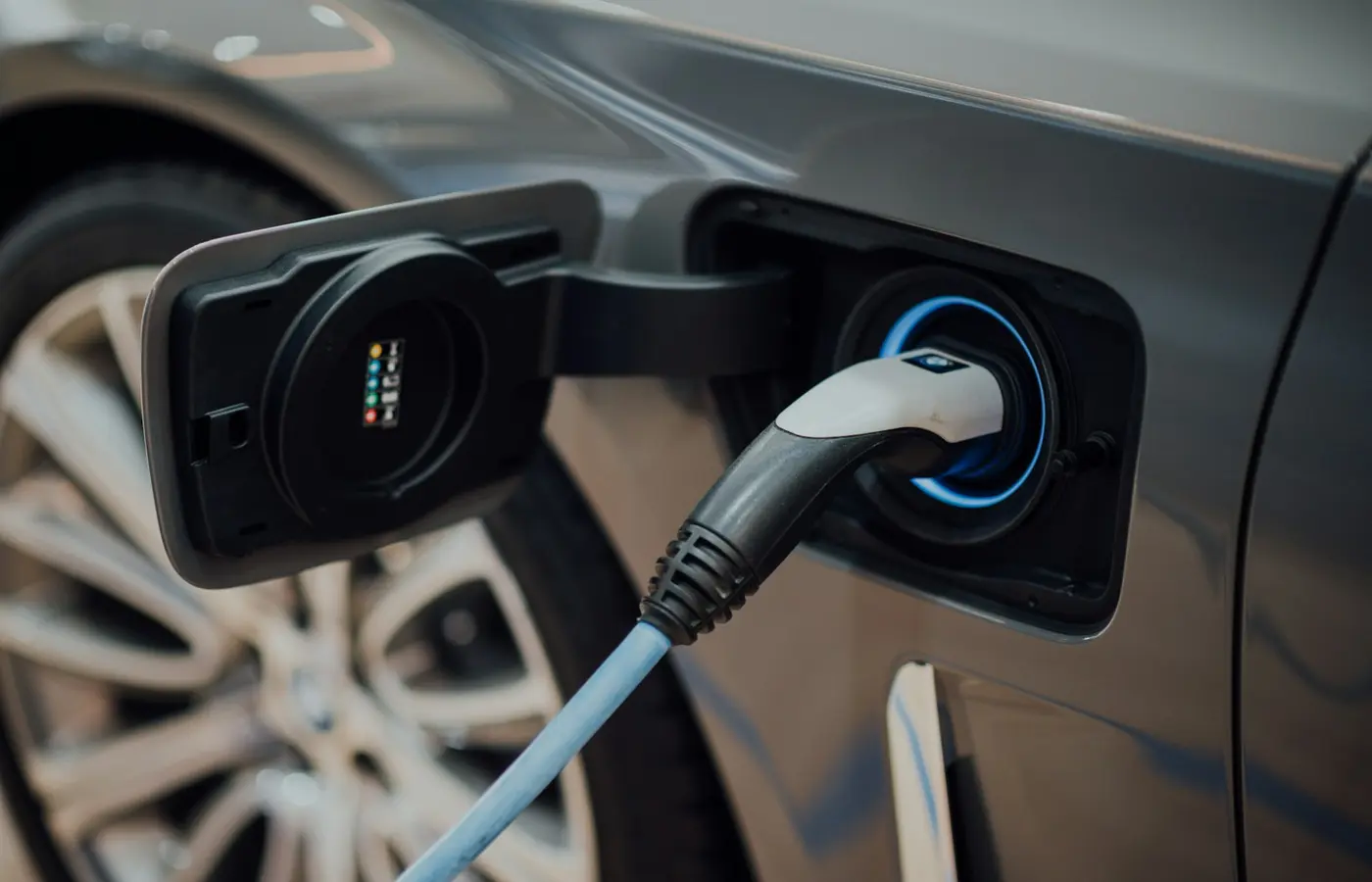
A Chinese EV cannot be judged compatible with overseas charging infrastructure from its model name, charging-port shape, or an adapter listing alone. Before shipment, an importer needs to establish exactly which vehicle version is being supplied, what its AC and DC inlets support, how it communicates with charging equipment, and whether the manufacturer supports any adapter arrangement being proposed.
That distinction matters because an EV that can physically connect to a charger may still refuse to start a session, stop charging unexpectedly, charge at a restricted rate, or create warranty and liability questions. For importers, dealers and fleets, charging compatibility is therefore a procurement and compliance task—not an accessory purchase.
Start with the exact vehicle version, not the model name
A model name is not a complete charging specification.
Chinese manufacturers may sell one nameplate in domestic and export forms, with differences in charging inlet hardware, onboard charger capacity, DC charging equipment, software calibration and market approvals. Changes can also occur between model years, production batches, trim levels, sourcing channels and destination-country configurations.
A China-market vehicle supplied through a domestic dealer may not be technically equivalent to an officially exported version carrying the same badge. Equally, an export vehicle advertised with a CCS-style inlet should not be assumed to support every CCS-equipped charging network in every country.
Before assessing infrastructure compatibility, request documentation tied to the actual vehicle configuration. The most useful items are:
- The manufacturer specification sheet for the precise model year and destination-market version.
- The owner’s manual and charging instructions supplied for that version.
- Purchase-order documentation stating the fitted AC and DC charging inlets.
- VIN, build data or production-configuration evidence where available.
- Written confirmation from the manufacturer or authorised distributor covering AC and DC charging limits, approved charging equipment and adapter policy.
This is especially important when vehicles are sourced outside an official export channel. A seller may accurately describe the model but still be unable to confirm whether the supplied vehicle has the same charging hardware and software as a locally homologated version.
GB/T and CCS are system families, not interchangeable plugs
The phrase “charging standard” can obscure the number of systems involved. A charging connection includes mechanical fit, electrical ratings, control functions and digital communication between vehicle and charger. It is not just a plug shape.
China’s GB/T framework covers conductive EV charging connection sets and charging-system requirements. For example, GB/T 20234.1-2023 sets general requirements for conductive-charging connection sets, while GB/T 20234.3-2023 addresses DC charging couplers. These documents cover issues including ratings, physical construction, electrical performance and testing requirements.
CCS, or Combined Charging System, is used in multiple forms internationally. The relevant version depends on the destination market and the vehicle’s inlet arrangement. In many markets, the AC interface and DC fast-charging interface are considered together as part of the local CCS ecosystem, but the applicable hardware, charger behaviour and regulatory requirements are market-specific.
For an importer, the key practical point is simple: GB/T and CCS should not be treated as directly interchangeable systems merely because an adapter appears able to bridge their connectors.
Check AC and DC separately
AC charging and DC charging are different use cases and can involve different vehicle hardware.
With AC charging, the vehicle’s onboard charger converts grid AC power into DC power for the battery. Compatibility depends on the vehicle’s AC inlet, its onboard charger characteristics, the charging equipment and local electrical-installation conditions.
With DC charging, an off-board charger supplies DC power directly to the vehicle battery system under controlled conditions. The vehicle and charger must establish a compatible charging session, agree operating parameters and maintain safety protections throughout the process.
A vehicle that works with an AC adapter arrangement is not automatically compatible with a DC fast-charging adapter. The reverse is also true. Procurement teams should document the two cases independently.
Why a physical adapter does not guarantee DC fast-charging compatibility
A DC adapter must do more than mate one connector to another. It may need to enable a charging session between two systems that use different signalling and communication approaches, while also maintaining electrical and safety functions.
China’s GB/T 27930-2023 concerns digital communication protocols between an off-board conductive charger and an electric vehicle. The standard’s scope underlines why physical connectivity alone is insufficient: a charging session depends on an exchange of information between the vehicle and charger.
Similarly, the available English publication for GB/T 18487.5-2024 describes DC charging-system requirements including control guidance, charging control processes, connection-control sequences, insulation monitoring and protective measures for the GB/T system specified in its scope.
An adapter maker may claim that its product converts GB/T to a CCS variant or supports a group of vehicles and chargers. That claim should be treated as a starting point for verification, not independent proof of interoperability.
Before relying on a DC adapter, obtain written answers to these questions:
- Which exact vehicle variants are supported? Ask for model year, market version, battery version and, where possible, software or hardware revision.
- Which charger types and networks have been validated? A claim that an adapter supports “CCS” does not necessarily mean it has been assessed on every charger model or operator network.
- What are the operating limits? Confirm voltage range, current limit, maximum power, ambient-temperature restrictions and whether the adapter derates under certain conditions.
- How is communication handled? The supplier should explain the adapter’s intended role in the communication path without relying on vague claims such as “smart protocol conversion.”
- What safety and fault protections are included? Ask about overheating protection, interlock behaviour, insulation-related safeguards, fault handling and shutdown conditions.
- Does the vehicle manufacturer approve it? Written vehicle-manufacturer approval is materially stronger than a reseller’s compatibility listing.
- What happens to warranty and service support? A working charging session does not resolve warranty exclusions or diagnostic limitations.
The authoritative Chinese text and applicable destination-market requirements should be checked where compliance decisions depend on them. English translations and commercial standard publications can be useful working references, but they may not be the controlling legal or technical text.
Check charging by use case, not by a single yes-or-no answer
Importers should map the actual charging environment before ordering vehicles or infrastructure. “Can it charge here?” is too broad a question.
| Use case | What to verify |
|---|---|
| Home AC charging | Vehicle AC inlet, onboard charger rating, supply characteristics, approved portable or wall-mounted equipment, and local installation rules. |
| Depot AC charging | Connector arrangement, fleet dwell time, load management, access control, charging schedules and site electrical capacity. |
| Public AC charging | Local public-charger connector type, account or payment access, cable requirements and expected charging speed. |
| Public DC fast charging | Vehicle DC inlet, maximum supported voltage/current/power, charger compatibility, communication support, approved adapters and network restrictions. |
| Fleet DC charging | Charger make and configuration, repeated-use durability, software support, fault escalation, site maintenance and documented fallback procedures. |
This approach prevents a common mistake: proving that a vehicle charges once at a low-power AC point and then assuming it is ready for public DC fast charging or a high-utilisation fleet depot.
China-side technical context can also be helpful when assessing domestic-specification vehicles. GB/T 18487.1-2023 covers general requirements for conductive EV charging systems. However, destination-market electrical rules, charging-equipment requirements, type approval and insurance expectations remain separate questions that must be checked locally.
Importer checklist: documents and tests to complete before shipment
The most effective time to discover a charging incompatibility is before vehicles leave the factory, port or supplier yard.
Request a charging documentation pack
For each ordered configuration, request:
- The exact AC and DC inlet specification.
- Maximum AC charging power and relevant supply requirements.
- Maximum DC charging voltage, current and power ratings.
- Charging instructions from the owner’s manual for that specific market version.
- A list of manufacturer-approved charging equipment and adapters.
- Any restrictions on third-party adapters, public charging or cross-market use.
- Warranty terms relating to charging equipment and non-standard adapters.
- Software-update procedures and service requirements related to charging faults.
Do not accept a generic brochure as a substitute for version-specific technical confirmation. If a distributor provides the information, ask whether it is backed by the vehicle manufacturer and retain the written response in the procurement file.
Review the adapter separately
If an adapter is central to the business case, obtain:
- A compatibility matrix that identifies supported vehicle versions and charger types.
- Installation and operating instructions.
- Electrical ratings, limits and environmental conditions.
- Warranty terms and exclusions.
- Applicable conformity or safety documentation relevant to the intended market.
- A defined support contact and fault-reporting process.
A compatibility matrix should be precise enough to identify whether the ordered vehicle is included. A statement such as “works with Chinese EVs” is not sufficiently specific for commercial deployment.
Run a documented validation programme
Where practical, test a representative production-specification vehicle before shipment using the intended charging setup. The test plan should reflect real use rather than only a convenient demonstration charger.
For AC, validate the intended home, dealer or depot equipment. For DC, test representative chargers expected to be used by customers or fleet operators, including the relevant adapter where one is proposed.
Record the vehicle version, VIN or build identifier, charger make and model, connector arrangement, adapter serial number, ambient conditions, session outcome, power behaviour, errors and any recovery steps required. A successful session should be documented; so should failures and their resolution.
Testing does not replace compliance work or manufacturer approval. It does, however, reveal practical integration problems before they become stranded stock, customer complaints or fleet downtime.
What to watch after delivery: software, service support and liability
Charging compatibility can change after delivery. Vehicle software updates, charger firmware updates and changes to network hardware may affect behaviour, particularly where a vehicle uses a non-standard or adapter-based arrangement in the destination market.
Importers should therefore establish an operating process for charging issues rather than treating compatibility as a one-time acceptance test.
Key post-delivery controls include:
- Monitoring manufacturer notices relating to charging software, approved equipment and service campaigns.
- Maintaining a record of vehicle software versions and adapter revisions.
- Training service teams to distinguish vehicle faults, charger faults and adapter-related faults.
- Preserving logs, photographs and fault codes when sessions fail.
- Confirming whether local roadside assistance and warranty channels will support imported vehicles.
- Defining escalation routes with the vehicle supplier, adapter supplier and charger-network operator.
- Obtaining country-specific legal and insurance advice where non-standard charging arrangements could affect responsibility following a fault or incident.
For fleets, a fallback plan is essential. If a particular adapter or charger network becomes unavailable, vehicles may need access to an alternative AC depot solution, compatible DC sites, spare adapters where permitted, or operational scheduling that avoids dependence on a single charging path.
The practical takeaway
Chinese EV charging standards are not a reason to avoid importing vehicles. They are a reason to make charging due diligence as rigorous as vehicle-specification, spare-parts and homologation due diligence.
The right question is not whether a Chinese EV is “GB/T” or “CCS.” It is whether the exact vehicle being purchased can safely, reliably and supportably charge from the equipment it will use in the destination market.
That answer should be supported by manufacturer documentation, confirmed charging limits, a clearly defined adapter policy and representative validation before shipment. If any of those elements remain unclear, the compatibility risk has not been resolved.
FAQ
Can a GB/T electric vehicle charge from a CCS charger with an adapter?
Possibly, but not automatically. A physical adapter may fit while the vehicle and charger still fail to establish a compatible DC charging session. Confirm the exact vehicle version, the relevant charger type, communication compatibility, operating limits, safety functions and vehicle-manufacturer position on adapter use.
Does a CCS-shaped charging port prove that a Chinese EV is ready for my market?
No. It is useful evidence about the fitted inlet, but it does not by itself confirm local type approval, AC charging behaviour, public-network interoperability, software support, warranty coverage or compatibility with every charger in the destination market.
What documents should an importer request before ordering a Chinese EV?
Request the owner’s manual for the exact version, AC and DC inlet specifications, charging limits, written manufacturer confirmation of approved charging equipment and adapters, warranty terms, software-update information and the purchase-order configuration or VIN-linked build information where available.
Should fleets test charging compatibility before vehicles are shipped?
Yes, where feasible. A documented pre-shipment test using a representative vehicle, intended adapter and representative destination charging equipment can identify integration problems early. It should complement, not replace, manufacturer documentation, regulatory checks and local electrical or compliance advice.