Industry
How Chinese Automakers Localize Vehicle Production Overseas
Chinese automakers use owned plants, joint ventures and contract assembly to localize overseas production, manage risk and improve market access.
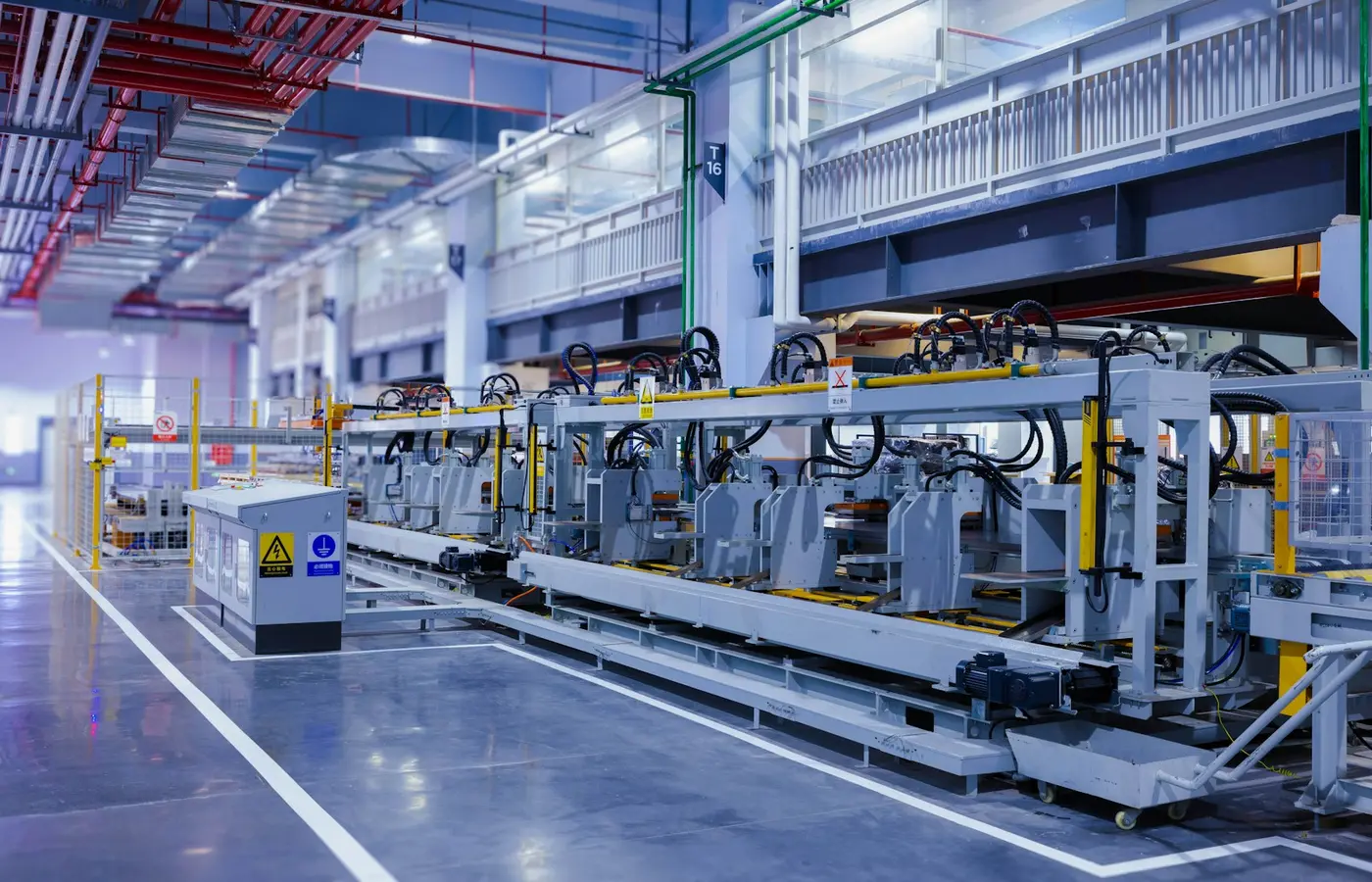
Chinese automakers are no longer relying only on finished-vehicle exports as they expand abroad. In selected markets, they are building factories, partnering with established manufacturers, acquiring access to existing industrial assets, or assembling vehicles from imported kits.
The important distinction is that these approaches are not interchangeable. A wholly owned factory, a joint-venture plant and a contract assembly operation can all be described loosely as “local production,” but they involve very different levels of investment, control, local sourcing and long-term commitment.
For buyers, fleets, suppliers and market analysts, the key question is not simply whether a Chinese brand has announced a factory. It is what the site actually does, who controls it, which parts are locally sourced, and whether serial vehicle production has started.
Why Chinese automakers are moving beyond exports
Exports remain an important route to international growth for Chinese vehicle manufacturers. Shipping complete vehicles from China allows an automaker to enter a new market quickly, test demand and avoid committing capital before it has built a dealer network, service capability and customer base.
That model becomes less straightforward when sales rise. Import duties, changing incentive rules, longer delivery times and exchange-rate exposure can make fully built-up vehicle imports less attractive than they were at market entry. Some countries also use industrial policy to encourage local assembly, domestic employment or local procurement.
Overseas production can therefore serve several purposes at once:
- reduce exposure to import tariffs or tax differences where local assembly qualifies for different treatment;
- shorten transport routes for vehicles sold in the host market or nearby countries;
- improve access to industrial incentives, subject to local-content and eligibility rules;
- create capacity closer to regional customers;
- establish a local base for parts distribution, technical support and after-sales operations;
- deepen relationships with governments, dealers, fleet customers and domestic suppliers.
None of these outcomes is automatic. A plant may still depend heavily on imported kits, batteries, powertrains or electronic components. It may serve only the domestic market rather than a wider region. And a project announced with an investment target and a planned opening date is not yet an operating factory.
The expansion pattern is also not uniform across Chinese automakers. Companies with large export volumes, broad model line-ups and established overseas sales networks may be better positioned to support deeper localization. Others may prefer a lower-capital arrangement until demand is proven.
Wholly owned plants: the highest-control model
A wholly owned overseas plant gives an automaker the greatest direct control over manufacturing operations. Depending on the project, the company may own the land, buildings, production equipment and local operating entity, while setting standards for quality, production planning, supplier selection and model allocation.
In its fullest form, a vehicle factory can include body stamping, body-in-white welding, paint, final assembly, testing and logistics functions. It may also include battery-pack assembly, component production, a parts warehouse or a technical centre. Such a site represents much deeper localization than a facility that only assembles imported vehicle kits.
The benefits of ownership are clear:
- Production control: The OEM can apply its own manufacturing systems and quality procedures directly.
- Model flexibility: It can decide which models to produce and adjust allocations as local demand changes.
- Supplier strategy: The company can develop a local supplier base over time while retaining control over critical imported components.
- Long-term planning: A dedicated plant can support regional exports, service-parts logistics and future product launches.
- Brand commitment: Ownership can signal a durable intention to participate in a market rather than merely sell imported vehicles.
The trade-off is capital exposure. Building or substantially upgrading a factory requires spending before volumes are certain. The automaker must also navigate land approvals, construction, hiring, labor rules, environmental requirements, supplier qualification and local infrastructure.
A wholly owned plant should not automatically be assumed to be a full manufacturing operation. Some sites begin with final assembly and add welding, paint, battery or component operations later. The manufacturing stage matters because it affects local value creation, employment and the amount of imported content embedded in each vehicle.
Joint ventures and acquired capacity: faster access, shared control
Joint ventures and acquisitions offer a different route into overseas production. Rather than building every capability from the ground up, a Chinese automaker can work with a local manufacturer, distributor, industrial group or another global vehicle company that already has factories, supplier relationships and regulatory experience.
The structure can vary considerably. A partnership may cover manufacturing only, or it may combine production with distribution, procurement, technology sharing, financing or after-sales support. Equity stakes can be equal, majority-controlled or minority positions. Governance arrangements, board representation and production rights can be as important as the percentage ownership itself.
This model can provide several practical advantages:
- access to an existing plant or industrial site;
- a quicker route to local manufacturing approvals and supplier networks;
- shared financial risk during an uncertain market-entry phase;
- local knowledge of regulations, dealer practices and customer preferences;
- potential access to established workforce skills and production systems.
The limitations are equally significant. The Chinese automaker may not have complete control over plant scheduling, investments, supplier choices or capacity allocation. The partner may have competing commercial priorities, especially if the facility produces vehicles for multiple brands. A partnership that appears to offer manufacturing access may in practice be focused primarily on distribution or sales.
This is why headlines about stake purchases and cooperation agreements require careful reading. An investment in a local automotive company does not necessarily mean that a Chinese brand is immediately producing vehicles there. Readers should look for confirmation of the actual manufacturing role, the planned models, the responsible legal entity and the stated production timetable.
Acquired capacity can also be valuable when it includes more than buildings. Existing facilities may come with trained employees, approved suppliers, logistics links, dealer relationships and familiarity with local compliance procedures. Those assets can shorten the path to production, but they do not eliminate the work of adapting a plant to different vehicle platforms, battery systems, software architecture or quality processes.
Contract assembly and CKD/SKD operations: lower-capital market entry
Contract assembly is often the fastest way to establish local vehicle output without constructing a full factory. Under this approach, an automaker supplies vehicles or kits to an independent local assembler, which performs agreed assembly work for the brand.
Knocked-down-kit production is a common form of this model. Vehicles are shipped in disassembled or partially disassembled form and assembled in the destination market. The terminology varies by country, but two broad categories are widely used:
- SKD, or semi-knocked down: Larger pre-assembled modules arrive from abroad and local work is relatively limited.
- CKD, or completely knocked down: More individual parts are shipped for local assembly, usually requiring more labor, tooling and process capability than SKD.
The exact distinction is defined by local customs, tax and industrial rules rather than by a single global standard. A process called CKD in one market may not involve the same level of local work as a CKD program elsewhere.
For automakers, this model can reduce up-front investment and speed up entry. It can also help a company assess demand before deciding whether to add deeper manufacturing processes. For local partners, contract assembly can make use of existing facilities and workforce capacity.
However, kit assembly has limits. The automaker remains dependent on international logistics for a large share of vehicle content. Currency movements, shipping disruption, component shortages and customs delays can affect output. Local value added may also be modest if high-value systems such as batteries, motors, inverters, powertrains and advanced electronics continue to be imported.
For this reason, contract assembly should not be treated as equivalent to a fully integrated vehicle factory. It is a legitimate industrial model, but its economic impact, supply-chain depth and resilience depend on the specific processes performed locally.
What localization actually changes
Vehicle assembly is only one layer of localization. A plant can create jobs and perform final assembly while importing most of the vehicle’s value. Deeper localization develops gradually and differs by model, market and technology.
The first locally sourced items are often those that are bulky, market-specific or easier to qualify. They may include tires, seats, glass, wiring, plastic trim, wheels, low-voltage batteries, packaging, fluids and selected metal components. Local logistics, warehousing and pre-delivery preparation may develop alongside these supply relationships.
More complex components usually take longer. Batteries, electric motors, power electronics, advanced driver-assistance hardware, high-voltage systems and vehicle software can remain linked to global or China-based supply chains, particularly in early production stages. That does not mean a plant is insignificant; it means that assembly depth and local-content depth should be assessed separately.
A serious localization programme can also include:
- workforce recruitment and technical training;
- supplier auditing and quality-development programmes;
- local parts warehouses and service-parts planning;
- product changes for local climate, road conditions or regulations;
- local engineering, certification and homologation work;
- fleet support and repair-network training;
- regional sourcing for components that meet cost and quality requirements.
Host-country policies often influence how quickly these steps occur. Some incentives reward local procurement, while others focus on investment, employment, export performance, vehicle type or environmental outcomes. Companies must meet the actual terms of those programmes; a factory’s location alone does not guarantee eligibility.
How the production model affects buyers, suppliers and market access
Different production models create different practical outcomes. The following comparison is a framework, not a substitute for checking a specific project’s legal structure and manufacturing scope.
| Production model | Typical strengths | Typical constraints | What to verify |
|---|---|---|---|
| Wholly owned plant | High control over quality, capacity, suppliers and model allocation | High capital commitment and longer setup period | Ownership, production processes, start of serial output, local sourcing plans |
| Joint venture or acquired capacity | Faster access to facilities, local knowledge and established networks | Shared governance and possible limits on plant control | Equity structure, partner responsibilities, manufacturing rights and capacity allocation |
| Contract assembly | Lower investment and faster entry | Dependence on imported kits and an external assembler | Assembly format, local partner, level of local value added and service-parts arrangements |
For vehicle buyers and fleets, local production may improve availability over time, but it does not guarantee shorter delivery times or lower prices. Those outcomes depend on production volumes, imported component flows, dealer inventory, exchange rates, taxes and the company’s pricing strategy.
For suppliers, an announced plant is a potential opportunity rather than a confirmed programme. A supplier needs clarity on parts localization, sourcing timelines, technical specifications, quality standards and purchasing authority. In a contract-assembly model, the assembler may manage some procurement. In an owned factory, the OEM may retain tighter central control, especially for strategic electric-vehicle components.
For analysts, the most useful question is whether a project changes the company’s regional operating model. A modest assembly operation can be commercially important if it improves market access or supports after-sales logistics. Conversely, a large announced investment may have limited near-term impact until construction, equipment installation, supplier qualification and serial production are underway.
How to tell an operating factory from an announced project
Overseas manufacturing announcements often use broad language: investment agreement, localization plan, production hub, assembly facility or factory project. These terms should not be treated as proof that vehicles are already rolling off a line.
A practical status framework helps separate intention from output:
- Announced: The company has disclosed an intention, memorandum, partnership or prospective investment. Land, approvals and financing may not be final.
- Approved: Relevant authorities or company boards have approved the project, but construction or equipment installation may not have started.
- Under construction: Buildings, utilities or production infrastructure are being developed. The site is not necessarily ready to produce vehicles.
- Trial production: Equipment is installed and pilot vehicles may be assembled for validation, training or regulatory work. This is different from sustained commercial output.
- Operating assembly: The site is producing vehicles, often from imported kits or modules, for sale or delivery.
- Operating full manufacturing: The facility performs multiple substantial manufacturing stages, such as body, paint and final assembly, with defined local supply activity.
When checking a project, look for dates and specific verbs. “Will build,” “plans to produce” and “aims to start” describe future intentions. “Started mass production,” “began commercial assembly” or “delivered locally assembled vehicles” are stronger indicators, provided the statement identifies the site and activity.
It is also useful to separate planned capacity from actual output. A factory may be designed for a certain annual volume but operate below that level during ramp-up. Capacity is a target or technical ceiling, not evidence of demand or achieved production.
What to watch next
The next phase of Chinese automakers’ overseas expansion will be defined less by the number of factory announcements than by execution. Key indicators include whether projects enter serial production, whether local suppliers win recurring business, whether component localization expands beyond basic assembly, and whether plants support regional exports as well as domestic sales.
The production model chosen will reveal much about a company’s priorities. Wholly owned factories generally indicate a deeper long-term commitment and greater desire for operational control. Joint ventures and acquired capacity can offer speed and local knowledge. Contract assembly can be a sensible bridge between exports and larger industrial investment.
The most reliable conclusion is therefore a narrow one: local production is not a single category. To understand a Chinese automaker’s real overseas footprint, assess ownership, manufacturing depth, imported content, sourcing plans and confirmed production status—not just the existence of a factory headline.
FAQ
What is the difference between CKD assembly and a full vehicle manufacturing plant?
CKD assembly generally involves assembling a vehicle from imported parts or kits in the host market. A full vehicle manufacturing plant typically performs more substantial processes, which may include stamping, welding, painting and final assembly. The precise distinction depends on local rules and the activities performed at the site.
Why do Chinese automakers use joint ventures or contract assembly instead of building their own factories?
These structures can reduce initial capital exposure and provide faster access to existing facilities, local partners, workforce skills and regulatory knowledge. They can also allow an automaker to test demand before committing to a larger owned plant.
Does local assembly mean that most parts are made in the host country?
No. A locally assembled vehicle may still contain a high proportion of imported kits, batteries, powertrains, electronics and other components. Local assembly and local-content depth are separate measures.
How can buyers and suppliers verify whether an overseas Chinese-brand factory is already producing vehicles?
Check for specific company or host-government statements that identify the facility, manufacturing activity and production status. Look for evidence of commercial or serial production rather than announcements, construction updates, pilot builds or planned capacity figures.
Sources
- In Depth: Chinese Carmakers Shift to ‘Asset-Light’ Models in Overseas Expansion - Caixin Global
- Chinese OEMs advance overseas vehicle manufacturing
- Research Report on Overseas Layout of Chinese Passenger Car OEMs and Supply Chain Companies, 2024 - ResearchInChina
- Nikkei Asia : Chinese automakers reach crossroads after conquering export markets - Automobility
- Research Report on Overseas Layout of Chinese Passenger Car OEMs and Supply Chain Companies, 2025
- The producers of China’s NEV