Commercial Vehicles
China’s 4x4 Van Market: Vehicle Types, Drivetrains, and Export Checks
How to distinguish Chinese 4WD vans, AWD people movers and conversion vehicles, then verify specification, compliance and support before import.
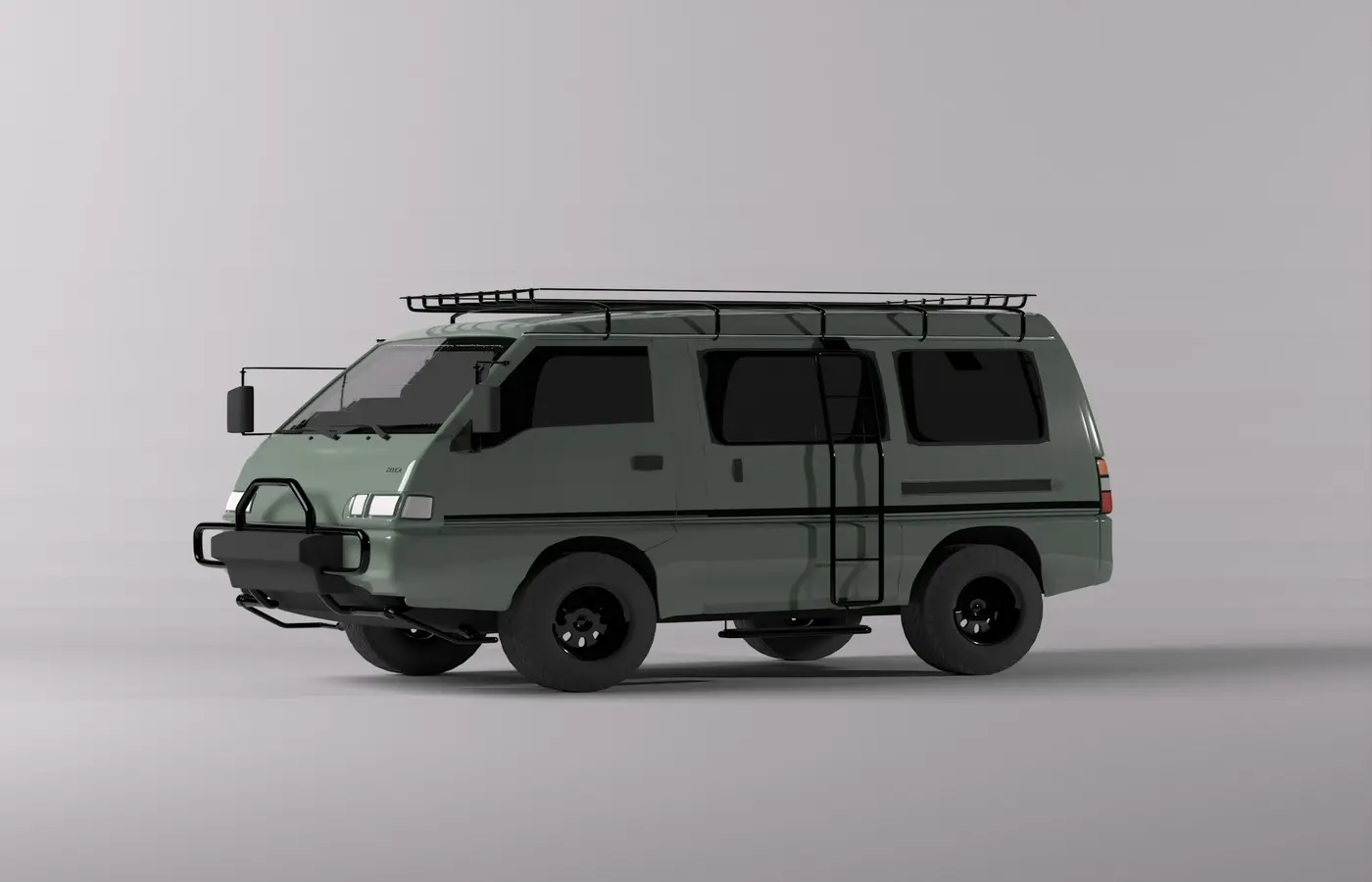
A “China 4x4 van” is not one clearly defined product category. It may be a factory-built commercial van with selectable four-wheel drive, an all-wheel-drive passenger vehicle, a truck-derived utility vehicle with an enclosed body, or a conventional van converted for rescue, camping or remote-site work.
That distinction matters before an importer requests a quotation. A vehicle intended to carry technicians over unsealed access roads needs more than a supplier’s “4x4” label: it may require low-range gearing, suitable tyres, axle-load margin, underbody protection and a dependable parts plan. A passenger shuttle operating on wet or snowy paved roads may instead benefit from AWD, stability systems and cabin comfort, without needing off-road hardware.
For international buyers, the practical question is not simply whether a Chinese van is advertised as 4x4. It is whether the exact model, chassis and body configuration match the duty cycle and can be legally supported in the destination market.
What counts as a China 4x4 van?
In supplier listings, “4x4 van” is often used broadly. Buyers should establish which of four vehicle architectures is actually being offered.
Factory-built 4WD commercial van
This is the closest match to what many fleet buyers mean by a 4x4 van: an enclosed cargo or personnel vehicle built with four driven wheels by the vehicle manufacturer or as a documented factory variant. Depending on the design, it may use a transfer case, selectable four-wheel drive, a low-range ratio or differential locks.
These vehicles can be relevant for utility fleets, telecommunications work, mining support, field maintenance and emergency-service use. But hardware varies substantially between variants. A factory 4WD claim does not automatically establish the presence of low range, locking differentials or high ground clearance.
AWD passenger van or light bus
An AWD people mover may resemble a commercial van but serve a different purpose. Its drivetrain may be designed primarily for traction on wet, icy or loose paved surfaces rather than continuous work on deeply rutted tracks.
This category can suit staff transport, hotel shuttles, regional passenger operations and public-service transport where road conditions are variable. Importers should not assume that an AWD system has the same towing, payload or off-road capability as a utility-focused 4WD chassis.
Truck-derived enclosed utility vehicle
Some vehicles marketed as vans are based on a light-truck chassis, cab-chassis platform or special-purpose vehicle base. They may have a separate cab and enclosed rear body rather than an integrated van body.
The advantages can include stronger axle ratings, simpler body adaptation and more scope for specialist equipment. The trade-off may be a larger turning circle, less refined passenger accommodation, a higher floor or different licensing and registration treatment. In some markets, the finished vehicle may be classified as a light truck or special-purpose vehicle rather than a van.
Conversion-based vehicle
A camper, ambulance, rescue vehicle, refrigerated unit or mobile workshop may be described as a 4x4 van because of its finished appearance. Yet the conversion may be based on a two-wheel-drive van, or the driven-axle arrangement may be unclear in the sales material.
The chassis maker, drivetrain supplier and body builder may all be different parties. That is workable only when responsibility for the completed vehicle is documented. The buyer needs to know who warrants the base vehicle, who approves the body installation and who is accountable if the conversion changes axle loads, cooling performance, electrical systems or legal classification.
A useful starting point is China Vehicles’ earlier overview of applications, platforms and sourcing checks. The central principle is to verify the base vehicle and drivetrain before assessing the finished body.
The main vehicle types buyers will encounter
The following categories help translate a broad search into realistic sourcing choices.
| Vehicle type | Typical applications | Main questions to resolve |
|---|---|---|
| Compact cargo van | Local delivery, maintenance teams, light equipment transport | Is it 4x2, AWD or genuine 4WD? What is the usable payload after options? |
| Personnel van or light bus | Staff shuttles, tourism, remote-site crew transport | How many seats are approved, and does passenger equipment reduce payload? |
| Truck-based enclosed utility vehicle | Tools, mobile workshops, field-service work | What are the axle ratings, body-builder limits and final vehicle classification? |
| Ambulance or rescue conversion | Emergency response, clinics, civil protection | Who certifies the conversion and supports medical or auxiliary equipment? |
| Camper or expedition conversion | Recreation, overland support, specialist projects | Is 4WD factory supplied, and are water, battery and roof loads within limits? |
Marketplace listings can be useful for identifying possible models, but they should not be treated as technical proof. For example, an 86Trucks listing for a Changhe Landy describes both rear-wheel-drive variants and a “4x4(6 wheels)” variant. The listing does not, by itself, establish current production status, factory availability, export eligibility or the exact drivetrain hardware. Its legacy-looking emissions description is another reason to seek current manufacturer-issued documentation.
The same caution applies to special-purpose listings. A product described as an “all driven” ambulance may indicate a genuine four-wheel-drive chassis, but it could also reflect incomplete marketplace terminology. The importer should identify the original chassis maker, model code, engine, transmission, axle arrangement and body-builder approval status.
4WD, AWD, 4x2 and six-wheel layouts: labels to verify
Drivetrain terminology is often the biggest source of misunderstanding in this segment.
4x2
A 4x2 van has two driven wheels. It may be front-wheel drive, rear-wheel drive or, less commonly in this category, another arrangement. A well-specified 4x2 vehicle with appropriate tyres can be entirely suitable for ordinary unpaved roads, urban work and many fleet tasks.
Do not dismiss 4x2 automatically, but do not allow a conversion body or rugged styling to imply four-wheel-drive capability.
Selectable or part-time 4WD
A part-time 4WD system normally allows the driver to engage drive to both axles when conditions require it. Some systems include a transfer case and low-range gearing; others do not. Operating instructions may also limit where and how the system should be used.
For rough access roads, ask for the operating manual and transfer-case specification. Confirm how 4WD is engaged, whether low range is fitted, whether front hubs are manual or automatic, and whether the system is approved for use on high-grip paved surfaces.
Full-time AWD
AWD generally refers to a system that can distribute drive between front and rear axles without the driver manually selecting a conventional 4WD mode. It may improve traction and stability in poor weather, but its design priorities can differ from those of an off-road commercial 4WD system.
Ask how torque is distributed, whether there are selectable modes, and whether the vehicle has any low-range function or locking differential. If those details are unavailable, the buyer should assume neither feature is present.
Six-wheel descriptions
A vehicle described as “six wheels” may have dual rear wheels, three axles, a six-wheel body arrangement or an unconventional supplier description. None of those facts alone proves that six wheels are driven.
Terms such as “4x4,” “all driven” and “six wheels” should be reconciled against the axle configuration in the official specification sheet, type-approval documents and VIN or model-code records. A seller’s headline should never substitute for those documents.
Match the vehicle to the duty cycle, not the marketing description
The correct vehicle emerges from operating requirements, not from an online category filter. Before comparing suppliers, define the following conditions in writing:
- Typical and maximum payload, including passengers, tools, water, spare wheels and body equipment.
- Expected road surfaces: paved roads, gravel, mud, sand, snow, steep tracks or mixed routes.
- Annual mileage, average trip length and idling requirements.
- Number of passengers and the need for seat belts, HVAC, communications or safety equipment.
- Ambient temperature, altitude, water crossings and dust exposure.
- Towing needs and whether a trailer affects local licence or registration rules.
- Required approach, departure and breakover angles where terrain is a genuine constraint.
A technician-transport vehicle for rough access roads may need tyre sidewall strength, clearance, recovery points and serviceable mechanical components more than luxury cabin trim. A passenger shuttle for wet mountain roads may place greater weight on AWD calibration, heating, demisting, seat layout and stability-related equipment.
For any conversion, calculate the vehicle as delivered rather than relying on the base chassis payload figure. Ambulance interiors, insulation, auxiliary batteries, refrigeration, roof equipment, camping furniture and generators can materially change axle loads. Request a completed-vehicle weight statement and individual axle weights wherever the supplier can provide them.
Export verification checklist: specification, compliance and documentation
Importing a vehicle requires a document trail that identifies the exact vehicle—not just a broadly similar catalogue model. Requirements differ by market, age of vehicle, fuel type, transaction terms and registration class, so customs brokers, regulators and qualified local compliance advisers should confirm the destination-country rules.
Before paying a deposit or approving production, request the following.
1. A signed technical specification
The document should identify:
- Manufacturer, factory, vehicle model code and body type.
- Engine model, displacement, fuel type and emissions designation.
- Transmission model and driven-axle configuration.
- Transfer case, low-range gearing and differential-lock equipment, if fitted.
- Wheelbase, overall dimensions, tyre specification and axle configuration.
- Gross vehicle weight rating, front and rear axle limits, kerb weight and payload.
- Seating capacity, doors, steering position and standard safety equipment.
- Optional equipment included in the quoted build.
A brochure is useful, but a signed configuration sheet linked to the pro forma invoice is stronger. It reduces the risk that a supplier delivers a visually similar 4x2 or lower-specification vehicle.
2. Evidence of identity and drivetrain configuration
Ask the manufacturer or authorised exporter to confirm the VIN format and explain when the VIN will be assigned. For a fleet order, obtain the model-code logic and confirm that the drivetrain variant is identifiable in factory records.
Request photos of the underbody, transfer case, driven front axle and relevant drivetrain labels for completed vehicles where possible. These images do not replace documentation, but they can help an inspector compare the physical vehicle with the agreed specification.
3. Destination-market admissibility review
Check the destination country’s rules on:
- Emissions and safety standards.
- Vehicle age limits and used-vehicle import restrictions.
- Right- or left-hand-drive requirements.
- Lighting, glazing, tyres and speedometer requirements.
- VIN format and anti-theft or conformity requirements.
- Approval routes for vans, buses, ambulances and special-purpose vehicles.
- Whether a post-import conversion needs separate certification.
A vehicle that can be exported from China is not automatically registrable elsewhere. Classification is particularly important for passenger conversions, ambulances and truck-based enclosed bodies.
4. Transaction and shipping documents
The typical paperwork may include a commercial invoice, packing list, bill of lading and certificate of origin. Additional inspection reports, export licences or certificates may be required depending on the route, vehicle type and importing country.
Some exporters advertise broad document support. For example, MSAUTO lists export licences, certificates of origin, inspection reports and bills of lading among its services. That is not a universal document checklist. The buyer should confirm every requirement against contract terms and advice from the destination customs broker and registration authority.
5. Independent pre-shipment inspection
The inspection scope should include VIN, model code, engine and gearbox identifiers, drivetrain hardware, options, odometer, body condition, tyres, spare parts, accessories and document consistency. For converted vehicles, inspect the finished body, auxiliary electrical equipment, mounting points and final weight evidence as well.
The contract should state what happens if the delivered vehicle differs from the approved technical annex.
After-sales support and conversion responsibility
Low-volume imports often fail operationally because support was treated as an afterthought. A low purchase price has limited value if filters, brake parts, body panels, tyres, diagnostic access or drivetrain components cannot be obtained within a workable time frame.
Before selection, ask each supplier for written answers on:
- Warranty duration, mileage limits, exclusions and claim procedure.
- Whether the manufacturer, exporter, body builder or local distributor pays for warranty work.
- Parts catalogues, workshop manuals and diagnostic-tool availability.
- Lead times and ordering channels for routine and collision parts.
- Compatibility of locally available fluids, batteries, filters and tyres.
- Responsibility for conversion-related failures, including electrical, cooling, suspension and body mounting issues.
For a special-purpose vehicle, responsibilities should be separated clearly. The chassis manufacturer may warrant the base vehicle, while the body builder warrants the conversion and the exporter handles logistics. The buyer should not assume those parties will resolve disputes between themselves after delivery.
What to request before selecting a Chinese 4x4 van supplier
Use a model-by-model comparison matrix based on documents rather than marketplace descriptions. Each shortlisted supplier should complete the same technical annex and provide evidence for each answer.
At minimum, request:
- A current factory or authorised-exporter status confirmation.
- Manufacturer, model code, body type and country-of-origin details.
- Signed drivetrain specifications, including driven axles and transfer-case hardware.
- Weight, axle-load, tyre, suspension and towing information.
- A clear list of standard equipment and fitted options.
- Completed-vehicle conversion details where applicable.
- Warranty, parts and service-support terms.
- Estimated production timing and delivery terms.
- A list of proposed shipping and export documents.
- Permission for an independent pre-shipment inspection.
The most useful sourcing outcome is not a list of vans labelled 4x4. It is a documented match between the vehicle’s actual architecture, its intended duty cycle, its legal route into the destination market and the support available after delivery.
FAQ
Is an AWD Chinese passenger van the same as a 4WD commercial van?
No. Both may drive all four wheels, but their mechanical layouts, payload ratings, intended operating conditions and off-road capability can differ significantly. Verify the drivetrain hardware and weight ratings for the exact variant.
How can an importer verify that a van has a genuine factory 4WD drivetrain?
Request a manufacturer-issued specification sheet, model code, VIN-format confirmation, operating manual and technical details covering the transfer case, driven axles and any low-range or locking-differential equipment. A pre-shipment inspection should compare the agreed documents with the completed vehicle.
Can a 4x4 van conversion be registered as a commercial vehicle in the destination market?
Possibly, but registration depends on local vehicle classification, passenger seating, body equipment, weights, emissions, safety requirements and conversion approval rules. Confirm the route with the destination regulator or a qualified local compliance professional before ordering.
Which documents should be checked before paying a deposit for a Chinese 4x4 van?
Check the signed specification sheet, pro forma invoice, manufacturer or exporter identity, model code, drivetrain details, weight ratings, compliance information, warranty terms, production schedule and proposed export-document list. Also confirm destination-market eligibility before committing funds.