Industry
Chinese Automakers’ Overseas Assembly: How CBU Exports, CKD, SKD and Local Production Differ
A practical guide to CBU imports, SKD and CKD assembly, contract manufacturing and local production by Chinese automakers overseas.
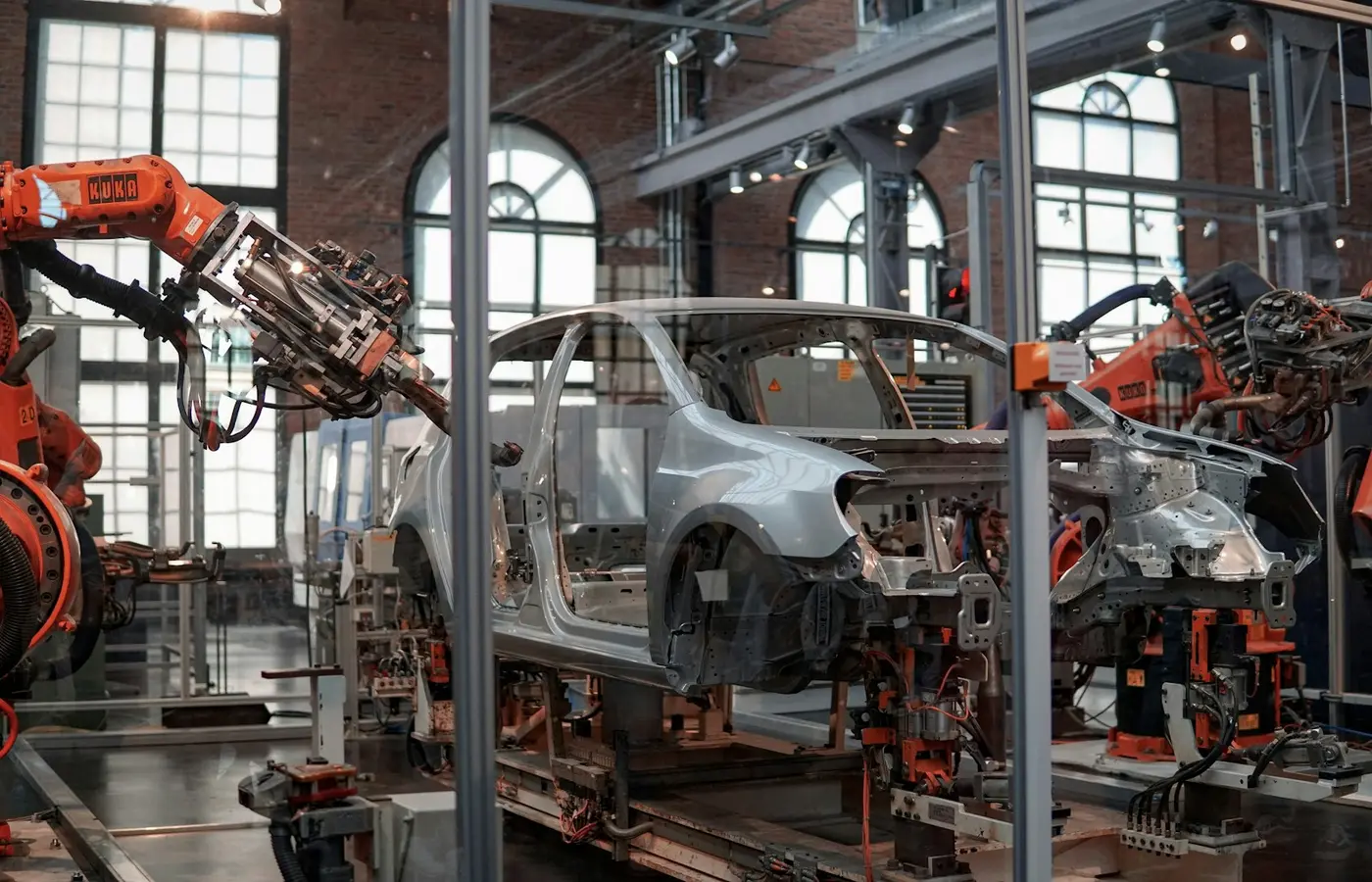
When a Chinese-brand vehicle is described as “locally produced,” what does that actually mean? It may mean a finished vehicle was imported from China, that major modules were fitted together in a destination-country plant, or that a factory carries out a broad range of manufacturing and sourcing activities locally.
Those models have very different implications for importers, fleet operators, suppliers and policymakers. They can affect customs treatment, lead times, service-parts planning, warranty responsibility, local-content eligibility and the credibility of a manufacturer’s localization claims.
The most useful question is not whether a brand has announced local production. It is: which production steps, components and commercial responsibilities are actually located in the destination market?
Why the production model matters
Chinese automakers commonly expand overseas in stages. Finished-vehicle exports can establish a market quickly. Kit assembly can support a deeper local presence where tariffs, investment policies or logistics make it attractive. A full factory, joint venture or contract-manufacturing arrangement can add further capacity, local procurement and operational control.
These approaches are not interchangeable. As China Vehicles has previously explained in its guide to how Chinese automakers localize vehicle production overseas, a wholly owned plant, a joint venture and a contract assembly arrangement may all be described broadly as local production, even though they involve different investment levels and degrees of control.
For a buyer or importer, the production model may influence:
- Landed cost: Customs duties, freight, port handling and taxes can differ between a completed vehicle and a component kit. The result depends on the destination country’s law, not on the label an automaker uses.
- Vehicle origin: A vehicle assembled in one country may still have significant imported content. Its origin for customs, trade-agreement or procurement purposes can require a separate legal assessment.
- Parts support: Local assembly does not automatically mean local parts warehousing, battery repair capability or supplier availability.
- Homologation and compliance: The entity importing, assembling or selling the vehicle may carry different responsibilities for type approval, recalls, labelling and warranty support.
- Supplier opportunity: A plant that installs imported modules offers a different local procurement opportunity from one that sources stamped parts, seating, wiring, tyres or battery components locally.
- Policy exposure: Changes to tariffs, local-content incentives or import restrictions can alter the economics of each model quickly.
A useful rule is to separate four claims that are often blended together in marketing: the location of final assembly, the origin of parts, ownership of the factory, and the legal origin of the finished vehicle.
CBU exports: finished vehicles shipped from China
CBU stands for complete built-up. In this model, a vehicle is manufactured and completed in China, then exported as a finished unit to the destination market.
The distributor, importer or local subsidiary receives a drivable vehicle rather than a set of components for assembly. This is often the simplest route for a brand entering a new country because it avoids the immediate need to establish a plant, recruit an assembly workforce, qualify local suppliers or manage a local production system.
Why CBU exports are attractive
For a new market launch, CBU imports can offer several practical advantages:
- Faster initial availability after regulatory approval.
- Consistent manufacturing processes from an established Chinese plant.
- Lower upfront capital commitment in the destination country.
- The ability to test demand before committing to assembly capacity.
- Simpler production planning when volumes are still uncertain.
This is why complete-vehicle exports remain an important part of Chinese automakers’ international expansion, even as more companies examine overseas factories and partnerships.
Where CBU can become difficult
The trade-off is that finished vehicles can face higher freight costs per unit, port congestion risk, import duties or market-specific restrictions. Technical rules may also require changes to lighting, charging equipment, safety systems, labelling, software language or documentation before vehicles can be sold.
CBU imports are not inherently better or worse than local assembly. They are often the most rational option where annual volumes are modest, the market is geographically close to China, or the local supply base is not yet capable of supporting production. But they may become less competitive when duties on finished vehicles rise, local assembly incentives improve, or demand grows enough to support a plant.
For importers, the key documentation typically includes the vehicle identification number, country-of-origin records, homologation approvals, shipping documents and warranty arrangements. These records are more useful than broad claims about a brand’s international footprint.
SKD assembly: imported subassemblies completed near the market
SKD means semi-knocked down. In broad commercial usage, it describes a vehicle supplied in large, substantially pre-assembled sections that are completed locally.
An SKD operation may receive painted bodies, chassis modules, powertrain units, interiors or other major assemblies from abroad, then carry out selected installation, inspection and final-completion work in the destination market. The actual division of work varies significantly by plant and country.
That variation matters. There is no single global SKD threshold that applies across every customs regime. One country’s automotive policy may classify a package differently from another country’s customs authority, and the same label can cover operations with very different levels of local work.
What SKD assembly can involve
Depending on the factory and applicable regulations, local SKD activities may include:
- Installing wheels, seats, glass, bumpers or interior trim.
- Completing electrical connections and software configuration.
- Fitting locally required equipment or accessories.
- Final quality checks, fluid filling and end-of-line testing.
- Preparing vehicles for local registration and delivery.
Some SKD arrangements are designed mainly to reduce logistics complexity or meet a local assembly incentive. Others are an intermediate step before a manufacturer introduces more local processes and supplier content.
However, an SKD plant should not automatically be treated as a full manufacturing facility. If major systems arrive assembled from abroad, the local operation may have limited influence over engineering, component sourcing and production scheduling.
For suppliers, the commercial question is straightforward: which parts does the plant buy locally, and which parts remain inside the imported kit? A local assembly announcement does not answer that question by itself.
CKD assembly: more assembly work, but not necessarily local components
CKD means complete knocked down. It usually refers to vehicles shipped as a more disaggregated set of parts for assembly in the destination country.
Compared with SKD, CKD commonly involves more local assembly work. Components may arrive separately for body assembly, trim, chassis installation or final assembly, depending on the factory’s equipment and the relevant legal framework. But CKD is still not a universal technical category with one fixed process definition.
The term should therefore be treated as a starting point for due diligence, not as proof of local manufacturing depth.
What CKD can change
A genuine CKD programme can require more local labour, production engineering, quality control, material handling and after-sales support than a finished-vehicle import model. It may also create a stronger basis for local supplier development over time.
At the same time, CKD does not automatically mean that the vehicle’s major parts are domestically made. A plant may assemble imported body panels, powertrain components, battery packs, electronics and interiors while sourcing only a limited set of local items. The level of domestic value added can therefore be much lower than the phrase “locally manufactured” may suggest.
The distinction is especially important for electric vehicles. Final assembly of an EV does not establish where the battery cells, battery pack, power electronics, electric motor, thermal system or vehicle software were developed or produced. Each element may come from a different country or supplier network.
CKD and tariff treatment
Many markets use lower duty rates, investment incentives or other policy tools to encourage component imports and domestic assembly. But CKD assembly does not automatically bypass tariffs or confer local origin.
The applicable treatment can depend on:
- Customs classification of imported kits and components.
- The degree of processing performed locally.
- Rules on local value added or locally sourced materials.
- Bilateral or regional trade agreements.
- Requirements for certificates of origin.
- Whether components are imported from a country covered by a trade preference.
Importers should obtain advice from qualified customs and trade professionals in the relevant jurisdiction rather than assuming that “CKD” has a standard duty outcome.
Local manufacturing, joint ventures and contract assembly
Beyond CBU, SKD and CKD, Chinese automakers can establish an overseas production presence through several ownership and operating models.
Wholly owned manufacturing facilities
A manufacturer may build or acquire a plant operated by its own local subsidiary. This can offer stronger control over production methods, model allocation, supplier selection and long-term capacity planning.
A wholly owned plant can still begin with imported kits or components. Ownership of the facility does not reveal the depth of local production. The relevant evidence is the plant’s confirmed processes, sourcing programme and operating status.
Joint ventures
A joint venture can combine a Chinese automaker’s products and technology with a local or international partner’s plant, distribution network, regulatory experience or supplier relationships.
The arrangement may reduce entry risk, but responsibilities vary. One partner may operate the factory while another supplies vehicle platforms and kits. The venture may serve only the domestic market, or it may have export rights. It may be a long-term manufacturing enterprise or a limited model-specific programme.
Contract manufacturing
Under contract assembly, a brand uses an existing manufacturer’s facility to build vehicles on its behalf. This can reduce time and capital expenditure compared with constructing a new factory.
Contract manufacturing may be commercially effective, particularly where the contractor has established staff, equipment and approvals. But it does not necessarily mean the brand owns the plant, controls the supplier base or has committed to large-scale localization.
For all three models, “made locally” should be treated as a description requiring detail. A buyer should ask who owns the facility, who holds production approvals, who buys components, who is responsible for warranty claims, and whether the factory is operating at commercial volumes rather than merely announced.
How to evaluate an overseas assembly claim before sourcing
A careful sourcing review should go beyond press releases, factory renderings and planned capacity figures. The goal is to identify the physical production scope and the legal entity responsible for the vehicle.
Questions for importers and fleet buyers
-
Where was this specific vehicle built?
Request VIN information, build records and documentation identifying the final assembly plant. -
Is the vehicle imported complete, assembled from SKD kits or assembled from CKD kits?
Ask for a clear description of the assembly route for the relevant model, not the brand’s wider global strategy. -
Which major components are locally sourced?
Ask separately about body parts, interiors, tyres, glass, wiring, battery systems, motors and electronics. “Local content” should be defined, not assumed. -
How is local content calculated?
A percentage may refer to cost, weight, component count or a policy-specific formula. These methods can produce very different results. -
Which entity provides warranty and recalls?
Confirm whether responsibility sits with the automaker, national distributor, assembly company or another entity. -
Where are service parts held?
Local assembly may improve parts supply, but only if the business maintains a local or regional stockholding system. -
Is the site operational?
Distinguish between a memorandum of understanding, a construction announcement, pilot assembly and verified series production. -
What approvals apply to the locally assembled vehicle?
Confirm the relevant homologation, registration and conformity documentation in the target market.
Questions for suppliers
Suppliers should also establish whether they are being considered for serial production or only for low-volume local fitment. Important questions include expected volumes, local purchasing authority, engineering approval processes, payment terms, packaging requirements and whether the plant can nominate local suppliers independently of headquarters.
A local factory can be strategically important without immediately becoming a large sourcing opportunity. Early-stage operations often retain imported components until production volume, quality systems and local supplier capability justify broader localization.
What to watch as Chinese brands expand outside China
The direction of travel is clear: many Chinese automakers are evaluating combinations of exports, kits, partnerships and overseas factories rather than relying on one route in every market. The pace and depth of that shift will depend on local demand, trade policy, available industrial infrastructure and supplier capability.
Trade barriers are one reason, but not the only one. A local operation can shorten delivery times, make market-specific variants easier to manage, improve relationships with distributors and governments, and provide a base for regional exports. Conversely, a factory may struggle to deepen localization if volumes are too low or if critical suppliers are absent.
Mexico illustrates the need for careful interpretation. The country is often discussed as a potential manufacturing base because of its established automotive industry and regional trade links. But manufacturing in Mexico does not by itself guarantee duty-free access to the United States. As noted in a Ducker Carlisle paper on Chinese automakers in Mexico, access under the USMCA framework depends on detailed regional-content and origin requirements rather than factory location alone.
For industry readers, the practical takeaway is simple: assess each plant, model and market separately. A Chinese-brand vehicle can be sold through an importer, shipped complete from China, assembled from kits, built under contract or produced in a more deeply localized factory. Those routes may look similar in a showroom, but they create very different supply-chain, customs and service implications.
FAQ
What is the difference between CBU, SKD and CKD vehicles?
CBU vehicles are fully built before export. SKD vehicles arrive as major pre-assembled sections that are completed locally. CKD vehicles arrive as a more disassembled set of parts for local assembly. The exact contents of SKD and CKD kits vary by country, manufacturer and customs regime.
Does CKD assembly mean a Chinese vehicle is locally manufactured?
It means local assembly activity is taking place, but it does not by itself prove extensive local component sourcing, domestic engineering, battery production or high local value added. The production scope and sourcing breakdown must be verified for the specific plant and model.
Can locally assembled vehicles qualify for lower import duties?
They can in some markets, but there is no universal rule. Eligibility can depend on component classification, local processing, origin rules, trade agreements and national incentive programmes. Local assembly alone may not be sufficient.
How can a buyer verify where a Chinese-brand vehicle was actually built?
Ask for the VIN, production-plant identification, certificate-of-origin documentation, homologation records and the name of the entity responsible for warranty and recall support. For procurement decisions, also request a model-specific explanation of the assembly process and local-content calculation.